 English
 Español
 Deutsch
Article Directory
A purchasing manager once told us that every engine timing sprocket supplier on paper looks the same. The quotation letter mentions ISO certification, the sales engineer promises excellent quality, and the sample part passes a visual check. The difference between suppliers only shows up later, in the form of abnormal timing chain noise, early sprocket wear, or a batch of parts whose bore dimensions drift just enough to make installation difficult.
That difference is not a matter of luck. It comes down to a small set of measurable standards: gear quality grade, material and heat treatment, inspection capability, and batch-to-batch consistency. Buyers who understand these four areas can separate a qualified engine timing sprocket supplier from a reseller or a low-cost workshop without waiting for field failures. This article explains each area in practical terms and what a buyer should ask for during a supplier audit.
What "Quality" Actually Means for an Engine Timing Sprocket Supplier
A quality standard for a timing sprocket is never a single number. It is a combination of dimensional tolerances, material properties, and manufacturing processes that together keep valve timing stable for hundreds of thousands of kilometers.
Interpreting Gear Quality Grades
Most buyers start with the gear quality grade written on the drawing. Common references are ISO 1328-1, DIN 3962, and AGMA 2000. A lower grade number means a tighter tolerance. For engine timing sprockets, DIN 7 or ISO Grade 7 is a reasonable minimum for a camshaft sprocket, while a crankshaft sprocket with a larger diameter may be specified at Grade 7 or Grade 8, depending on chain speed and load.
Too many aftermarket suppliers do not know which grade their parts actually achieve. They can produce a part that fits the shaft, but the interval between teeth is not controlled to the same tolerance as the original. Over time, the chain loads up unevenly and noise increases. The table below shows the difference in practical terms.
| ISO 1328-1 grade | Typical accumulated pitch deviation (Fp) | Typical radial runout (Fr) |
|---|---|---|
| Grade 6 | up to 8 micron | up to 10 micron |
| Grade 7 | up to 13 micron | up to 16 micron |
| Grade 8 | up to 20 micron | up to 25 micron |
Accumulated Pitch Error and Runout: The Tolerances That Matter
The most important tolerance for timing sprockets is not the tooth thickness alone. It is the accumulated pitch error, often abbreviated as Fp, which measures the maximum deviation of actual tooth position around the whole circumference. A high Fp means that some chain links engage too early and others too late, creating speed fluctuation in the camshaft.
Radial runout is the second value to check. If the sprocket bore is not concentric with the tooth tips, chain tension oscillates once per revolution. On a variable valve timing system, this oscillation also disturbs the oil-pressure signals used by the phaser. Buyers who need a deeper technical background on these relationships can refer to our guide on SAE accuracy requirements for timing sprockets.
Material and Heat Treatment: Where Sprocket Failures Start
A sprocket can meet every dimensional tolerance on the drawing and still fail in service if the steel or the heat treatment is not right. In our experience, field returns from chain noise or rapid wear almost always point back to material hardness rather than geometry.
Choosing the Right Steel Family
Most OEM timing sprockets are made from case-hardening alloy steels. European drawings often specify 16MnCr5 or 20MnCrS5; Japanese platforms frequently use equivalent SAE 4118 or SAE 8620 grades. These materials are carburized, quenched, and tempered to give a hard, wear-resistant case and a tough core. Some suppliers substitute free-cutting steels to reduce machining cost, but the lower hardness and weaker core show up as rapid tooth flank wear and chipped tips. For a broader comparison of material behavior, our article on common alloy materials used for timing crankshaft sprockets explains the performance differences in more detail.
Induction Hardening, Case Depth, and Tooth Load
Induction hardening is an alternative used mainly for larger crankshaft sprockets and oil pump gears. The key parameters are surface hardness, effective case depth, and the hardness gradient at the tooth root. A typical hardened tooth flank should reach 50 HRC or higher, and the effective case depth usually needs to be at least 0.5 mm on small sprockets, more on larger ones.
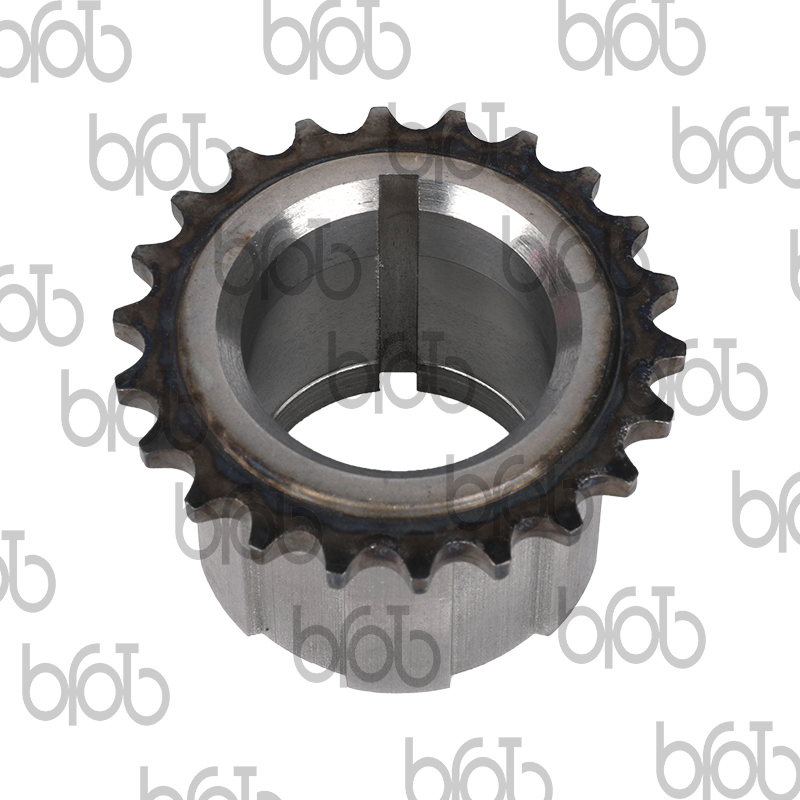
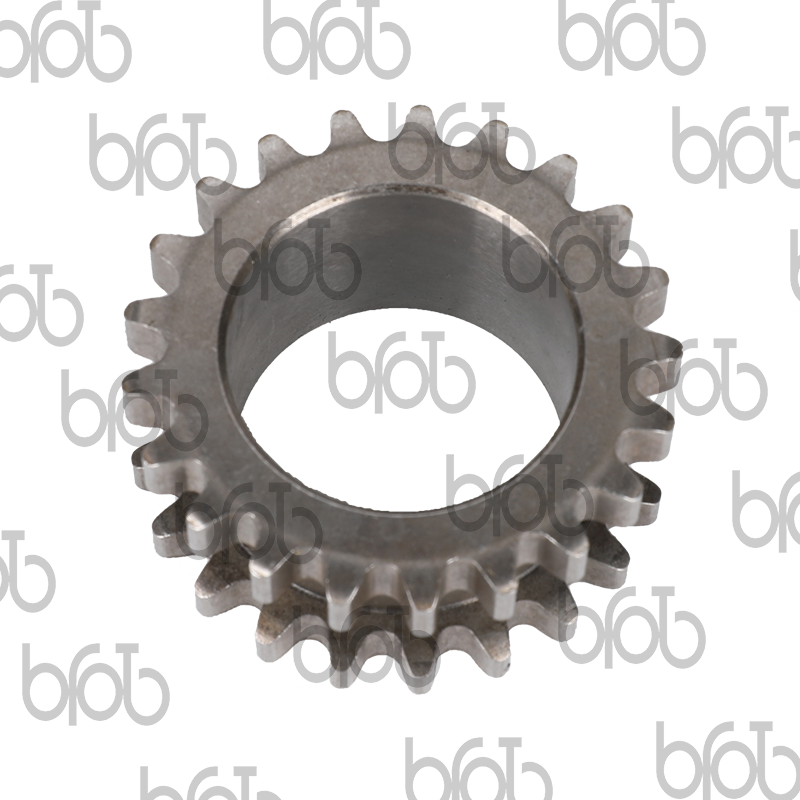
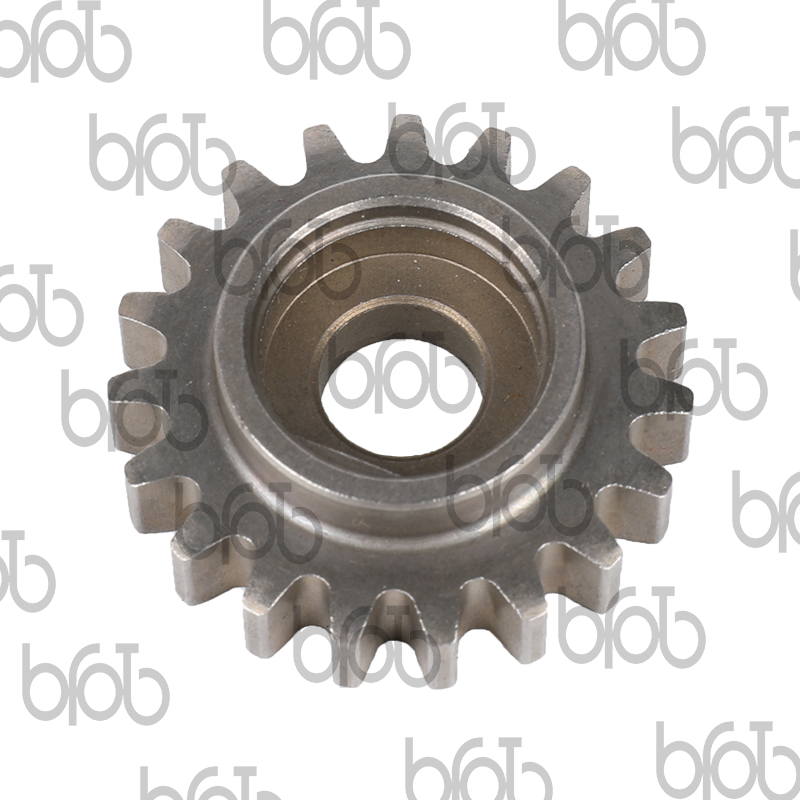
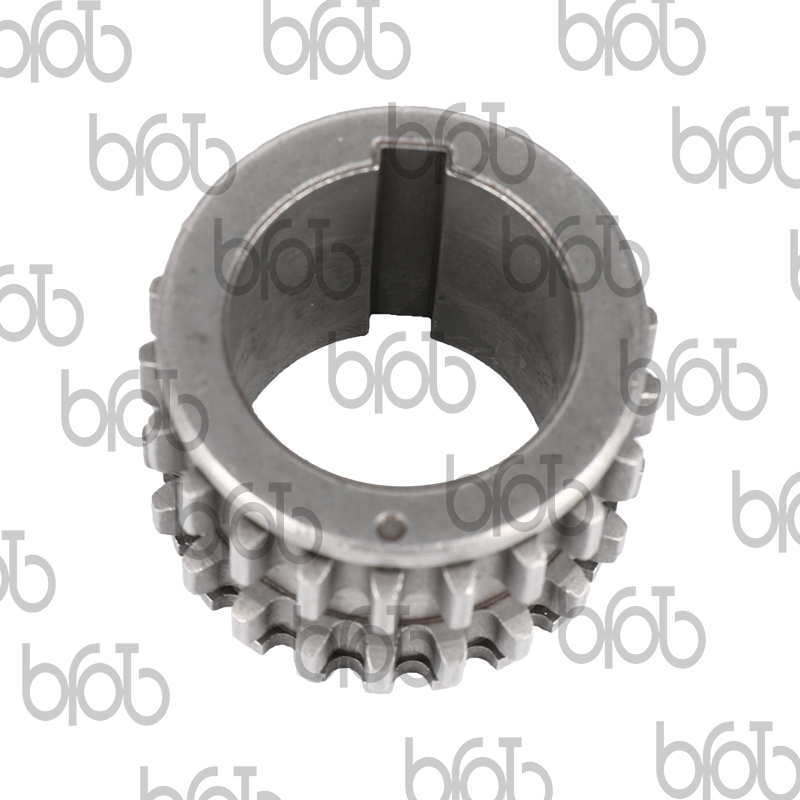
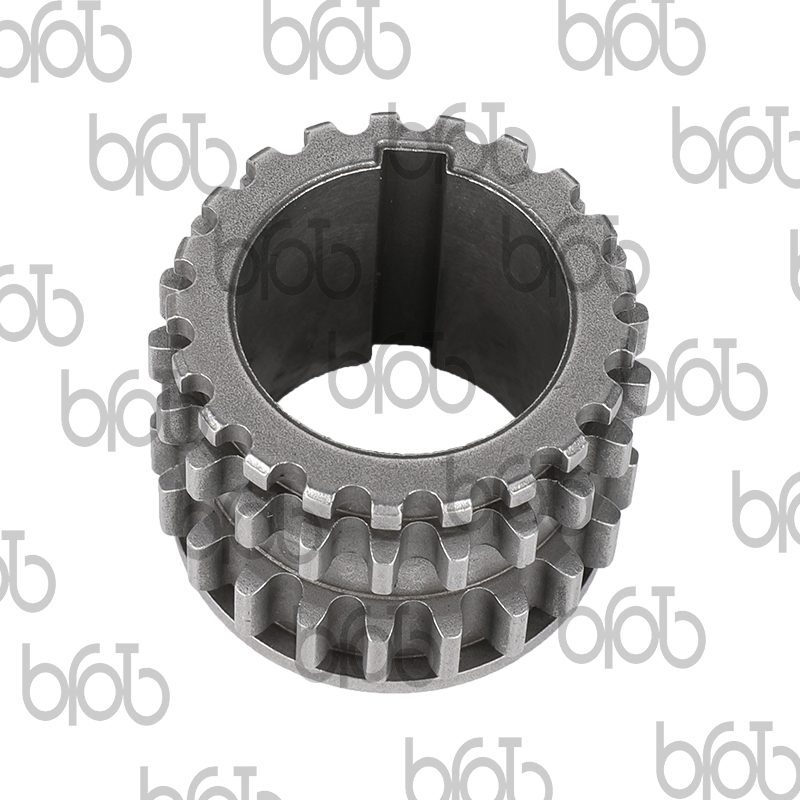
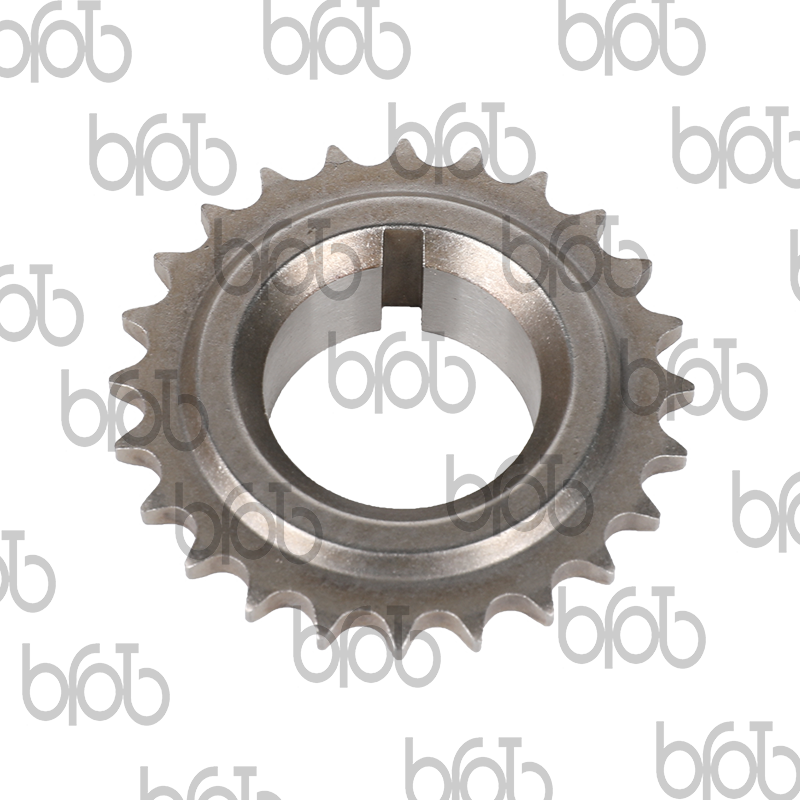
Buyers should ask the supplier for a hardening curve, not just the final hardness value. The case depth has to be measured below the tooth root, because that is where bending fatigue starts. A supplier that cannot show a microhardness profile is essentially asking you to trust the process. A concrete example is the Nissan HR16 engine timing crankshaft gear, a common replacement part where the bore tolerance, keyway position, and hardened tooth flank all need to be controlled at the same time.
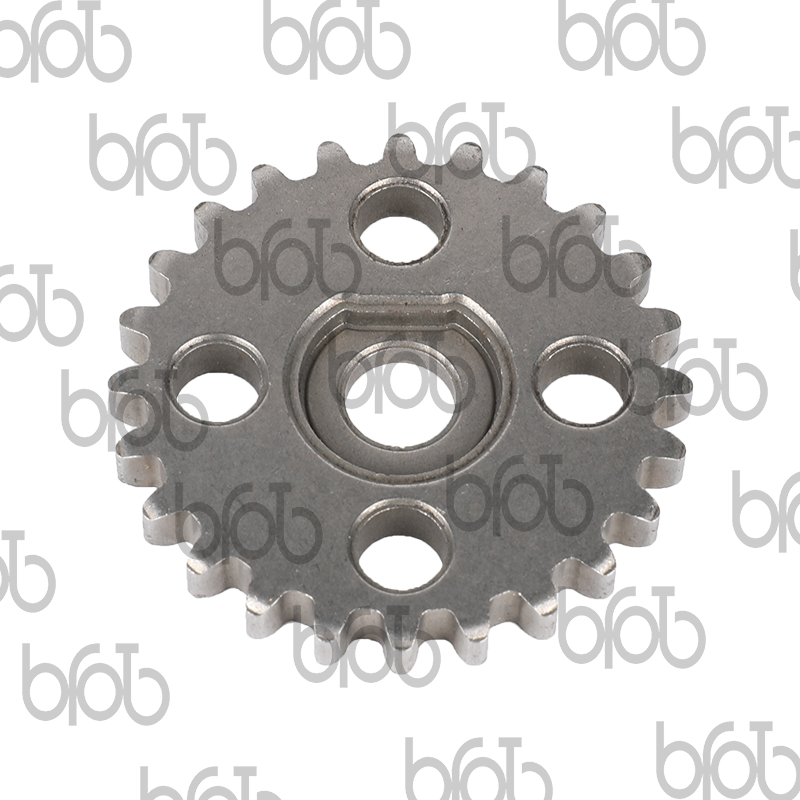
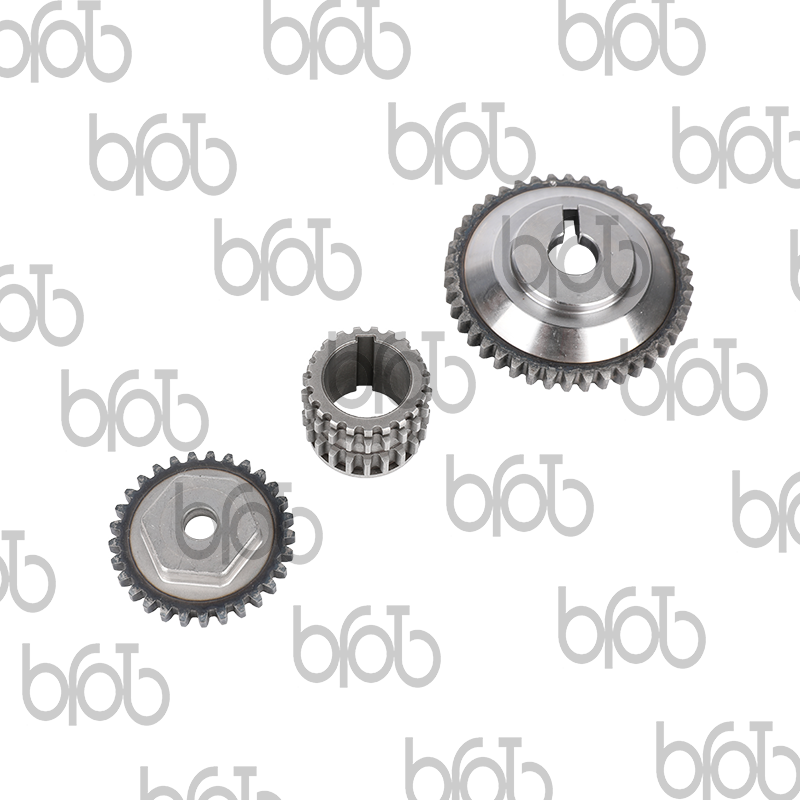 Wholesale automobile Nissan HR16 Engine Timing Crankshaft Gear Suppliers, ManufaJiaxing Befeite Chain Wheel Manufacturing Co., Ltd. is Wholesale automobile Nissan HR16 Engine Timing Crankshaft Gear Manufacturer, Compa...View Product →
Supplier Quality Systems: What Documentation Should Prove
A quality management system becomes meaningful only when it produces verifiable records. Look for registration to ISO 9001 as the baseline, and IATF 16949 when the supplier serves Tier 1 or OEM programs. But the certificate alone does not tell you whether the batch you receive has the same properties as the sample you approved.
Certifications and Batch Traceability
Traceability is the first thing we verify on a factory visit. Each batch should have a heat number for the incoming steel, a heat treatment cycle record, and a numeric inspection report from the final checking stage. If the supplier cannot map a batch number back to the original material certificate, treat the quality manual as decorative.
Also ask about non-conforming parts. A competent factory will show you the internal rejection rate and the corrective action records. Any supplier that claims a zero defect rate without data is not answering honestly.
Inspection Equipment and First Article Reports
The physical inspection equipment matters as much as the paper system. A gear measuring center is the minimum standard for measuring tooth profile, lead, and pitch deviations. For timing sprockets, a runout check fixture and a surface hardness tester are also necessary. Without these instruments, an inspector cannot generate the numbers on the certificate.
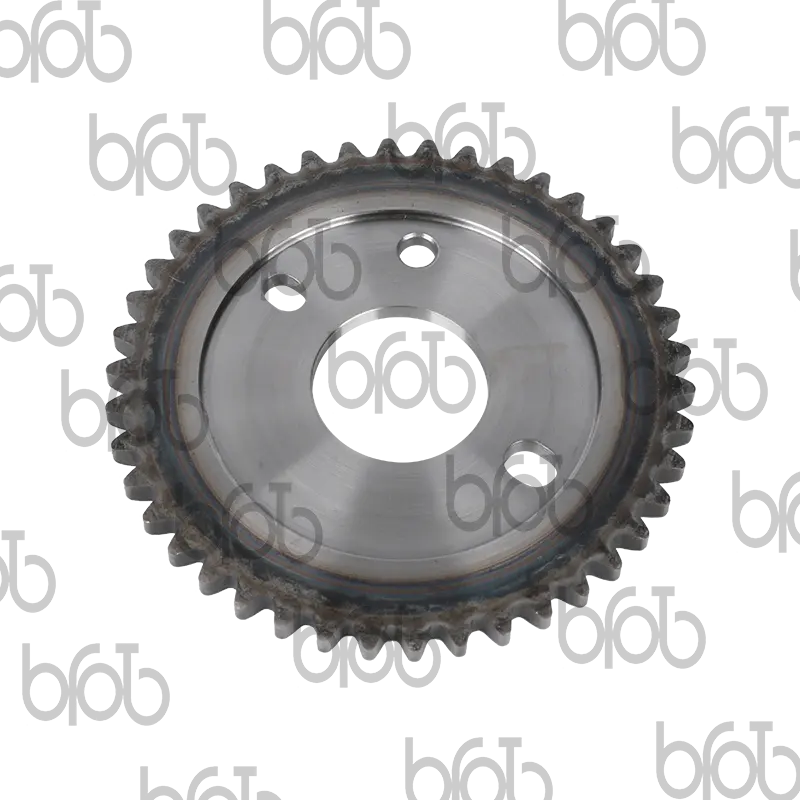
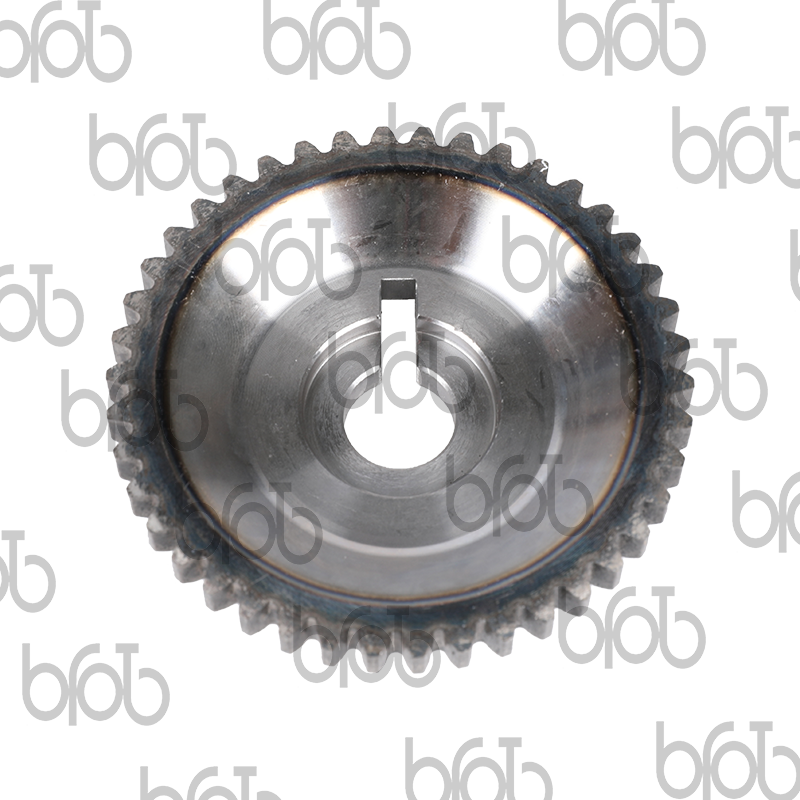
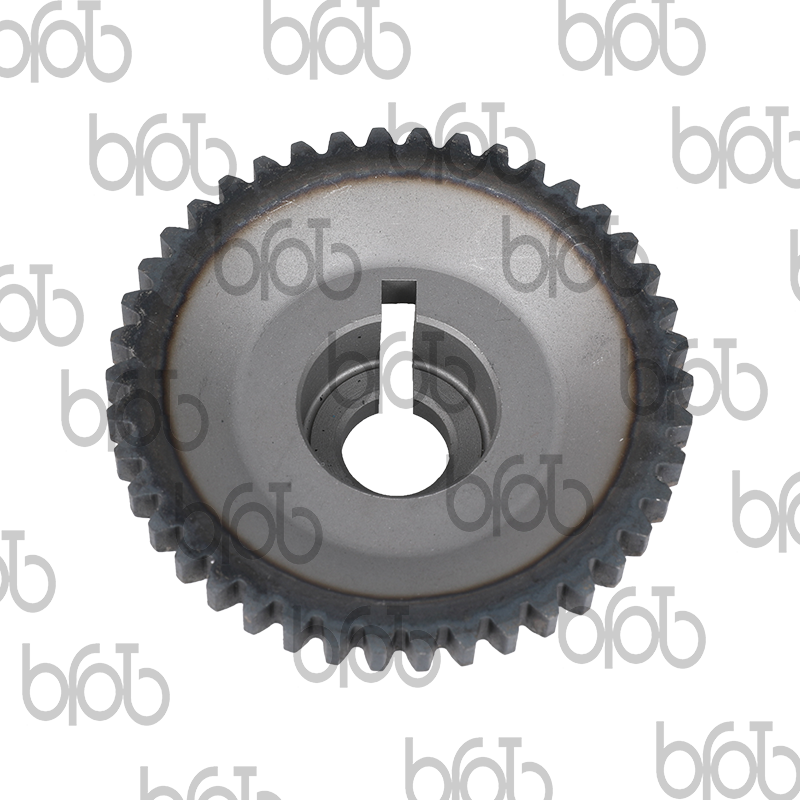
When you receive a first article report, check that it contains material grade, hardness, case depth, keyway dimensions, and pitch tolerance. The report should be produced from an actual measurement of the part you ordered, not copied from a generic template. A common part where this matters is the Nissan HR16 engine timing camshaft gear, because the keyway angle determines the cam phase position and must be controlled within a very narrow window.
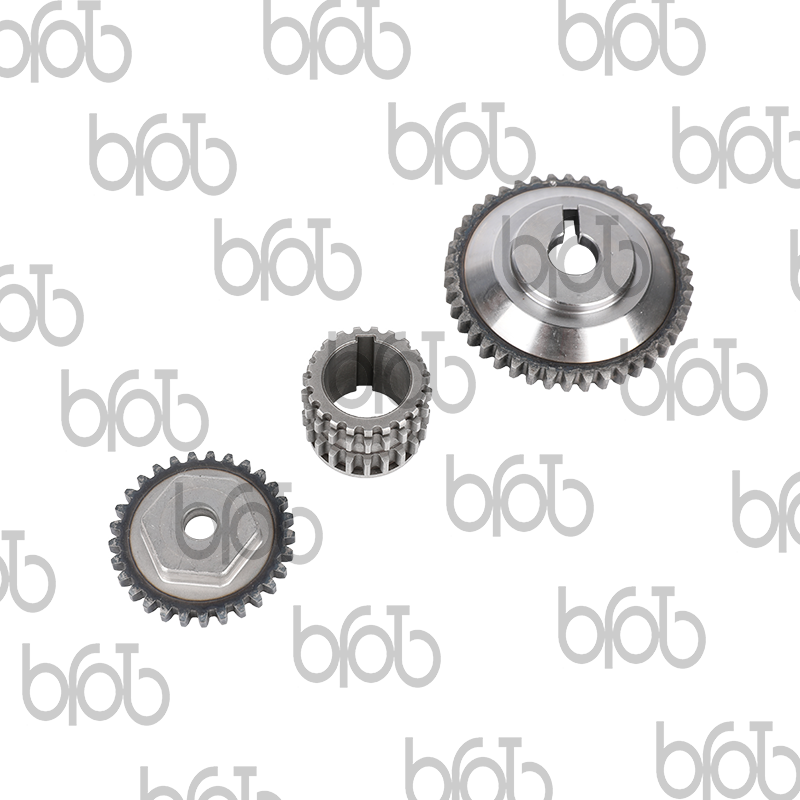 Wholesale automobile Nissan HR16 Engine Timing Camshaft Gear Suppliers, ManufactJiaxing Befeite Chain Wheel Manufacturing Co., Ltd. is Wholesale automobile Nissan HR16 Engine Timing Camshaft Gear Manufacturer, Company...View Product →
Custom Development and Aftermarket Consistency
Aftermarket parts differ from OEM parts in one crucial way: they must fit an engine that was designed by someone else. The supplier that never sees the vehicle still has to reproduce interface dimensions exactly, from the bore diameter to the tooth profile and the phaser mounting surface.
Drawing-Based Development and First Article Approval
A factory that can develop parts from drawings and samples is a different level of business from one that only copies an existing sprocket. Ask how they handle design responsibility, which dimensions they classify as special characteristics, and whether they provide a first article inspection before mass production. A clear answer usually follows PPAP logic: dimensional report, material certificate, process capability, and control plan.
Prototype speed matters in this business, but not at the cost of measurement. The most capable suppliers will quote a realistic development cycle and hold the sample until the dimensional report is complete.
Interchangeability Across Engine Platforms
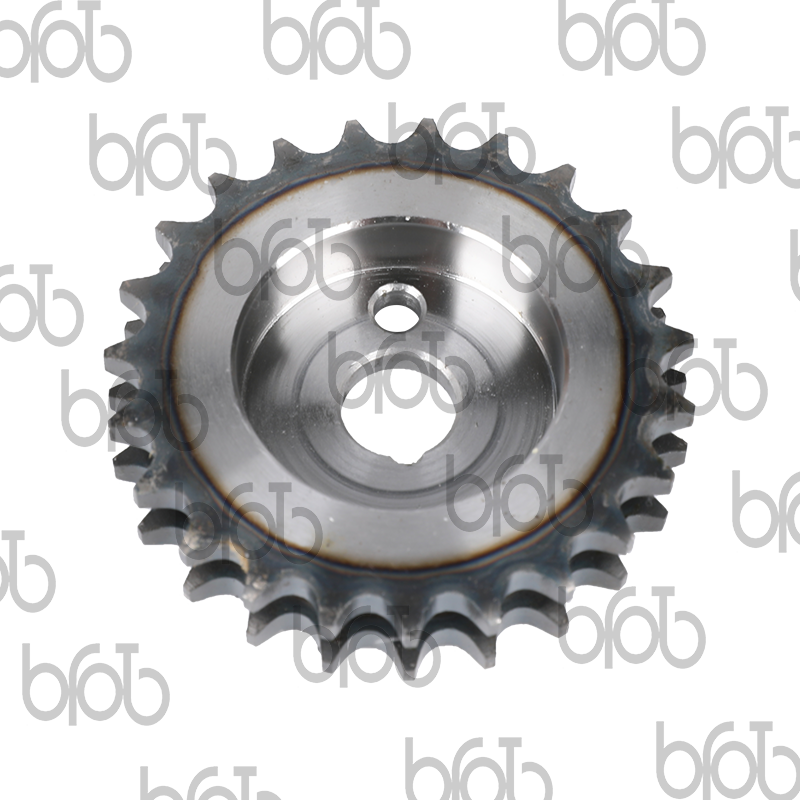
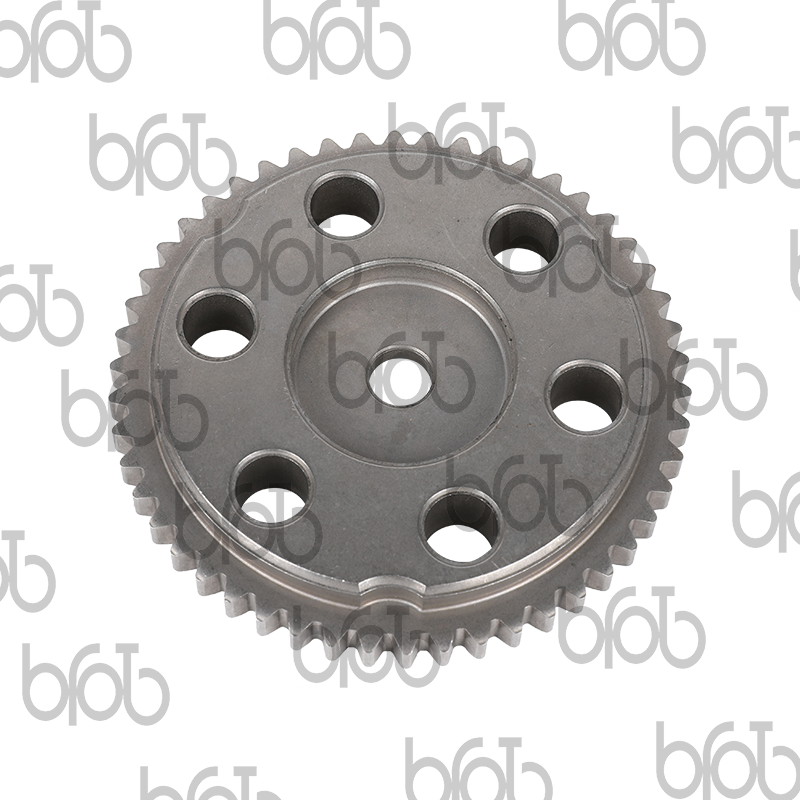
Interchangeability in the aftermarket means the replacement sprocket behaves exactly like the original in the same engine, with the same chain, oil pump, and phaser. Engine manufacturers often use the same basic sprocket family across multiple displacements and vehicle platforms. A supplier that maintains separate product ranges for those platforms reduces the chance of a wrong match. For example, the Chrysler Dodge engine timing camshaft sprockets line covers several engine generations within that group, and the dimensional verification for each application is handled separately.
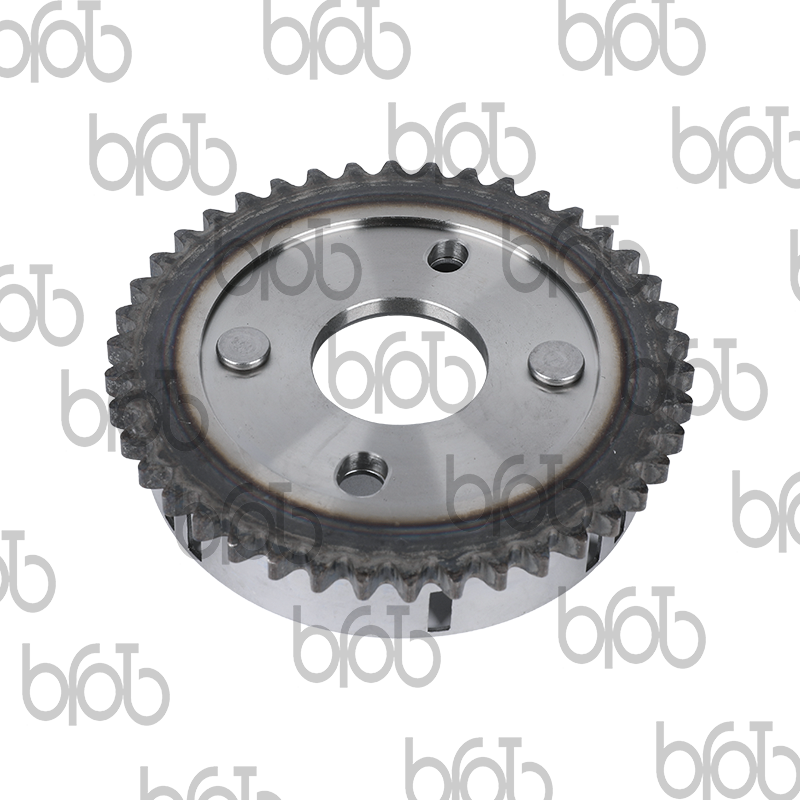 Wholesale automobile Chrysler, Dodge engine timing camshaft sprockets Suppliers,Jiaxing Befeite Chain Wheel Manufacturing Co., Ltd. is Wholesale automobile Chrysler, Dodge engine timing camshaft sprockets Manufacturer...View Product →
A Practical Supplier Audit Checklist
A simple checklist can save a week of investigation later. When auditing an engine timing sprocket supplier, at minimum confirm the following items and ask for written evidence for each.
- Gear quality grade: verify the ISO or DIN grade actually achieved on production parts, not just the grade stated on the drawing.
- Material certificates: confirm the steel grade and the heat number for every batch.
- Heat treatment data: request surface hardness, case depth, and hardening curve for the tooth root.
- Geometric inspection: check accumulated pitch deviation, radial runout, bore diameter, and keyway position from a gear measuring report.
- First article approval: confirm that the sample report includes dimensional, material, and hardness data, and that the supplier kept a copy.
- Non-conformance records: ask how many parts failed in the last 12 months and what corrective actions were taken.
There is no shortage of companies offering cheap timing sprockets. There is a much shorter list of suppliers that can show you a grade tolerance, a heat treatment curve, and a measuring report for the same part. When you choose the second kind, the engine timing system runs quiet, the warranty claims do not come back to you, and the relationship becomes a dependable supply chain instead of a gamble.