 English
 Español
 Deutsch
Suppose you have just removed the timing cover from a 1.8-liter Honda engine. In front of you is a toothed sprocket pressed onto the crankshaft nose, a flexible chain wrapped around it, and a second matching sprocket on the camshaft. Now picture a gear-driven commercial diesel engine: no chain at all, just toothed gears locked in direct mesh. Both arrangements keep the crankshaft and camshaft perfectly synchronized, but the parts are not interchangeable, and they are not the same component.
A timing sprocket is designed to drive a chain; a timing gear is designed to mesh with another gear. That single distinction changes how the part is shaped, how it wears, and how you should buy a replacement. This guide explains the difference in practical terms and gives you the checks to make before you order.
What Is an Engine Timing Sprocket?
An engine timing sprocket is a toothed wheel that engages a timing chain. The chain wraps around the sprocket and runs between the crankshaft sprocket and the camshaft sprocket, and usually on to the oil pump and balance shaft sprockets as well. The sprocket teeth never touch another toothed wheel. Instead, the chain links ride over the teeth and carry rotation along a flexible, continuous loop.
How a Chain-Driven Sprocket Transmits Power
The tooth profile and the tooth spacing, or the pitch, must match the chain exactly. If the chain pitch is 8 mm, the sprocket must be cut to the same pitch. Because the chain is flexible, a sprocket drive tolerates small variations in center distance and can drive several shafts from one chain. It also absorbs torsional pulses from the crankshaft, which is why chain-driven engines generally run quieter than gear-driven ones.
Where Timing Sprockets Are Used
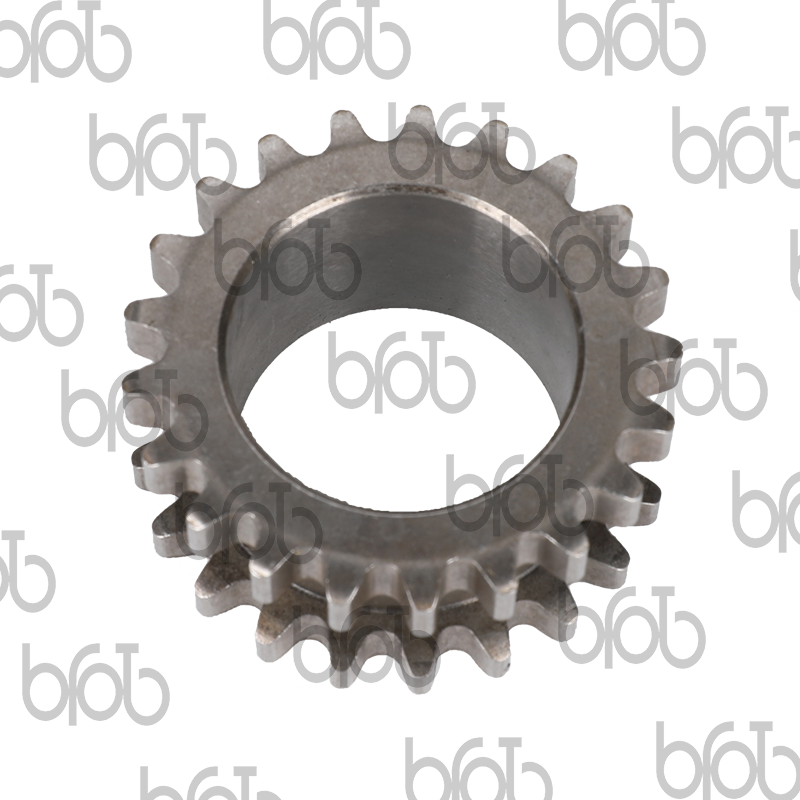
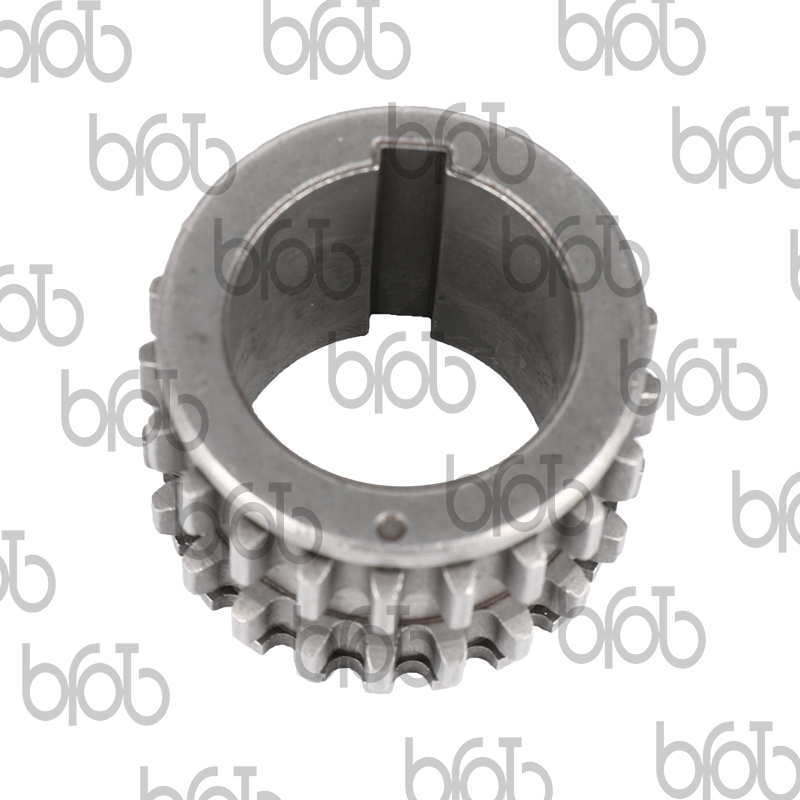
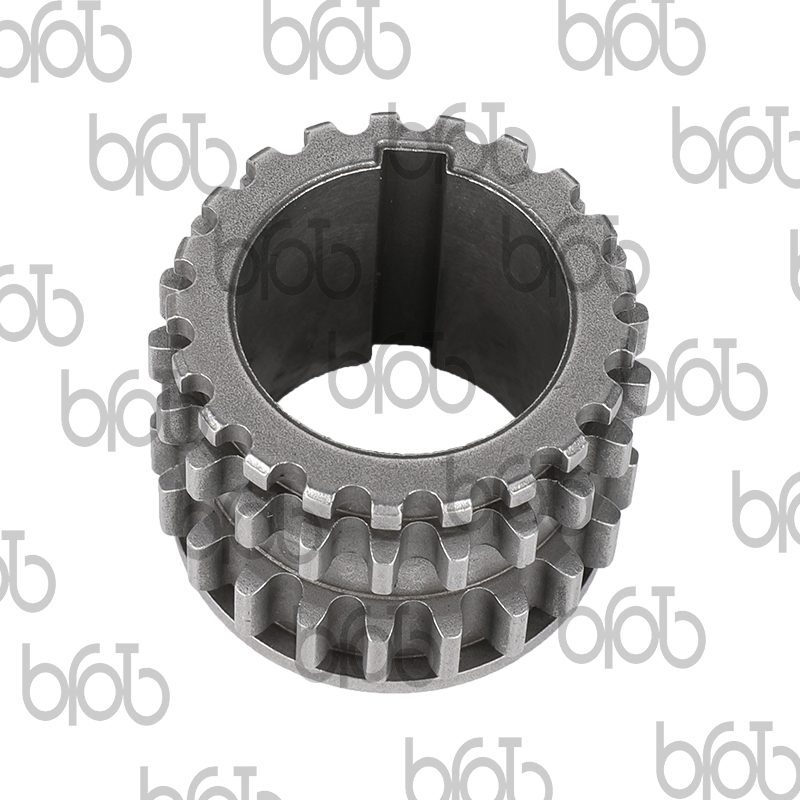
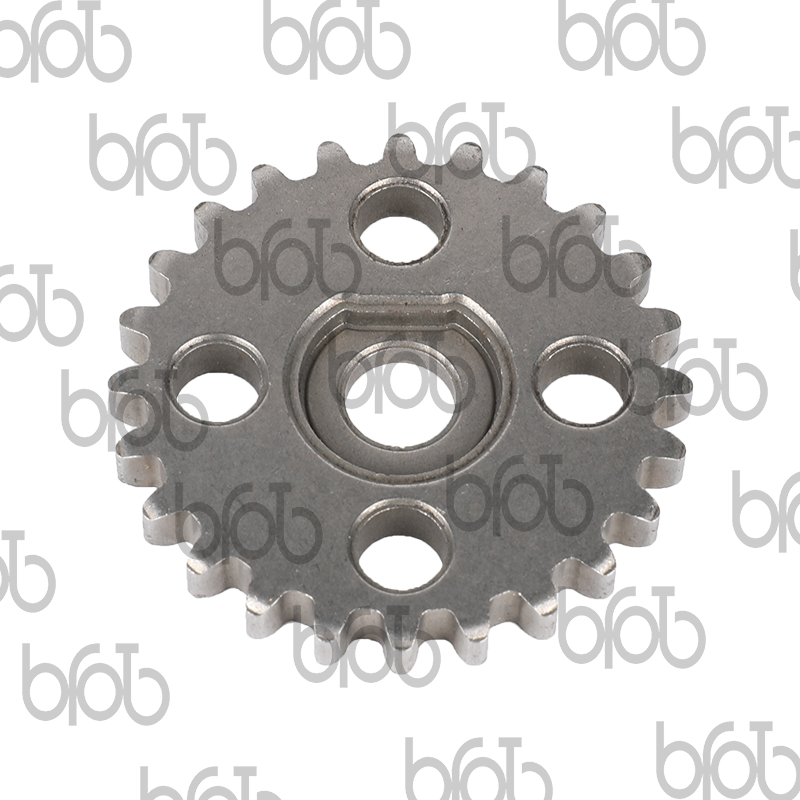
Most modern gasoline engines use chain-driven timing, so sprockets dominate the passenger-car market. They are found on both the crankshaft and the camshaft, in engines that range from compact four-cylinders to American V8s. A Chevrolet timing crankshaft sprocket, for instance, must match the original keyway position, tooth count, and chain pitch; any mismatch shows up as noise, misfire, or broken timing components. For a broader comparison of the two flexible drive options, see our timing chain vs timing belt guide.
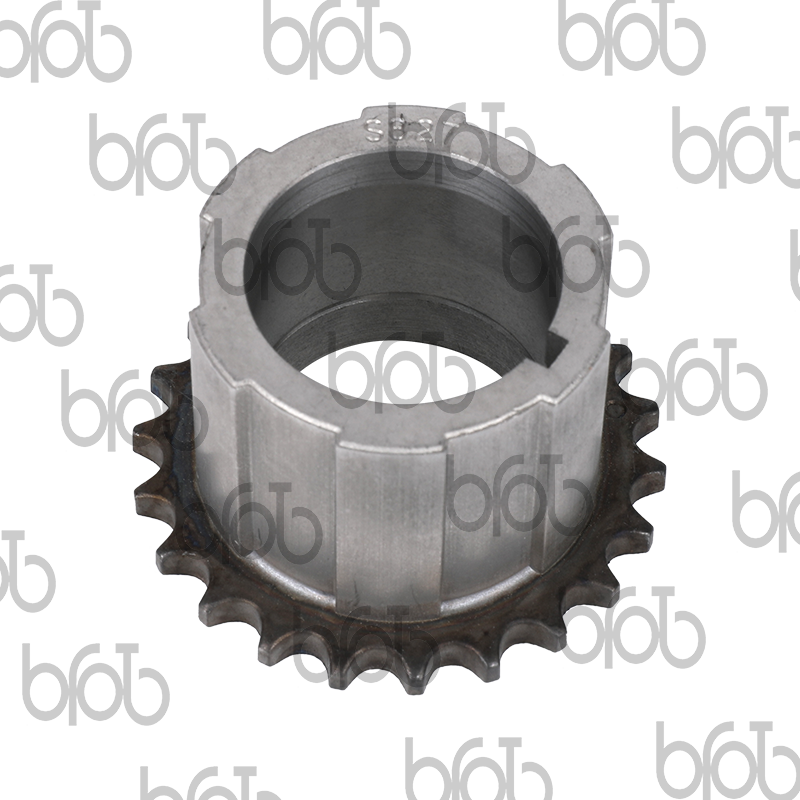 Wholesale automobile Chevrolet Timing Crankshaft Sprockets Suppliers, ManufacturJiaxing Befeite Chain Wheel Manufacturing Co., Ltd. is Wholesale automobile Chevrolet Timing Crankshaft Sprockets Manufacturer, Company a...View Product →
What Is an Engine Timing Gear?
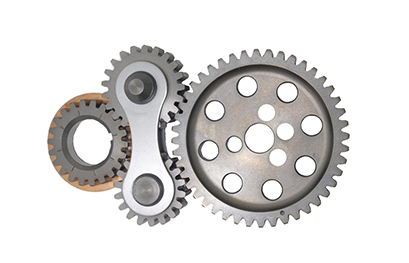
A timing gear, in the strict engineering sense, is a toothed wheel that meshes directly with another gear. There is no chain and no belt. The crankshaft gear rotates the camshaft gear, or a group of intermediate gears, tooth against tooth, through direct metal contact. Because the teeth physically interlock, the drive cannot stretch. The crankshaft and camshaft stay locked at a fixed ratio for as long as the teeth remain intact.
How Gear-to-Gear Timing Works
Gear drives require a precise center distance between the two shafts. If the centers sit too far apart, the teeth lose correct contact; if they sit too close, the gears bind. Manufacturers hold the crankshaft and camshaft bores at an exact spacing in the block, or use an idler gear to bridge the gap. Gear-driven timing appears in heavy-duty diesel engines, marine engines, and some performance and vintage engines, as well as in balance shaft and oil pump drives where positive synchronization is essential.
The Trade-Offs of a Gear Drive
Gear drives are extremely durable and maintain exact valve timing under heavy load. The price is noise and rigidity. Steel gears transmit vibration and harmonics directly through the engine block, because no flexible chain is there to absorb pulses. Gear drives also demand rigid housings and tight manufacturing tolerances. If a bearing wears and the shaft center distance changes, the mesh becomes noisy and the gears can fail quickly. Chain drives are far more forgiving of such mechanical shifts.
Timing Sprocket vs. Timing Gear: Side-by-Side Comparison
The differences between the two components are not theoretical. They influence performance, wear, and every replacement decision. The comparison below summarizes what matters in the workshop.
| Characteristic | Timing Sprocket | Timing Gear |
|---|---|---|
| Engagement element | Flexible timing chain | Another toothed gear |
| Torque transfer | Chain links drive over sprocket teeth | Direct metal-to-metal tooth contact |
| Clearance behavior | Chain slack controlled by tensioners and guides | Precise backlash between meshing teeth |
| Stretch over service life | Chain stretches; sprocket teeth wear gradually | No stretch; only tooth flank wear |
| Center distance tolerance | Moderate; chain absorbs small variations | Very tight; fixed by the engine block |
| Noise | Generally quieter | Can whine under load |
| Typical failure | Chain stretch, worn teeth, keyway damage | Tooth pitting, spalling, growing backlash |
| Replacement practice | Chain and sprockets replaced as a kit | Gears inspected as a matched set |
The practical takeaway is direct: if your engine runs a timing chain, it needs sprockets; if it runs gears in direct mesh, it needs timing gears. A sprocket and a gear are not substitutes for each other, even when they look similar and belong to the same engine family.
Why Timing "Gear" and Timing "Sprocket" Are Often Confused
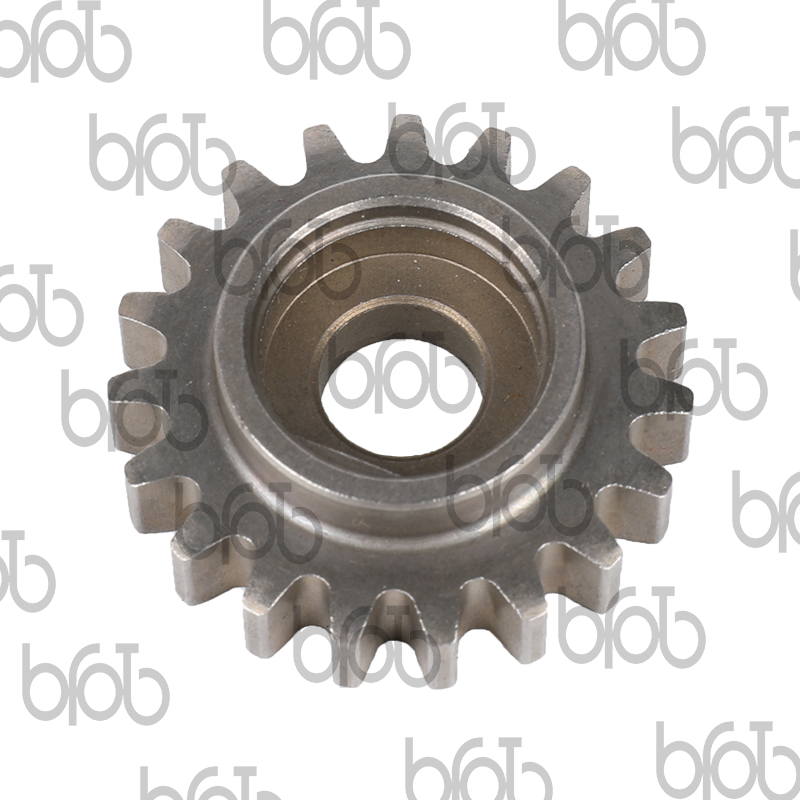
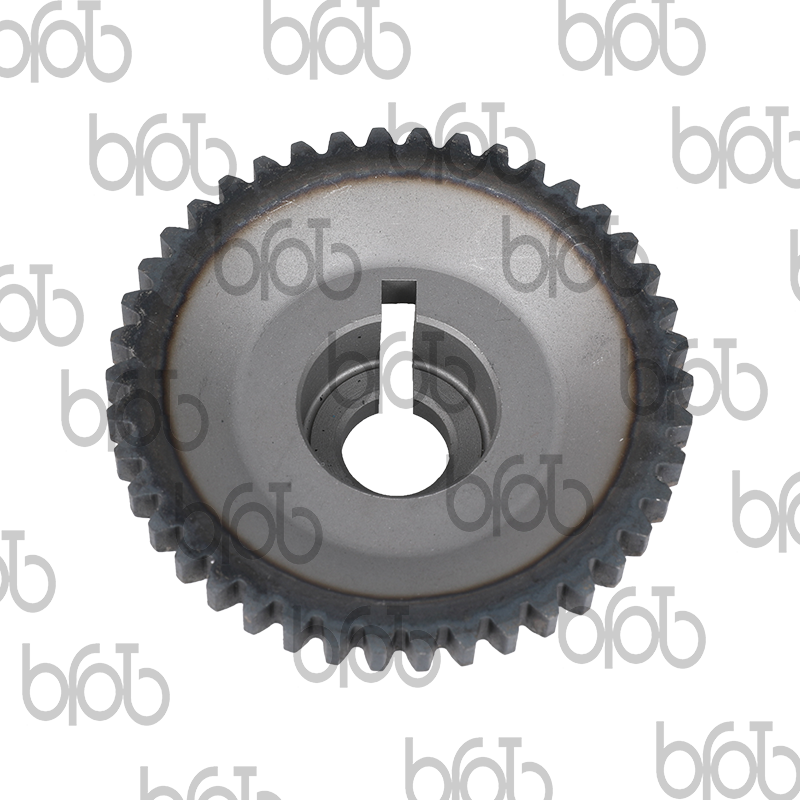
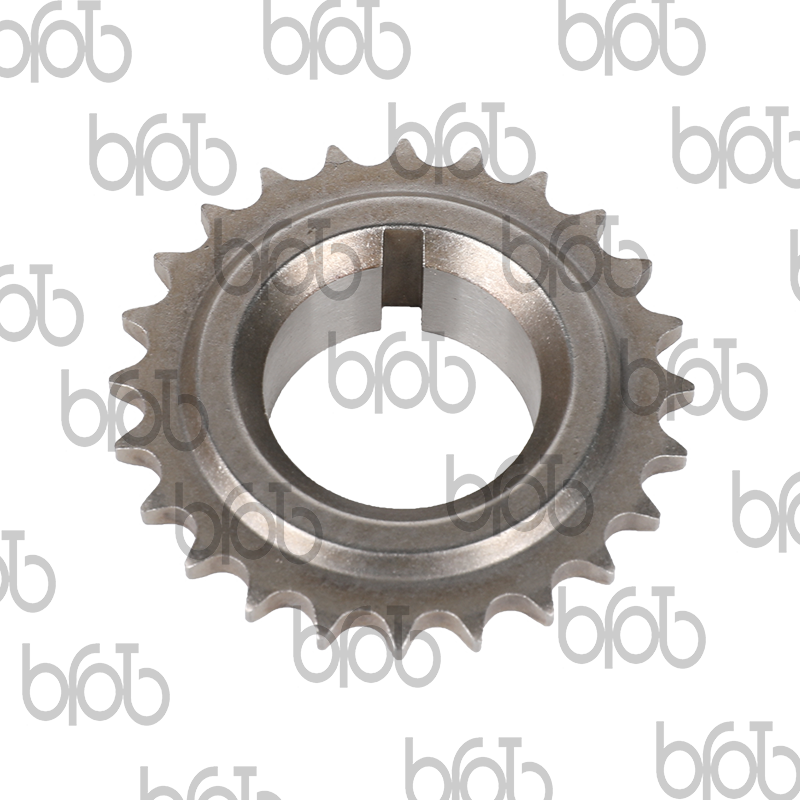
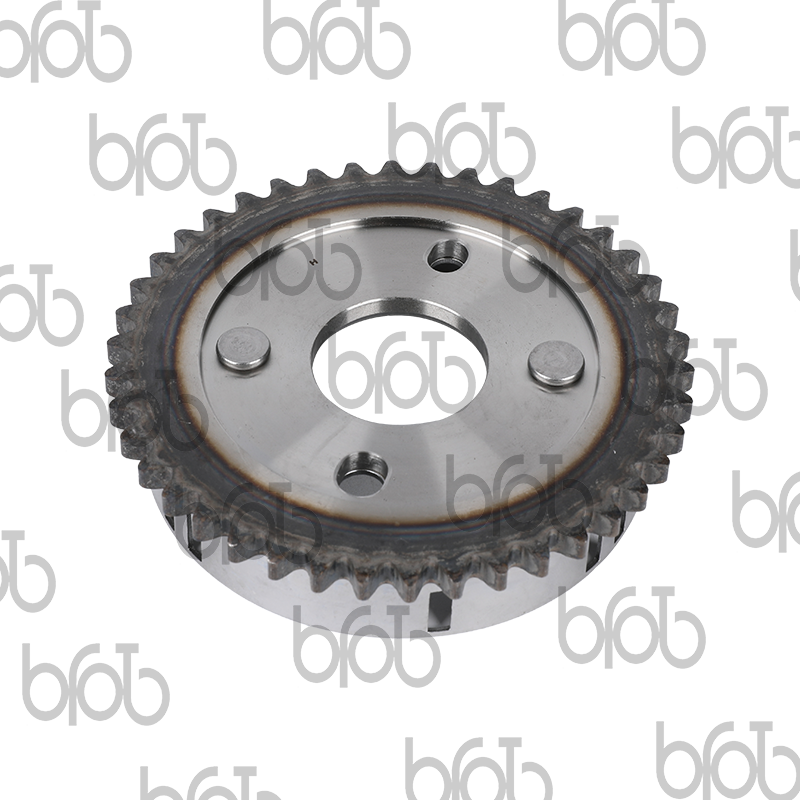
Despite the technical distinction, the two words are used loosely in the aftermarket. Many catalog listings call a chain-driven sprocket a "gear" simply because it is a toothed wheel. The Nissan HR16 engine is a classic example: its timing chain runs over a toothed crankshaft wheel, yet the same part can be found listed as a Nissan HR16 engine timing crankshaft gear. If you order by name alone, without verifying the drive type, you may receive a part designed for a different timing principle.
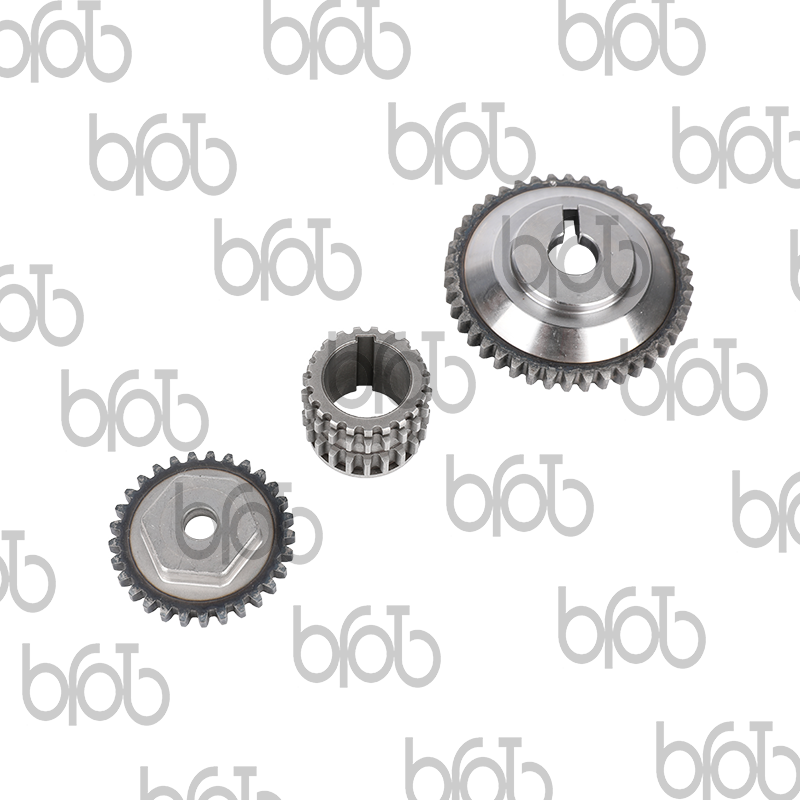 Wholesale automobile Nissan HR16 Engine Timing Crankshaft Gear Suppliers, ManufaJiaxing Befeite Chain Wheel Manufacturing Co., Ltd. is Wholesale automobile Nissan HR16 Engine Timing Crankshaft Gear Manufacturer, Compa...View Product →
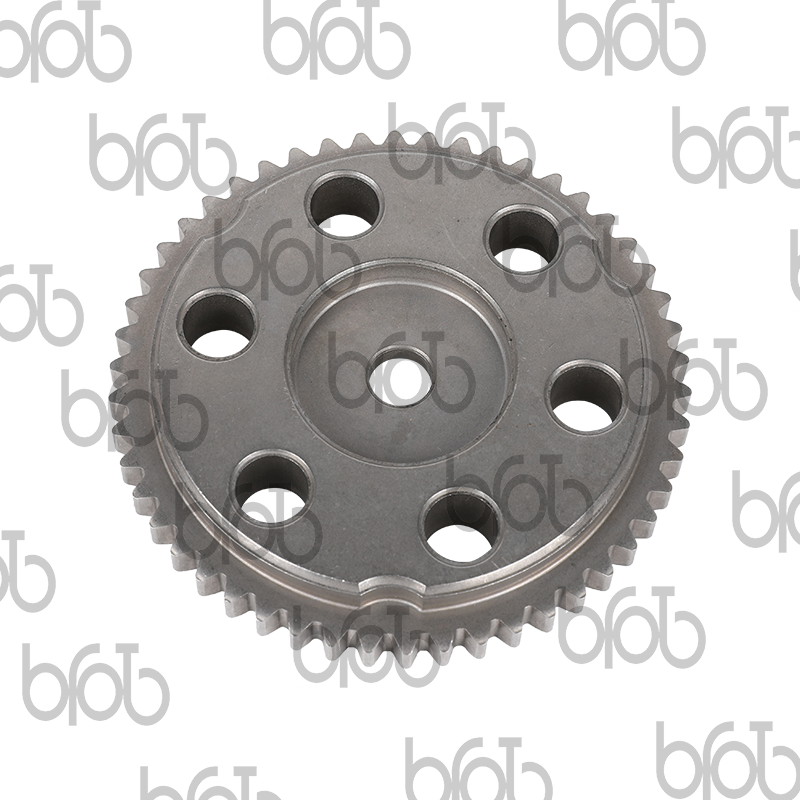
The same confusion appears inside chain-driven engines, where camshaft parts are sometimes called timing gears even though they are technically sprockets. What matters is not the label but three facts:
- Drive type: confirm whether the engine uses a chain or direct gear mesh.
- Pitch and tooth count: both must match the chain or the mating gear.
- Keyway position: the cut must line up with the required installation angle.
How to Choose the Right Timing Component
Confirm the Drive System First
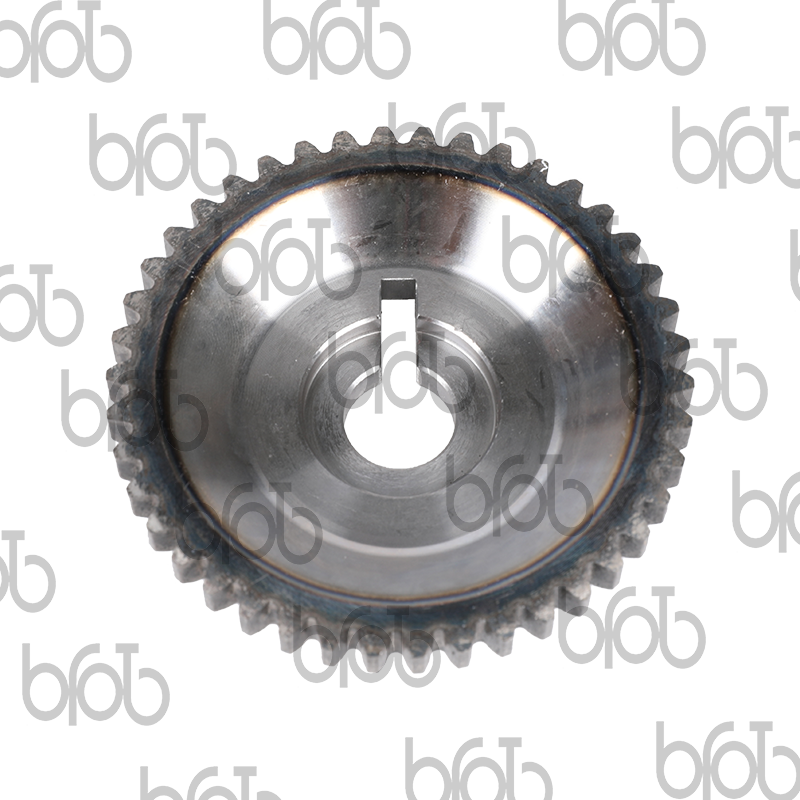
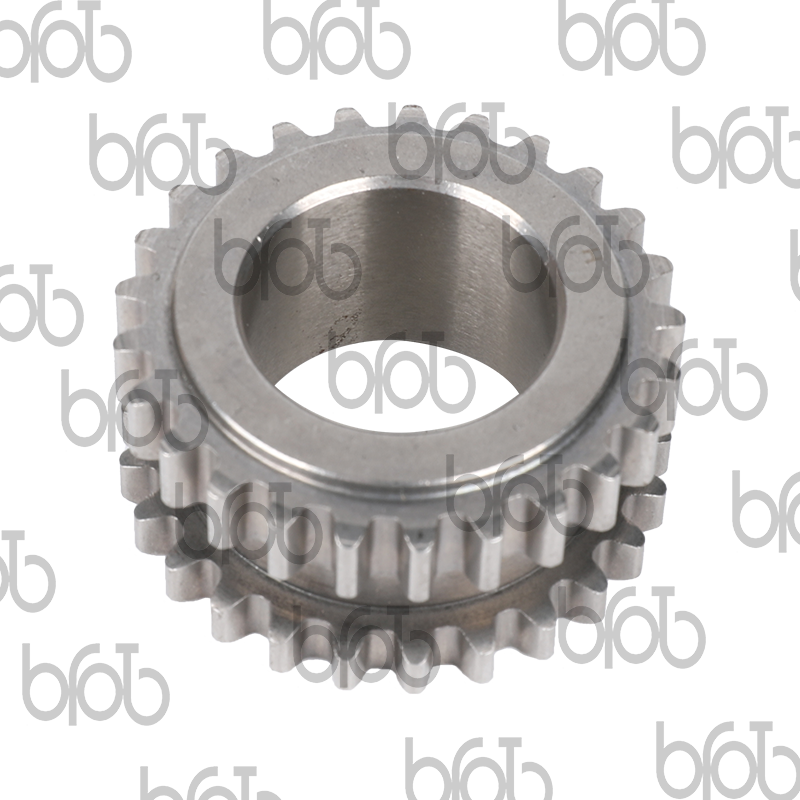
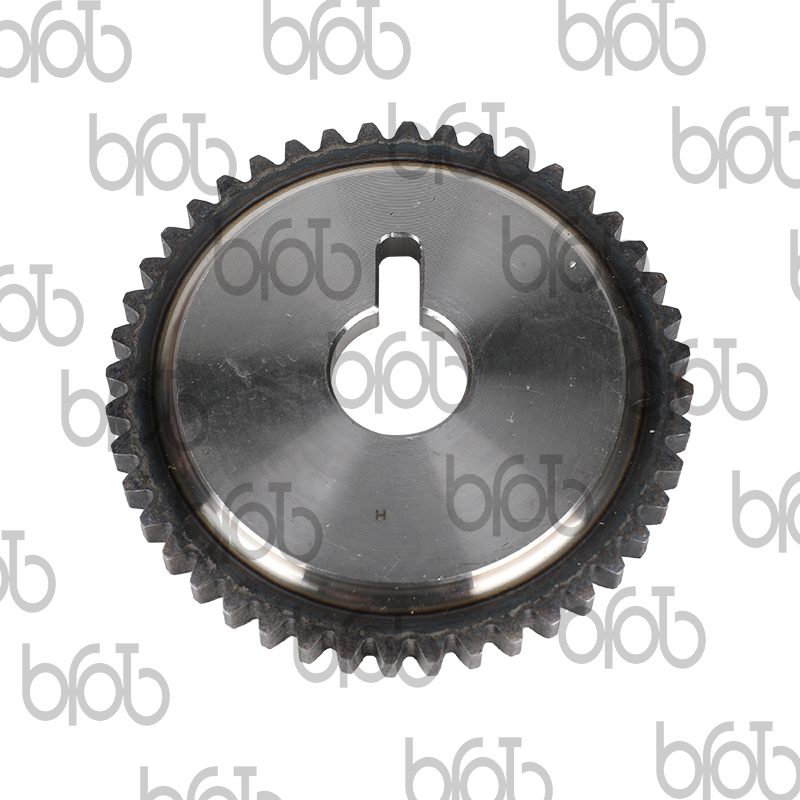
Start with the engine code, not the vehicle model. The same model can use different timing systems depending on the market and production year. Count the teeth on the original part, measure the pitch, and check whether the original was driven by a chain or by another gear. On European chain-driven platforms, for example, a BMW Mini Peugeot engine timing crankshaft sprocket has to match the original tooth profile, bore diameter, and keyway orientation. Any deviation changes valve timing and can lead to contact between valves and pistons.
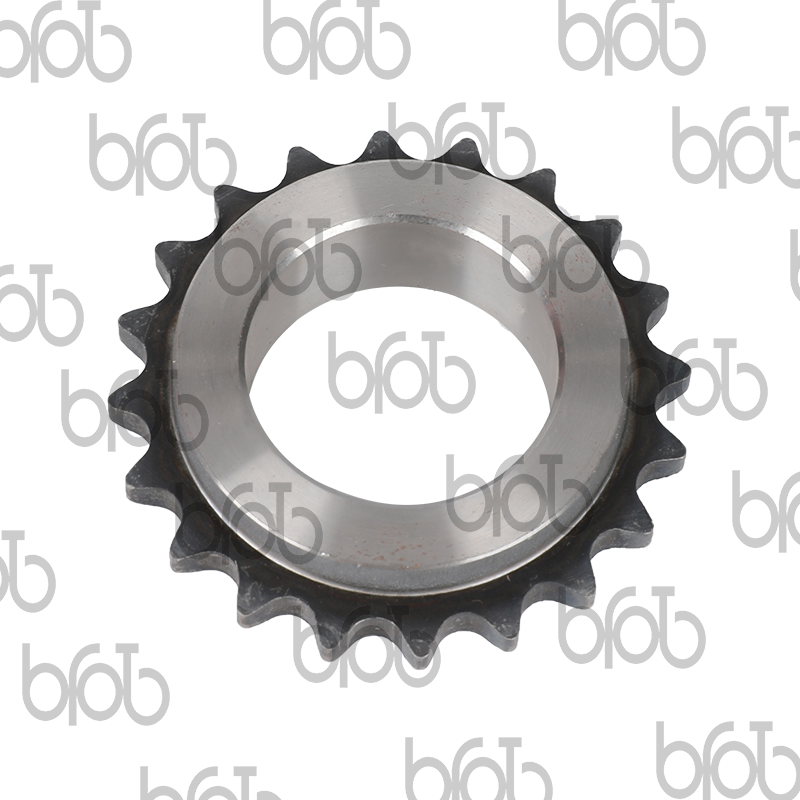 Wholesale automobile BMW mini, Peugeot engine timing crankshaft sprocket SupplieJiaxing Befeite Chain Wheel Manufacturing Co., Ltd. is Wholesale automobile BMW mini, Peugeot engine timing crankshaft sprocket Manufactu...View Product →
Materials, Heat Treatment, and Quality Control
Appearances deceive in timing parts. A sprocket and a gear can look nearly identical until you compare materials and hardness. Sintered powder-metal components serve many chain-driven applications, while forged or machined alloy steel is used where tooth strength and fatigue life are critical. The heat treatment profile decides whether the teeth resist wear or crack under load. Our article on steel versus powder metal timing gear materials explains those trade-offs in detail.
Manufacturing accuracy is just as important as the raw material. A few microns of error in tooth spacing, or a keyway cut at the wrong angle, translates into noise, accelerated wear, and inaccurate valve timing. Responsible suppliers measure tooth profile, test hardness, and verify bore concentricity on every batch. This manufacturing accuracy and quality control for timing gears is what separates a component that lasts for the life of the engine from one that fails within a year.
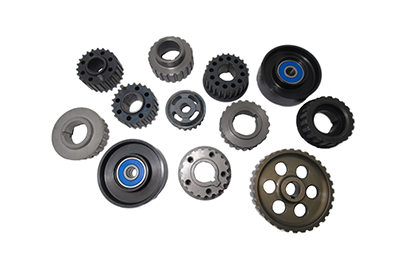
Because the requirement is always application-specific, many workshops prefer a manufacturer that can produce both sprockets and gears to the original specification, or even to a customer drawing or sample. That flexibility matters most for less common engines and non-standard replacement work.
The difference between an engine timing sprocket and a timing gear is not cosmetic. It comes down to the physical principle of the timing system: a chain drive needs sprockets, and a gear drive needs gears. When you confirm the drive type, check the pitch, tooth count, and keyway, and buy from a supplier with real manufacturing control, you avoid the most common, and most expensive, mistake in timing system repair.