 English
 Español
 Deutsch
Article Directory
- 1 What Supporting OEM and Replacement Actually Means
- 2 Manufacturing Consistency: Materials, Heat Treatment, and Machining
- 3 Engine-Specific Coverage Across American, Asian, and European Platforms
- 4 Custom Development for OEM Projects and Specialized Replacements
- 5 What Buyers Should Verify Before Placing an Order
A distributor in Rotterdam opens a crate of timing kits and runs a feeler gauge across the camshaft sprocket keyway. The width matches the original part to within 0.02 mm. That ten-second check tells them more than any catalog page: the supplier understands what a replacement sprocket has to survive. How automotive engine sprocket manufacturers support OEM and replacement applications is written into that small clearance — the same tooth geometry, keyway logic, and heat-treatment control applied to both channels, with only the batch size, packaging, and paperwork changing. Get that balance right, and distributors get parts that drop on without coaxing. Get it wrong, and the comebacks arrive faster than the invoices.
What Supporting OEM and Replacement Actually Means
OEM application does not always mean a car factory assembly line. It often means supplying the same sprocket, to the same drawing, for a tier-one engine builder or for a distributor who serves the OE service channel. Replacement application means covering the installed base: engines still on the road whose original parts have worn, sheared, or lost their timing relationship. The two channels share one technical demand: the part must reproduce the original design intent.
The difference shows up in how quality parameters are measured. In OEM work, a drawing controls every feature, and the supplier reports within a PPAP-style discipline. In replacement work, the same parameters still decide whether the part survives — especially keyway width, bore tolerance, tooth profile, and surface hardness. None of these are optional on the aftermarket side, because an aftermarket sprocket does not get the benefit of factory verification on the same assembly line.
Keyway fit is the classic example. An aftermarket camshaft sprocket with a loose keyway develops backlash that hammers the locating key and elongates the slot; an undersized keyway forces installation and creates stress risers around the bore. That is why published guidance on aftermarket sprocket keyway precision and torque is worth studying before a buyer commits to a vendor.
Manufacturing Consistency: Materials, Heat Treatment, and Machining
Manufacturers that serve both OEM and replacement lines tend to build sprockets the same way. Blanks are cut from alloy steel, teeth are generated by hobbing or shaped to profile, and keyways are broached or wire-cut. Then comes heat treatment. For timing sprockets, surface hardness is often targeted in the 50–60 HRC range, with case depth matched to the loads a chain or gear drive transmits. Induction hardening offers a localized case without distorting the rest of the blank; carburizing or carbonitriding suits complex tooth forms that need a uniform case across the flank.
Heat treatment is also where the relationship between bore and keyway can quietly go wrong. If distortion moves the keyway relative to the pitch diameter, the part still measures within print on the bench and still runs rough on the crank. A supplier with real OEM discipline either machines the critical features after hardening or holds compensation allowances during blank preparation. The same discipline produces the batch traceability that replacement buyers rarely ask for — until a field problem appears. Then the ability to trace a heat number to a production week matters more than the original discount.
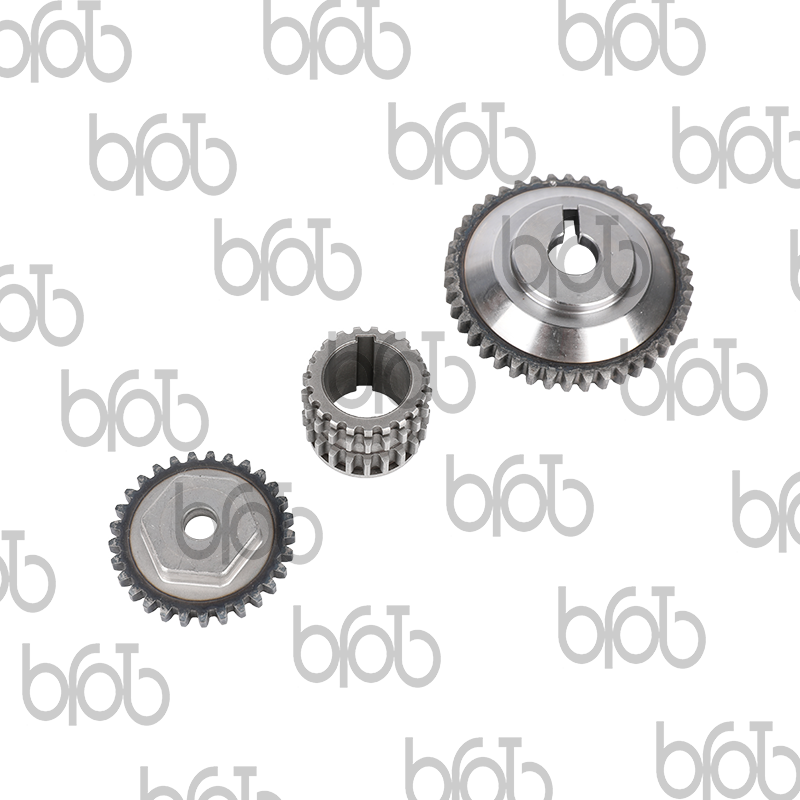
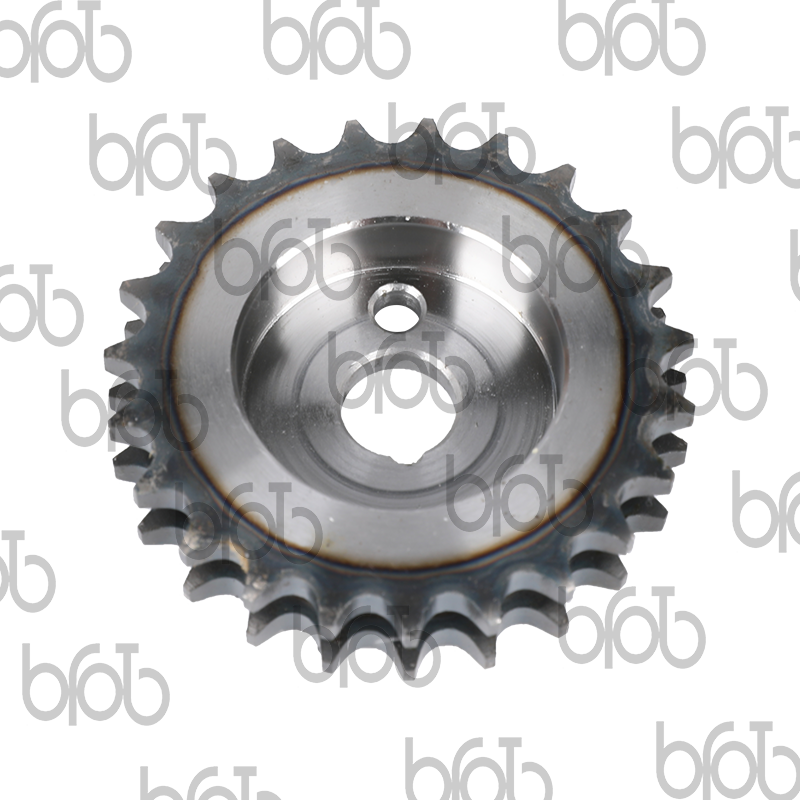
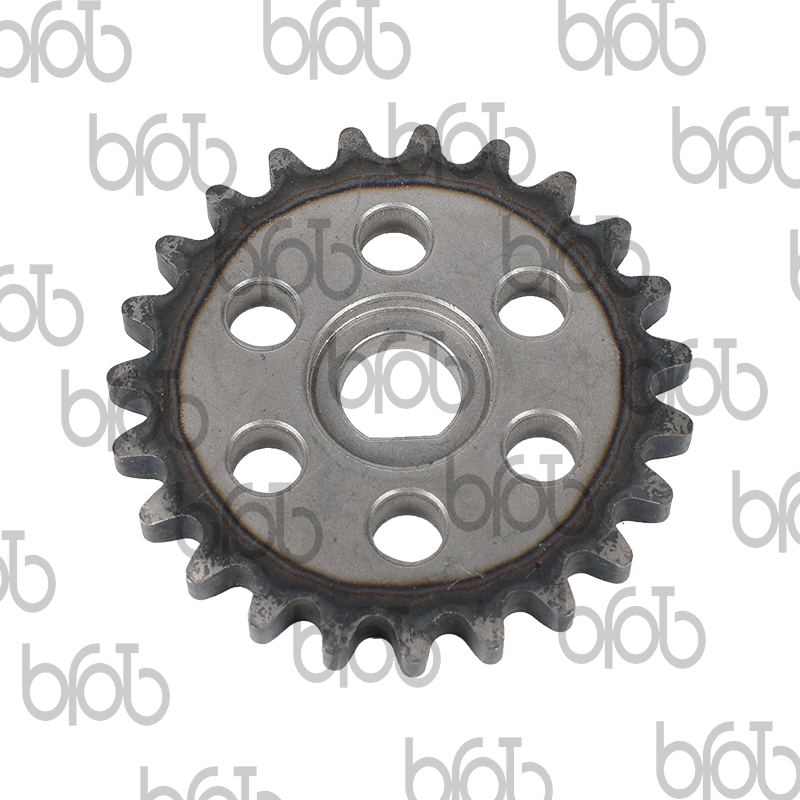
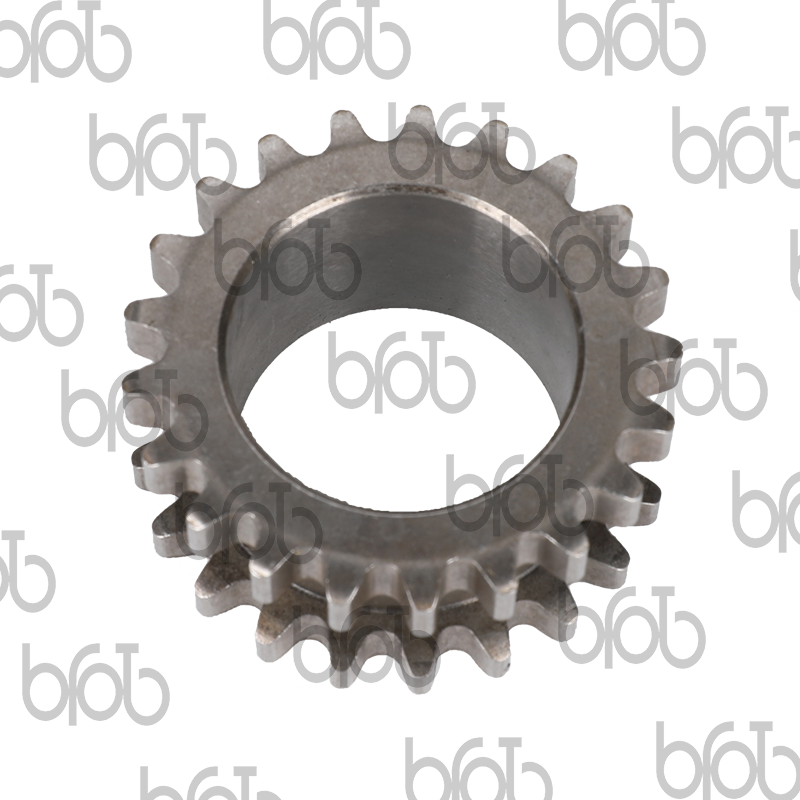
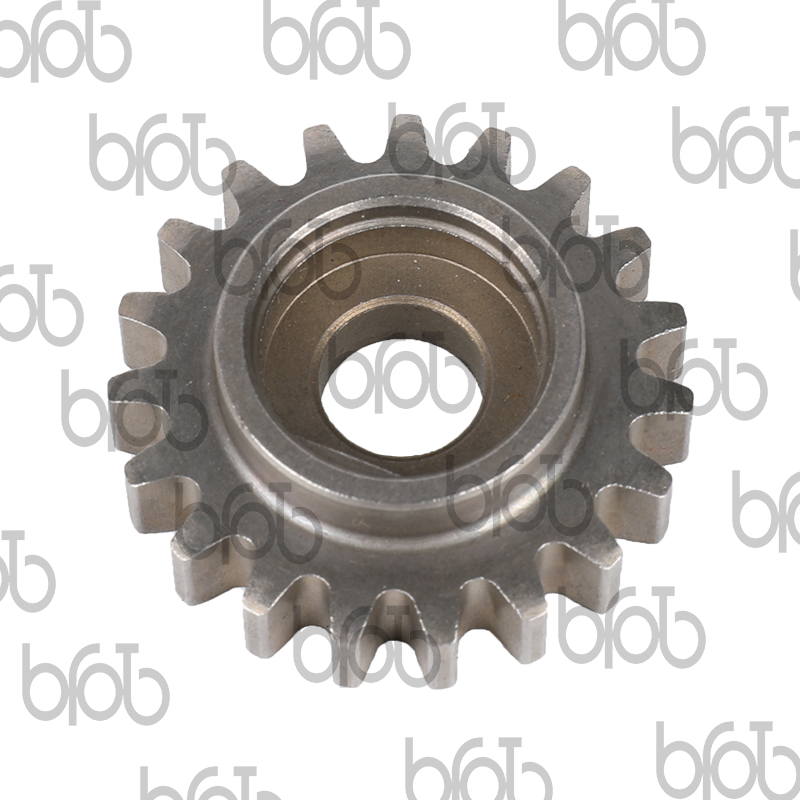
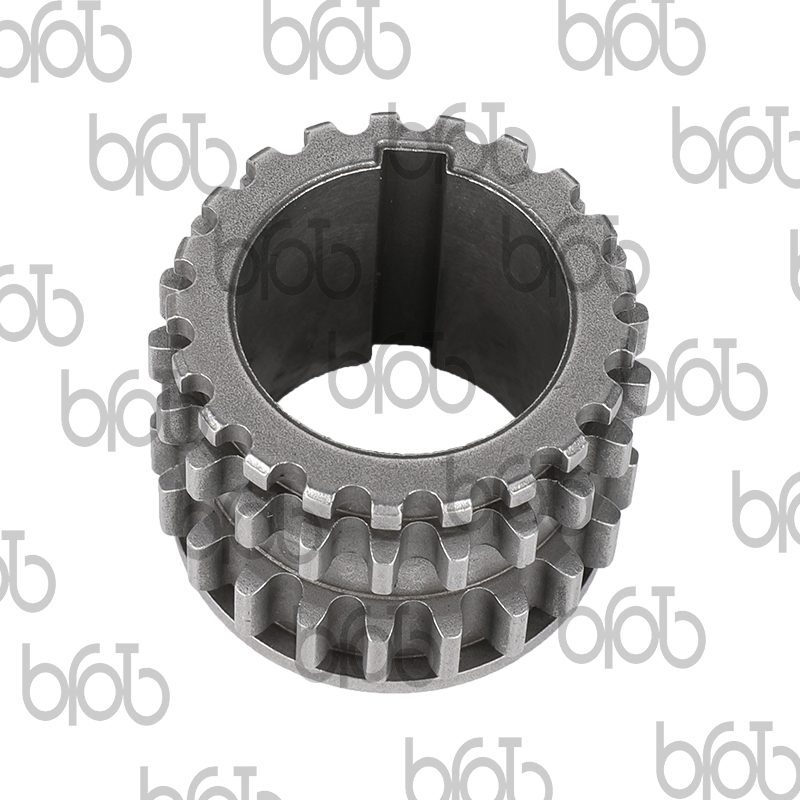
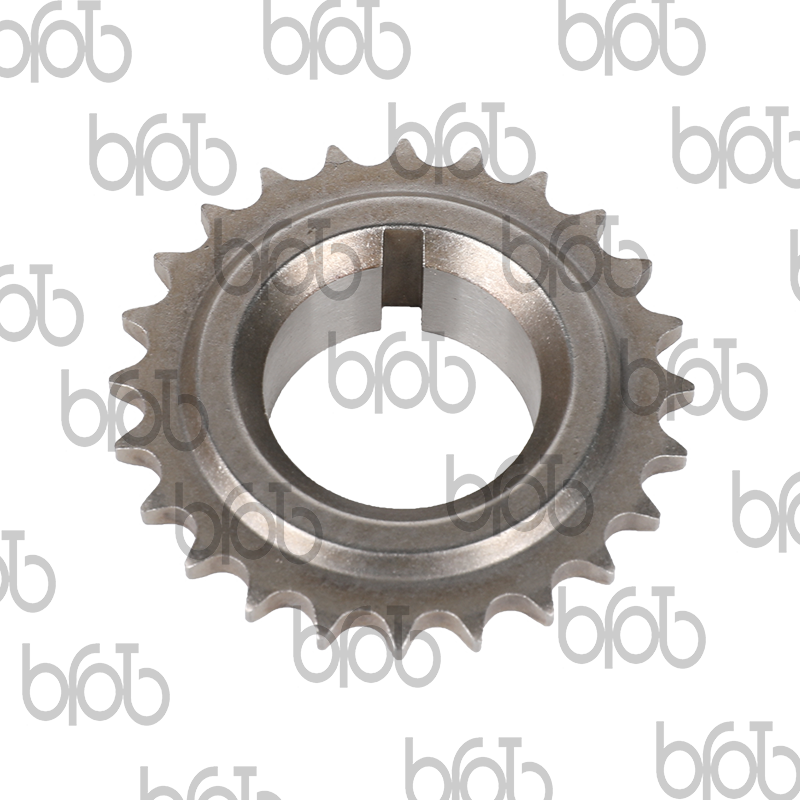
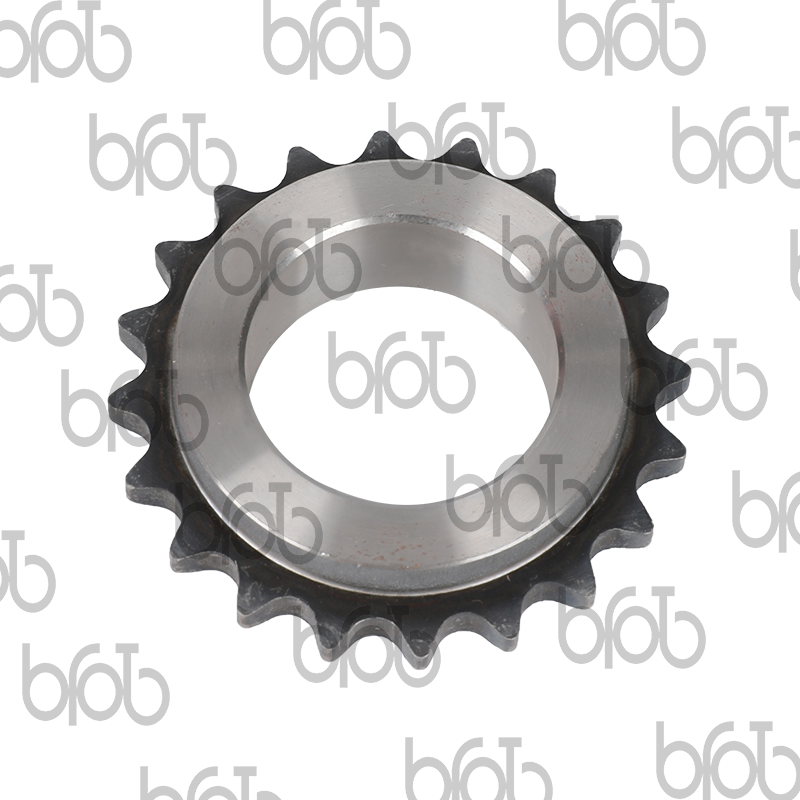
One example of this approach is a Toyota timing crankshaft sprocket that mirrors the OE part number format (13521-75010) and its original fit specifications, giving replacement buyers a direct cross-reference rather than a universal-fit guess.
 Toyota Engine Timing Crankshaft Sprocket 13521-75010This genuine-style crankshaft sprocket matches the OE number 13521-75010, offering direct cross-reference for Toyota replacement buyers. Its alloy steel construction and precise machining ensure reliable valve timing without guessing fitment.View Product →
Engine-Specific Coverage Across American, Asian, and European Platforms
A manufacturer can call itself a sprocket maker after producing a dozen generic sizes. It becomes a partner for OEM and replacement work the day its catalog is organized around engines — not just diameters. The practical difference is speed. When a buyer in Miami needs a Ford/Lincoln engine oil pump sprocket, and a workshop in Munich needs a Volkswagen EA888 crankshaft gear, the supplier should be able to pull up tooling, inspection fixtures, and historical production data for both without treating either as a new project. The product range below shows what engine-specific coverage looks like in practice:
| Vehicle Group | Representative Engine Platforms | Typical Sprocket Parts |
|---|---|---|
| American | Chevrolet/Pontiac V8, Ford/Lincoln V8, Chrysler/Dodge, Jeep, Land Rover 5.0 | Camshaft sprockets, crankshaft sprockets, oil pump sprockets, fuel pump gears |
| Asian | Honda 1.8/2.0, Nissan HR15/HR16, Toyota/Lexus, Mitsubishi 4B12, Mazda/Ford shared, Hyundai/Kia, Chery 4G15 | Timing camshaft and crankshaft gears, oil pump gears, balance shaft gears, idle gears |
| European / Russian | BMW/Mini/Peugeot shared, VW EA888, VW Touareg 3.2T / Audi Q7 3.6T, Fiat, Lada | Camshaft gears, crankshaft gears, single-row chain wheels |
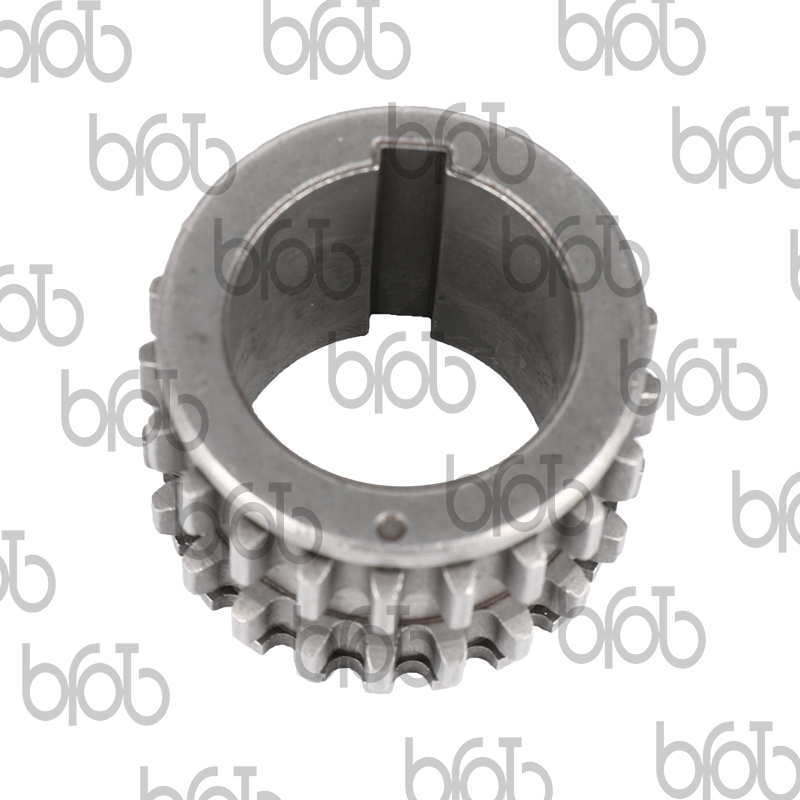
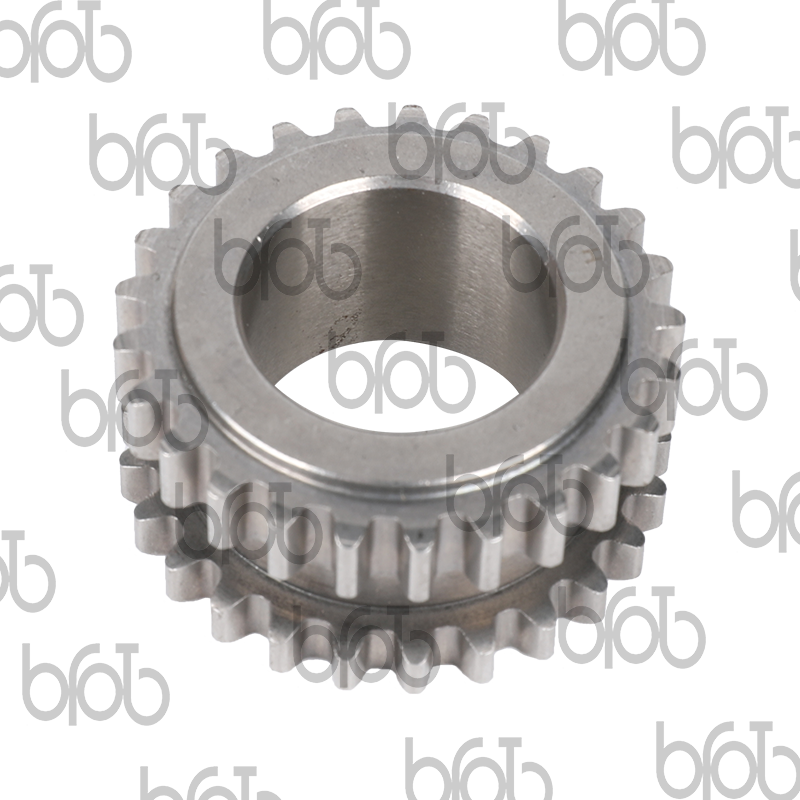
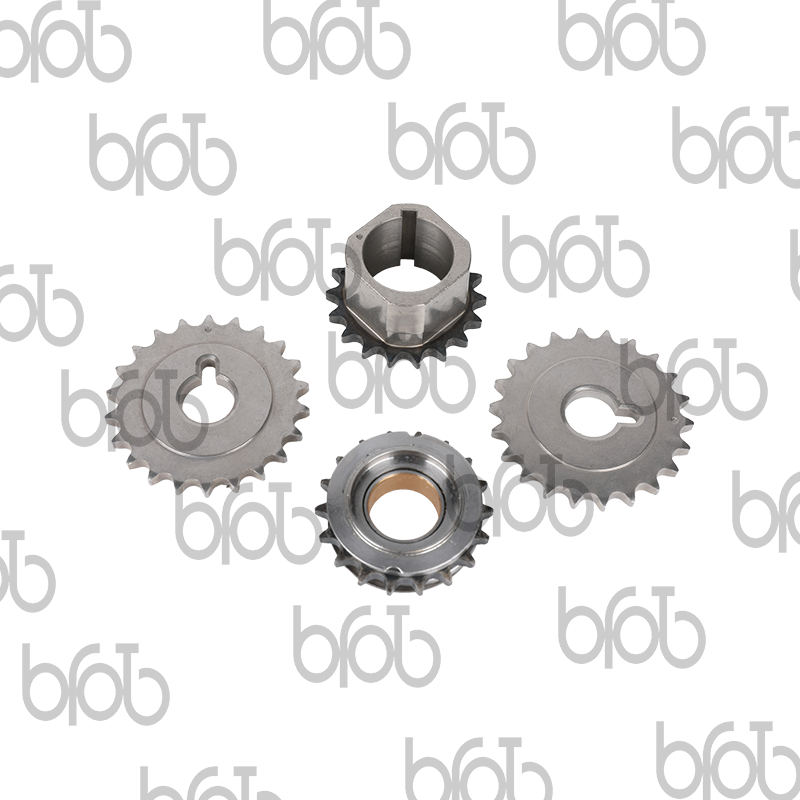
Shared platforms are a particularly useful test of a supplier's coverage. The BMW/Mini/Peugeot engine family, for example, places the same demand on the crankshaft sprocket across several brands, which means the replacement market treats those parts as a single application family. A supplier that recognizes that pattern can keep one proving-ground trace for all the badges it serves.
 BMW Mini Peugeot Engine Timing Crankshaft SprocketDesigned for shared BMW, Mini, and Peugeot engine platforms, this sprocket suits multiple DOHC displacements. High-strength alloy steel and anti-corrosion coating support quiet operation and durability across the application family.View Product →
Custom Development for OEM Projects and Specialized Replacements
OEM support frequently starts with a drawing. An engine builder sends a 2D print or a 3D model, specifies the material grade, the hardness range, the keyway tolerance, and the plating or coating, and expects the supplier to quote intelligently and then produce to the file. Replacement support often starts with the opposite: a worn sample, a damaged sprocket pulled from an engine, or an OE part number that has been superseded twice. In that case, the manufacturer must reverse-engineer the part — tooth profile, pitch, keyway position, base circle, and hardness — before a single blank is cut.
The two paths converge in production. Whether the order is a few hundred pieces for a warehouse or tens of thousands for an assembly schedule, the same process controls apply. The supplier should be honest about minimum order quantities, but a factory that holds both small-batch and serial production capabilities can move a distributor's slow-moving application onto a replenishment schedule instead of forcing a long stock-out.
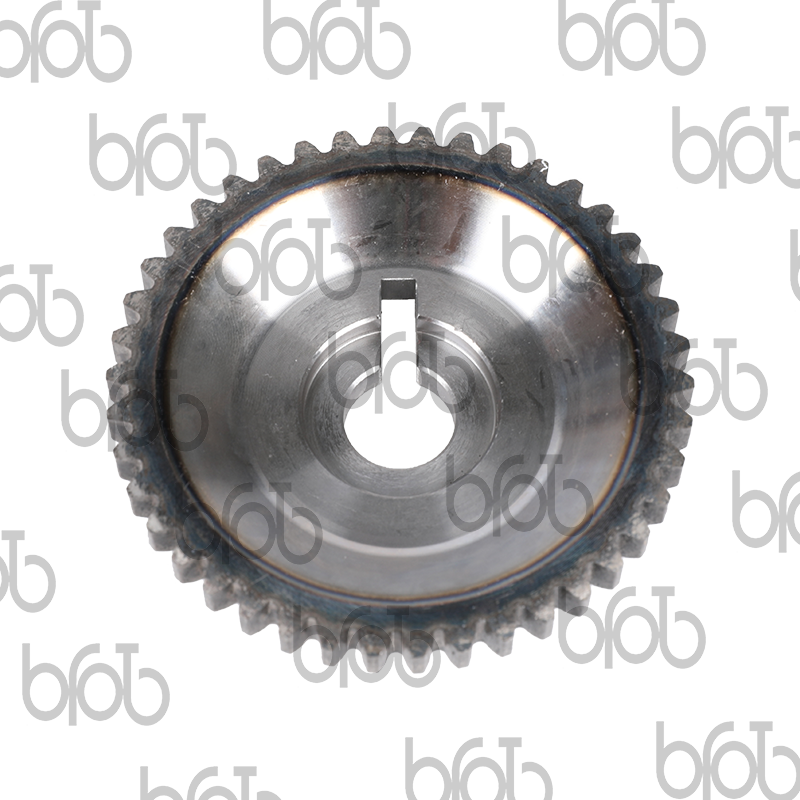
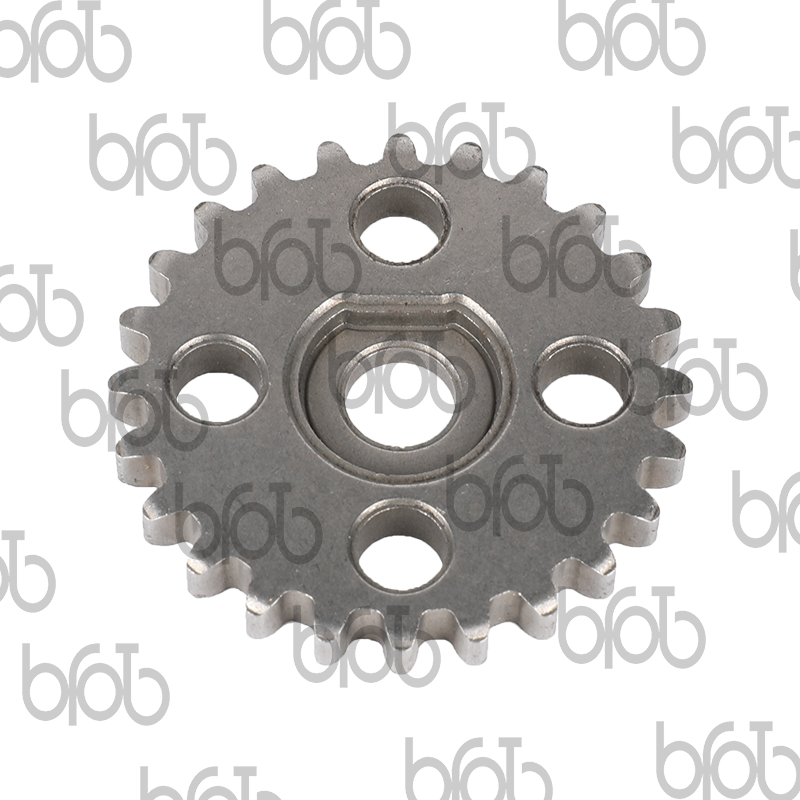
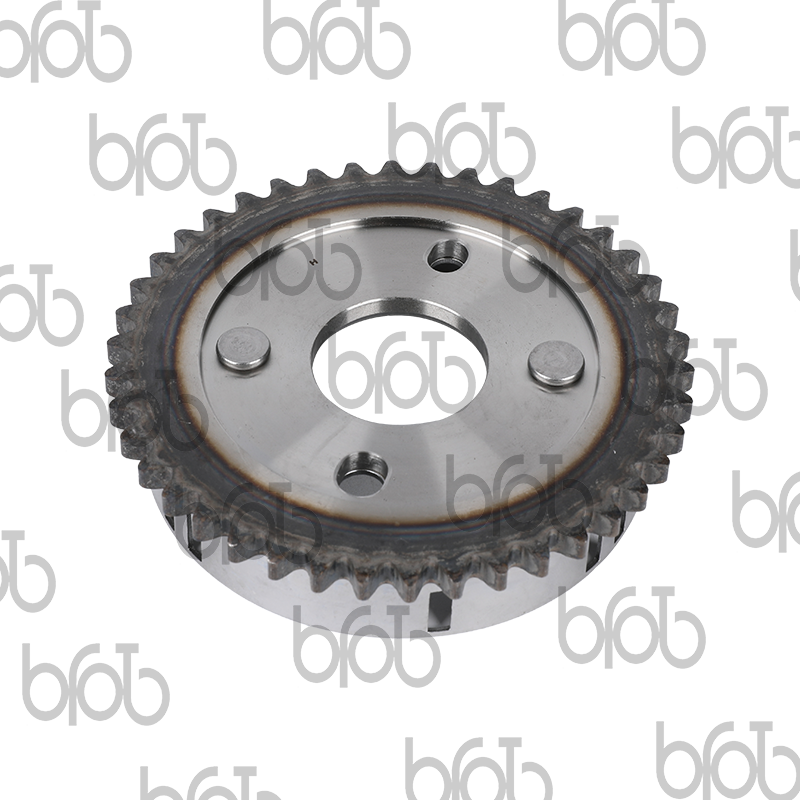
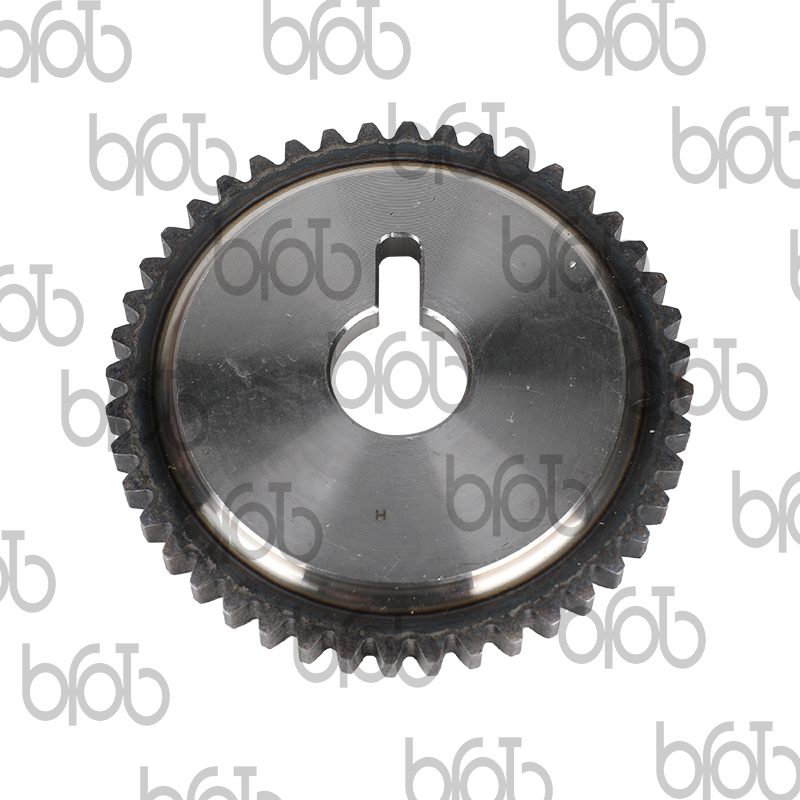
A concrete replacement case is the Volkswagen EA888 crankshaft gear, a part that sees regular wear in high-mileage EA888 engines. Because the OE reference is well defined, a manufacturer can produce a replacement that matches the original profile, keyway position, and hardness rather than a generic steel-gear approximation.
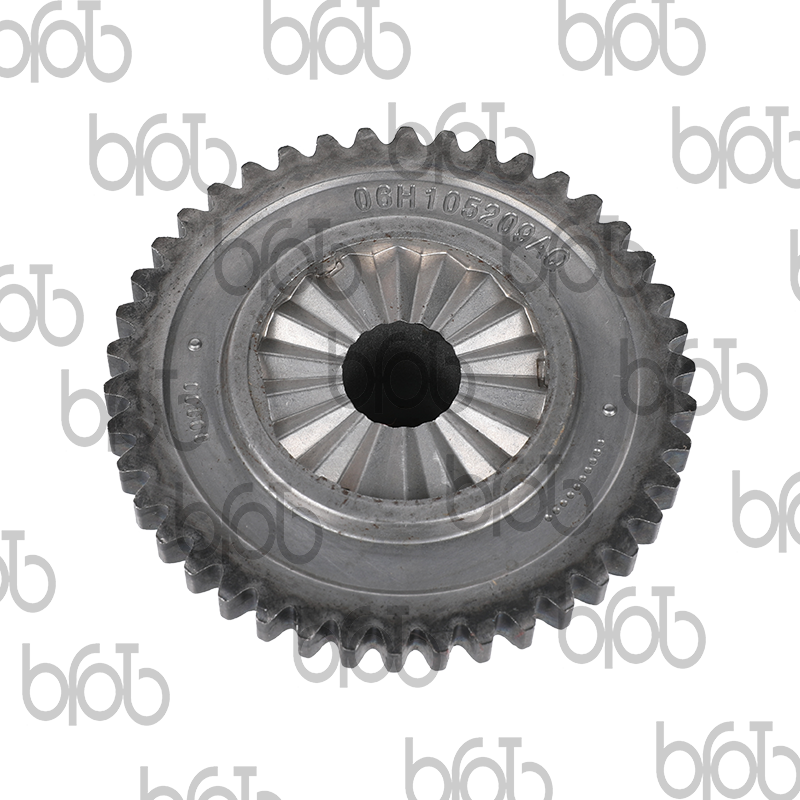 Volkswagen EA888 Crankshaft Gear 06H105209ATThis OE-matching crankshaft gear 06H105209AT is built for VW, Audi, and Skoda EA888 engines. High-strength alloy steel and optimized tooth profile help maintain accurate timing and reduce wear in high-mileage units.View Product →
What Buyers Should Verify Before Placing an Order
Purchasing managers and workshop buyers evaluate sprocket suppliers on the same evidence, in slightly different order. The full checklist includes:
- Material and hardness specification: ask for the alloy grade and the target hardness range, not just "hardened steel."
- Keyway and bore tolerance: confirm the part matches the OE fit class; a replacement that needs shims or force is a replacement that will fail early.
- Heat-treatment consistency: ask how the supplier controls distortion and whether critical features are machined after hardening.
- OE reference traceability: the catalog should let you cross a stamped OE number to the replacement SKU without a phone call.
- Batch flexibility: a low minimum order quantity matters for slow lines; guaranteed capacity matters for fast ones.
- Documentation: material certificates, heat numbers, and inspection reports turn a replacement line into an auditable supply chain.
A practical evaluation sequence takes less than a month. Cross-reference the OE number, request one sample, measure the keyway and hardness on receipt, install it in a test engine or a known-good carrier, and then release a pilot batch. Suppliers that have walked this path before will not flinch at the questions.
The brands that survive in engine timing parts are the ones that treat OEM and replacement applications as two doors into the same factory, not two different factories. For the distributor, the remanufacturer, and the workshop, that unity shows up in measurable ways: a keyway that seats the first time, a hardness reading that matches the print, and a supplier who can answer an OE cross-reference without translating "close enough" into your language. That is the practical meaning of OEM and replacement support — and it is the standard worth buying against.