 English
 Español
 Deutsch
Article Directory
- 1 Material Selection Sets the Durability Ceiling
- 2 Tooth Profile and Pitch Accuracy Control Timing Stability
- 3 Heat Treatment Converts Steel into a Wear-Resistant Component
- 4 Mounting Accuracy Determines How the Sprocket Meets the Shaft
- 5 Balance and Dynamic Behavior Are the Final Geometry Check
- 6 Quality Control Turns Intentions into Consistent Parts
- 7 Before You Place an Order: What to Verify
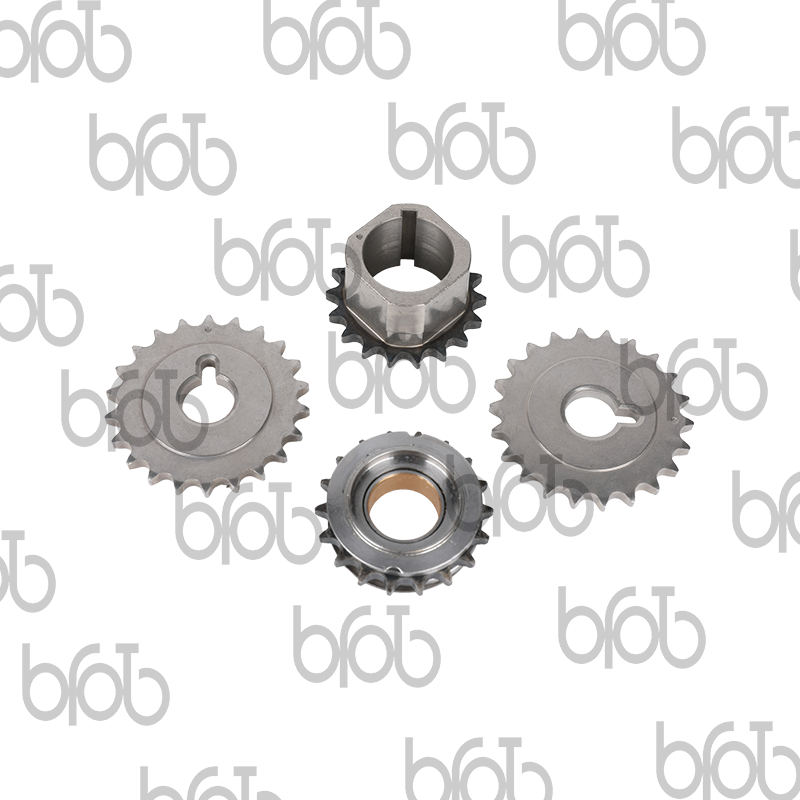
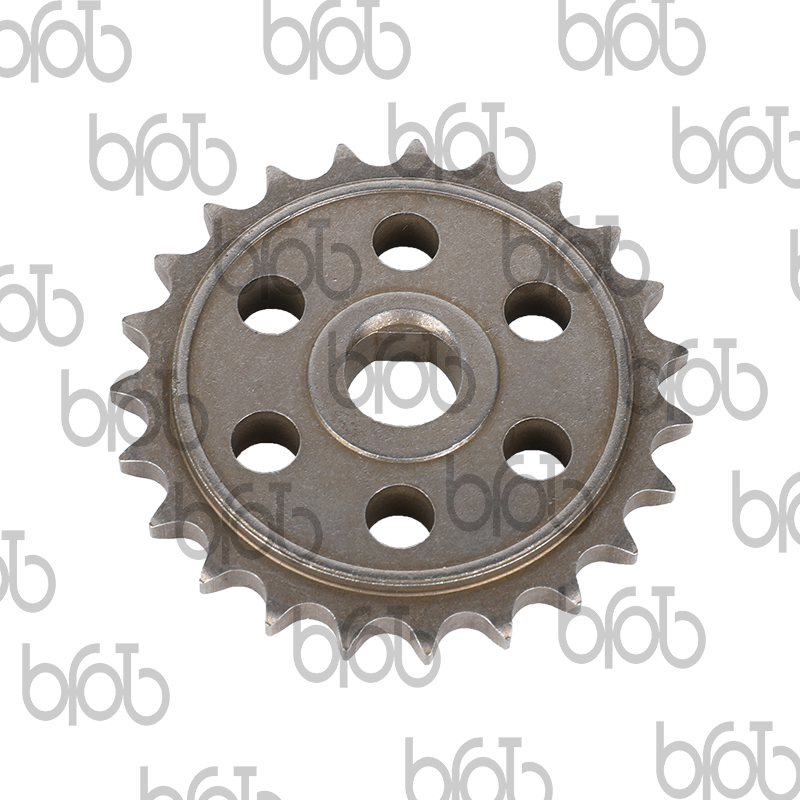
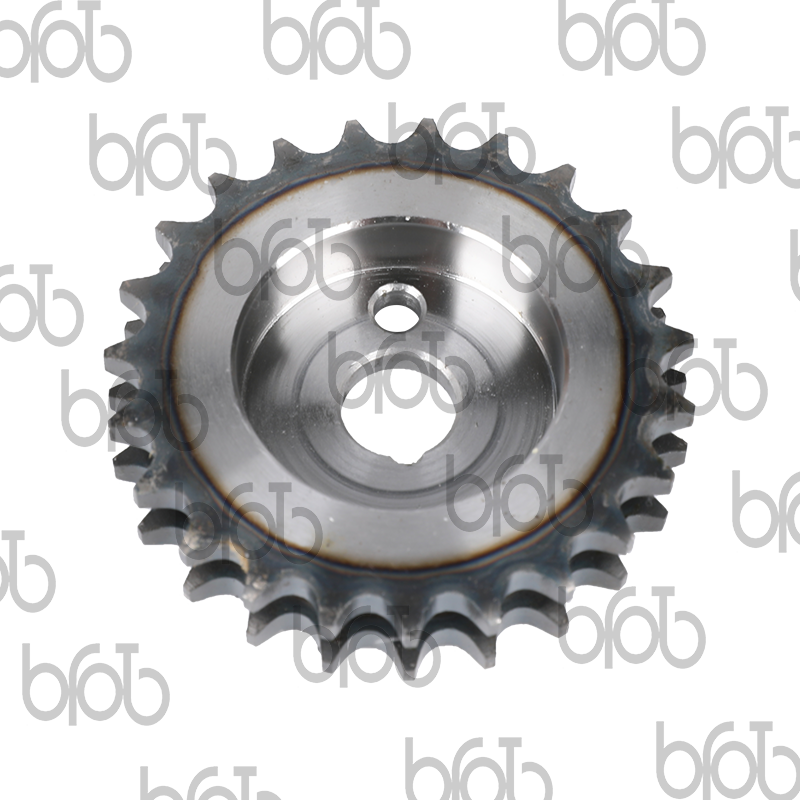
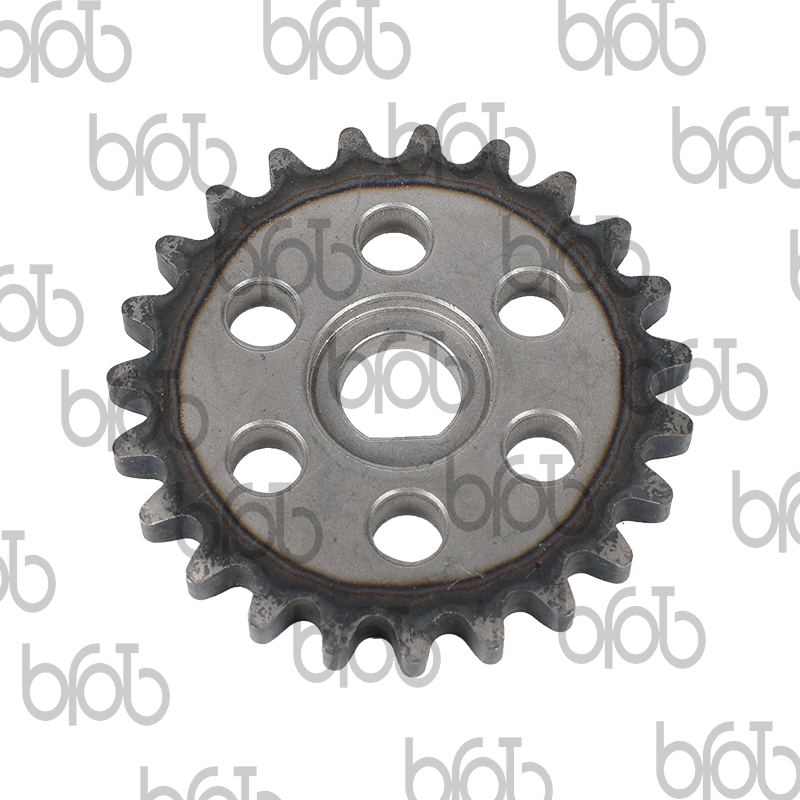
At the front of nearly every engine sits a small part that most owners never think about. The timing sprocket looks simple — a steel wheel with teeth — but it carries the entire responsibility of keeping the camshaft in step with the crankshaft. When a sprocket loses its grip, valve timing drifts, the chain begins to rattle, and the engine may suffer serious internal damage. From a manufacturing standpoint, the key quality factors for automotive engine timing sprockets come down to five areas:
- Material and hardenability
- Tooth profile and pitch accuracy
- Heat treatment and case depth
- Bore, keyway, and mounting accuracy
- Inspection and traceability
A supplier that controls these five areas makes sprockets that run quietly and outlast the engine. A supplier that treats the sprocket as a commodity makes failures. The difference shows up in the drawing, in the process, and in the inspection report.
Material Selection Sets the Durability Ceiling
No single material makes a good timing sprocket; the right one depends on the load, the chain pitch, and the heat treatment that follows. In practice, most automotive timing sprockets are made from medium-carbon steel such as SAE 1045, or from alloy steels such as SAE 4140 and SAE 8620. Powder metal is used for some complex shapes, but it demands tight density control and is less forgiving in high-fatigue applications.
The steel grade determines hardenability, toughness, and a clean microstructure. Off-spec steel can machine perfectly yet fail early because of inclusions, segregation, or wrong carbon content. That is why incoming material control matters as much as the machining process itself: a manufacturer that checks composition and cleanliness on every incoming batch removes most of the hidden risk before the first tooth is cut. The relationship between grade, hardness, and service life is covered in more depth in our article on engine timing sprocket hardness and material durability.
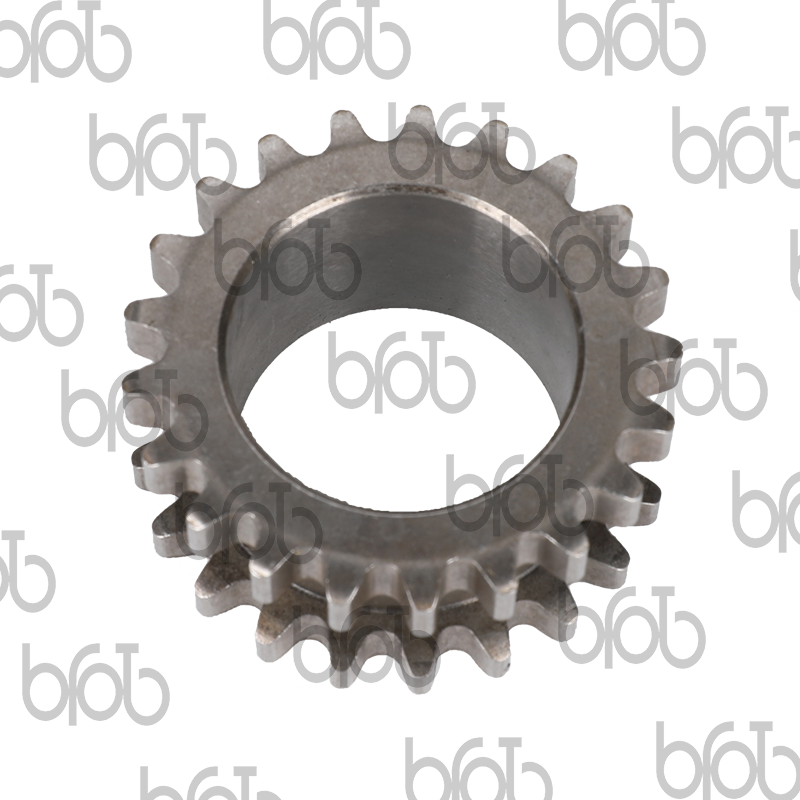
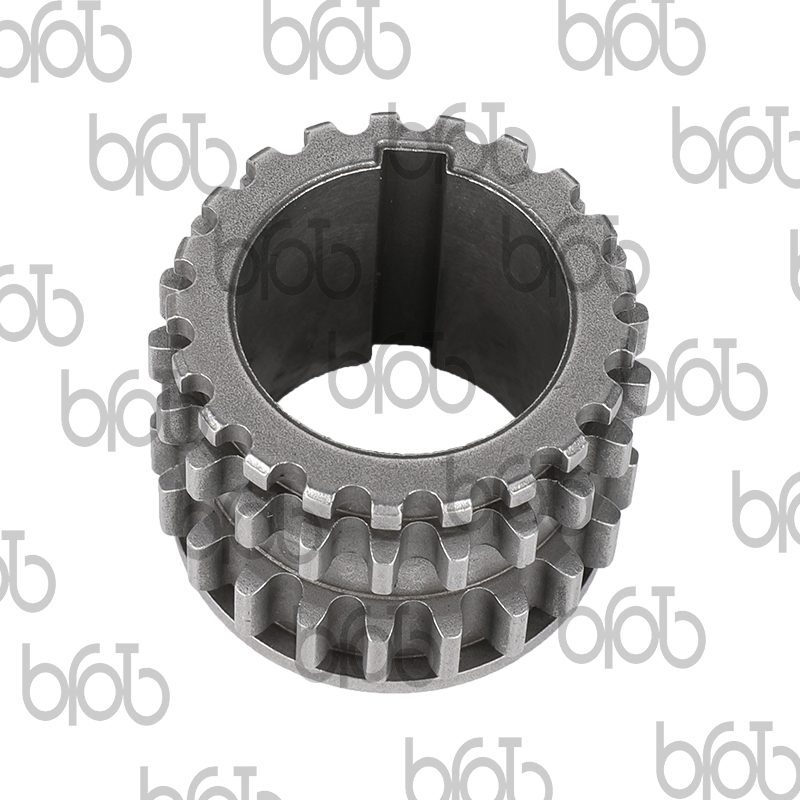
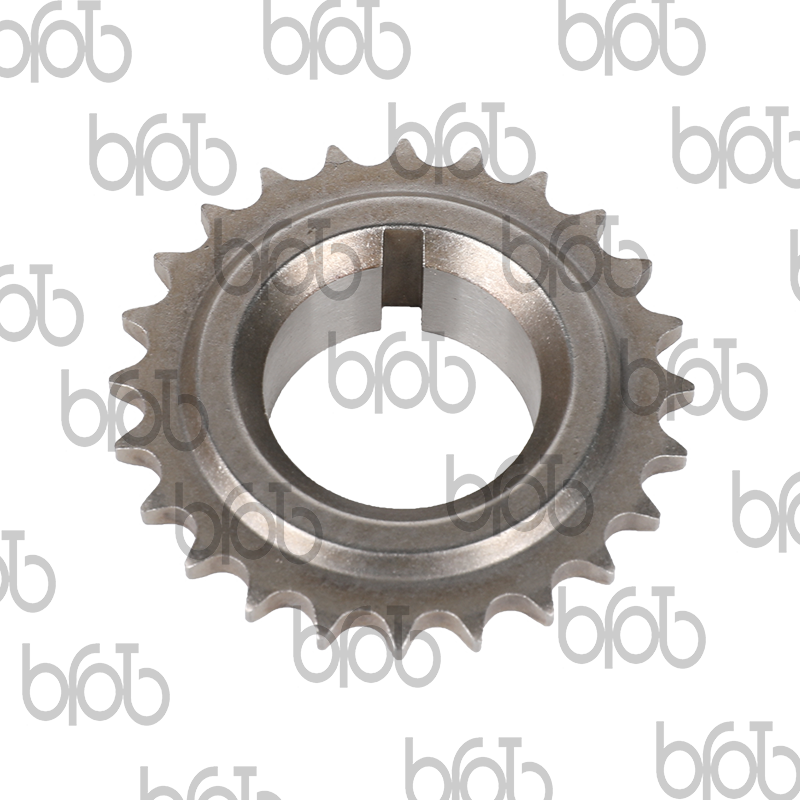
A good example is a crankshaft sprocket for Nissan HR16 engines, where the material must survive tens of millions of roller contacts without developing pitting or fatigue cracks.
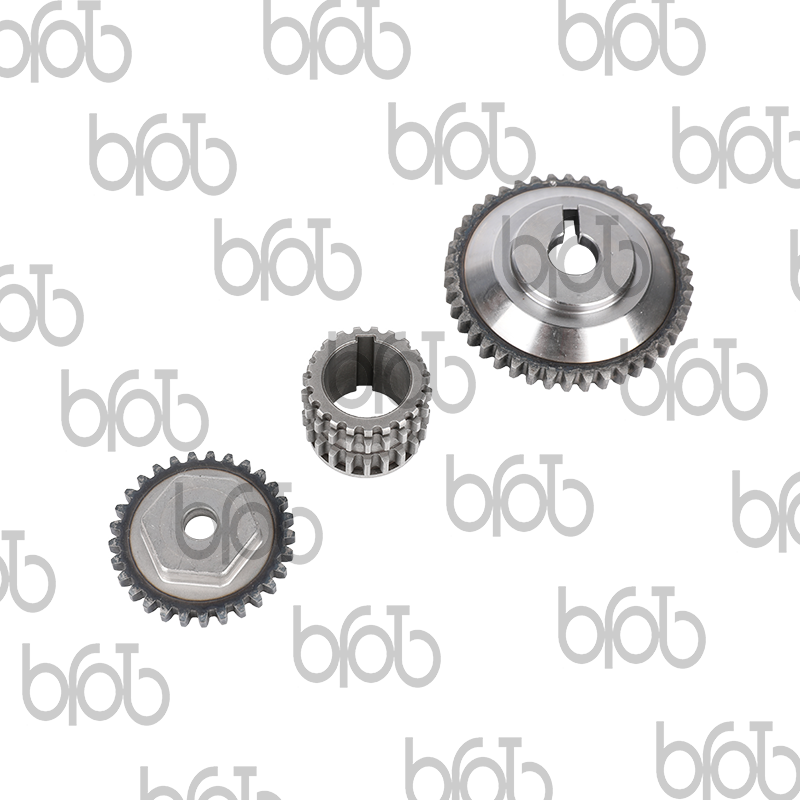 Nissan HR16 Engine Timing Crankshaft SprocketThis crankshaft sprocket for Nissan HR16 engines is highlighted for its material durability and precise tooth profile, which are essential to avoid premature wear and timing rattle under millions of roller contacts.View Product →
Tooth Profile and Pitch Accuracy Control Timing Stability
If material is the ceiling, machining precision is the floor. The sprocket tooth profile must match the chain rollers, and most timing sprockets use an involute profile. When the profile is wrong, only one or two teeth carry the full chain load. Their contact surfaces wear quickly, the chain tightens in one position and slacks in another, and the engine eventually develops the classic timing rattle.
Three measurements define precision here: tooth profile error, tooth-to-tooth pitch error, and accumulated pitch error. On modern machining lines, these values are held to a few hundredths of a millimeter and verified with gear measuring machines, over-pin checks, and CMM inspection. The application of high-precision manufacturing technology is what separates a sprocket that generates noise and vibration from one that meshes smoothly with the chain over its entire life.
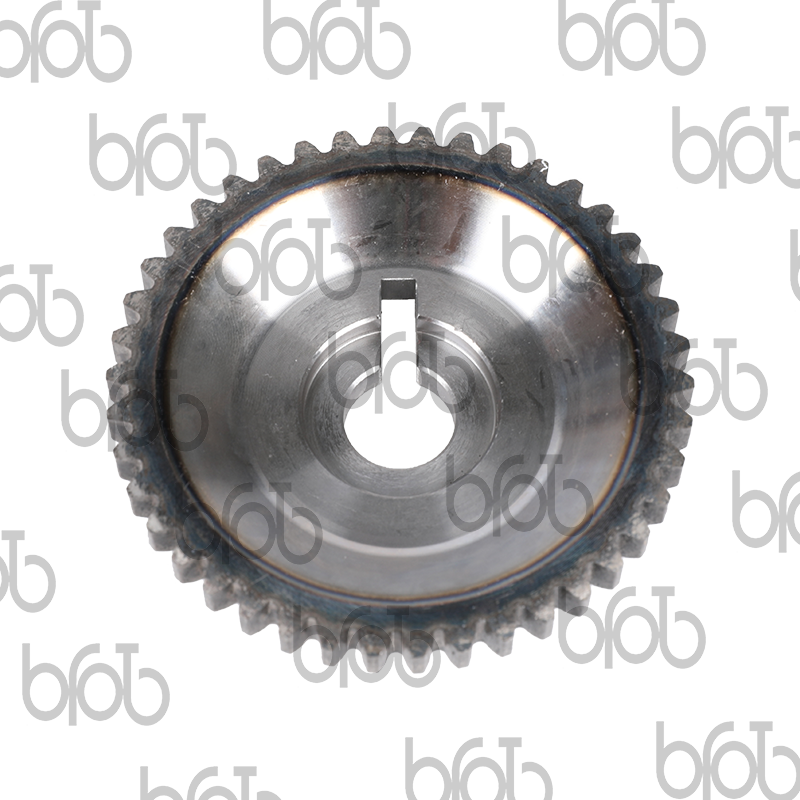
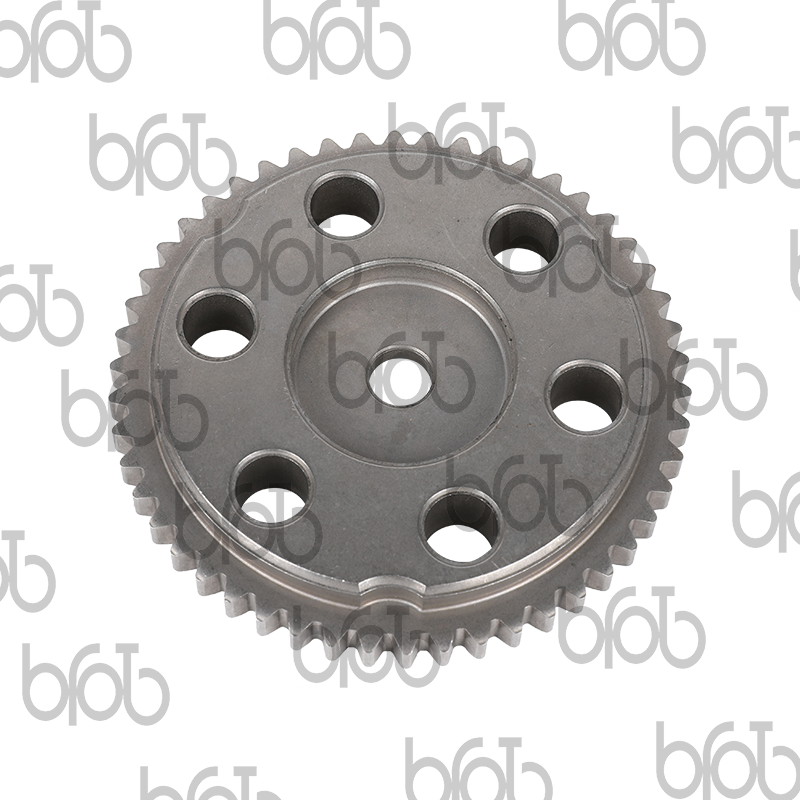
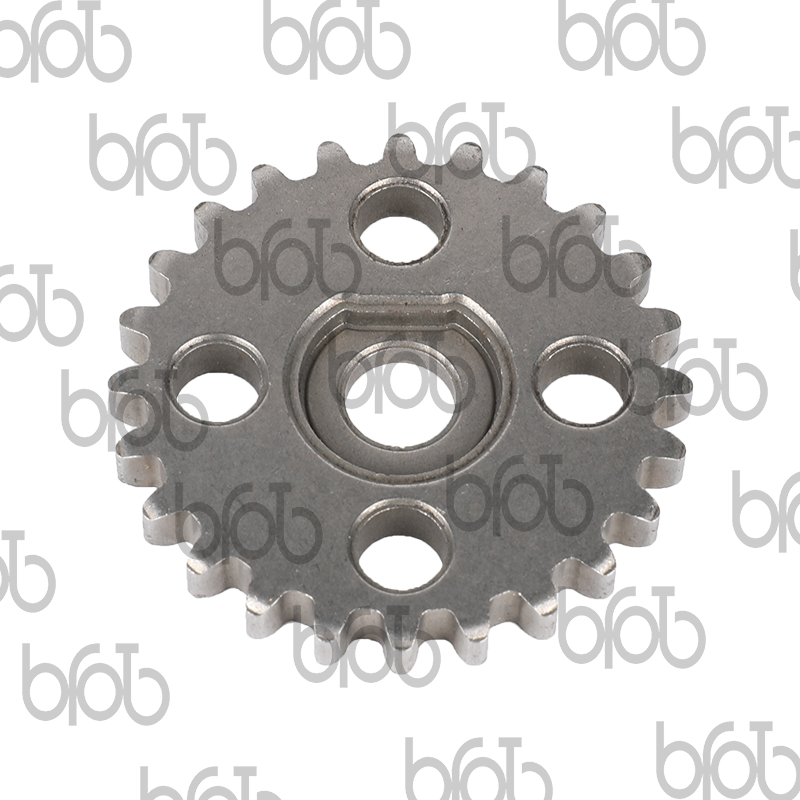
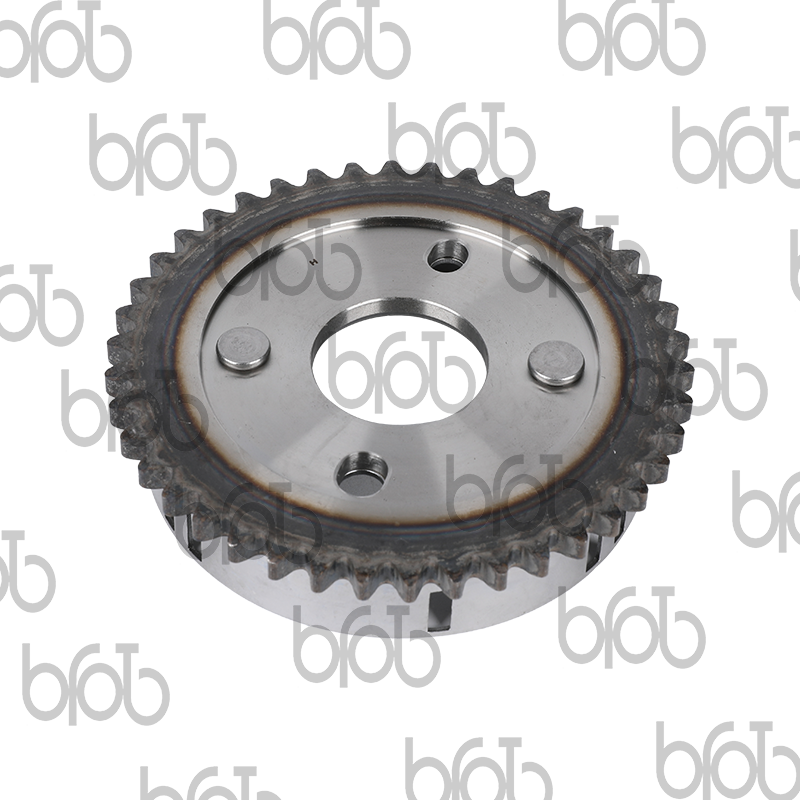
Camshaft sprockets for Honda 1.8L engines illustrate this balance: they must index the camshaft accurately while sharing the chain load evenly with the crankshaft sprocket.
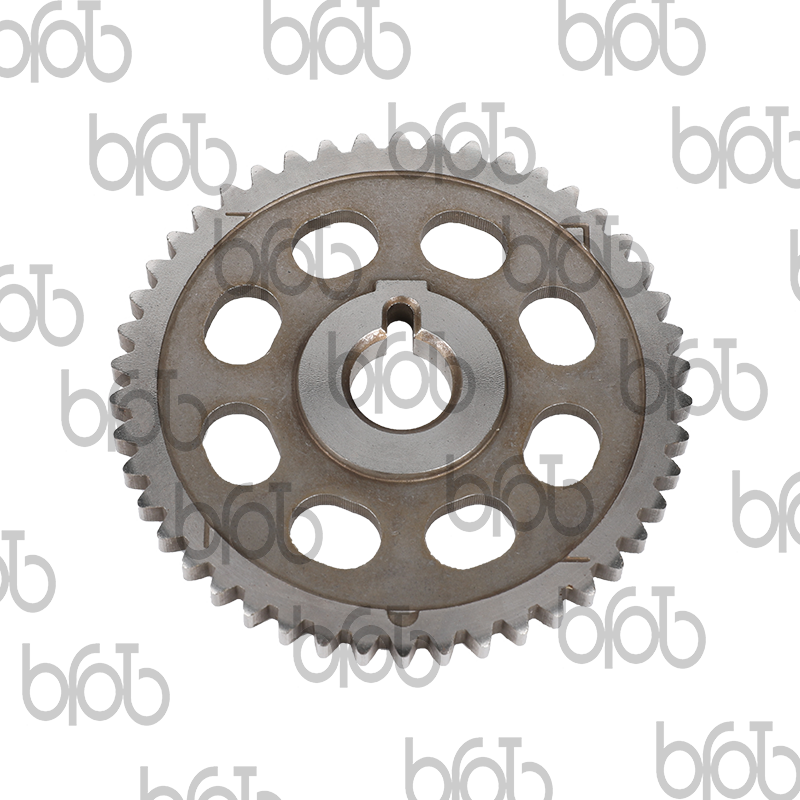 Honda Civic 1.8 and Accord 2.0 Camshaft SprocketThis camshaft sprocket suits Honda Civic 1.8L and Accord 2.0L engines, featuring heat-treated alloy steel and precise machining to maintain accurate valve timing and even chain load distribution.View Product →
Heat Treatment Converts Steel into a Wear-Resistant Component
Machining gives the sprocket its shape; heat treatment gives it the strength to hold that shape under service conditions. Two approaches dominate. Through-hardening works on medium-carbon and alloy steel, while case hardening with induction or carburizing creates a hard surface layer over a tough core. Induction hardening is particularly common for timing sprockets because it hardens the tooth flank and root while leaving the core ductile enough to absorb shock.
Hardness targets for automotive timing sprockets typically fall between 45 and 55 HRC, with the case depth matched to tooth size. A case that is too shallow wears through quickly; a case that is too deep, or too brittle at the edges, can crack under the shock of startup. Heat treatment also introduces distortion, so the same supplier must control how the bore and pitch circle stay concentric after hardening.
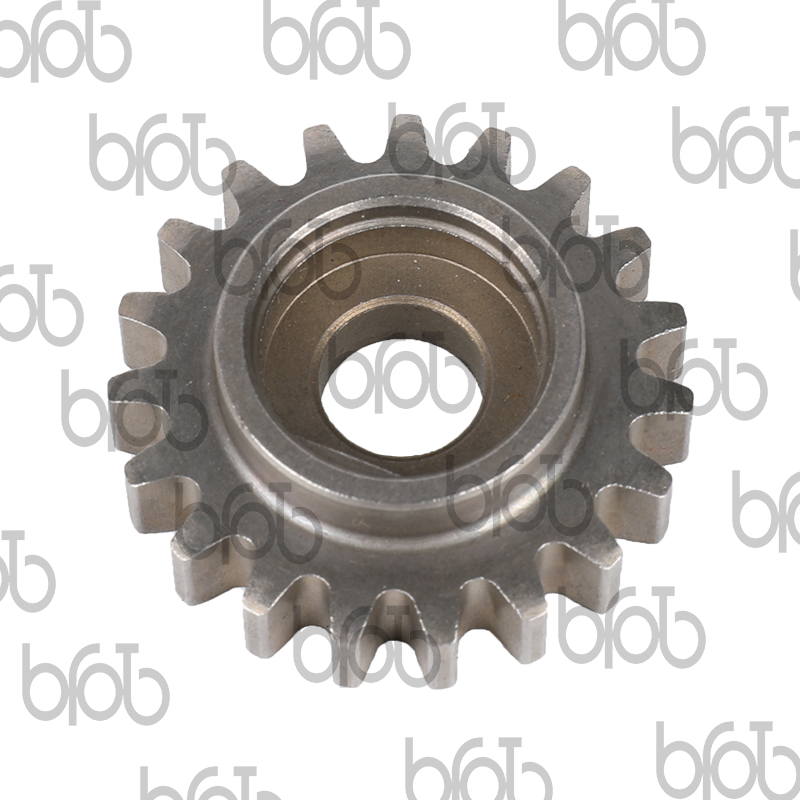
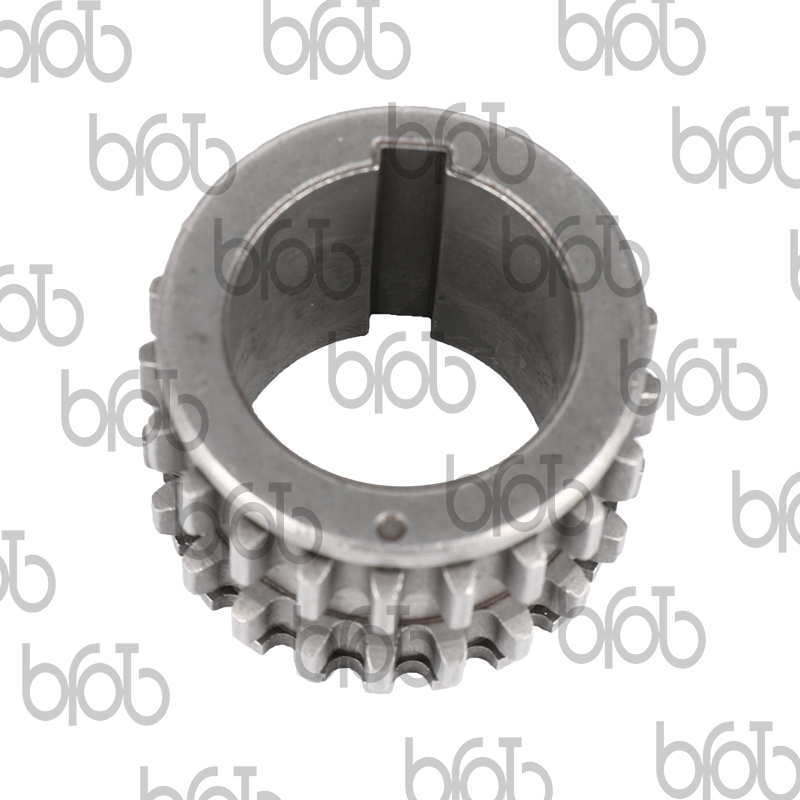
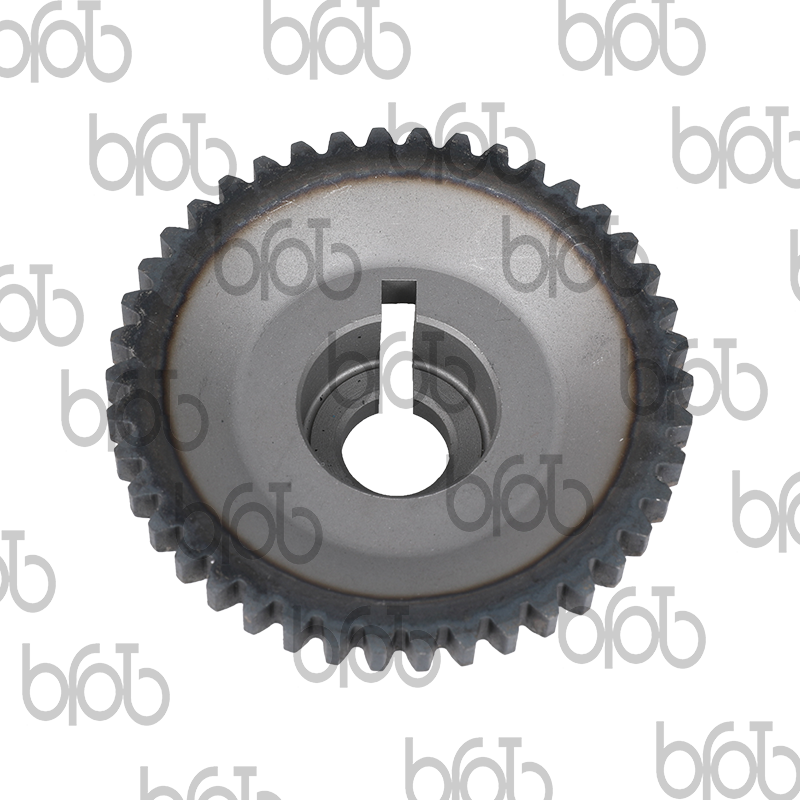
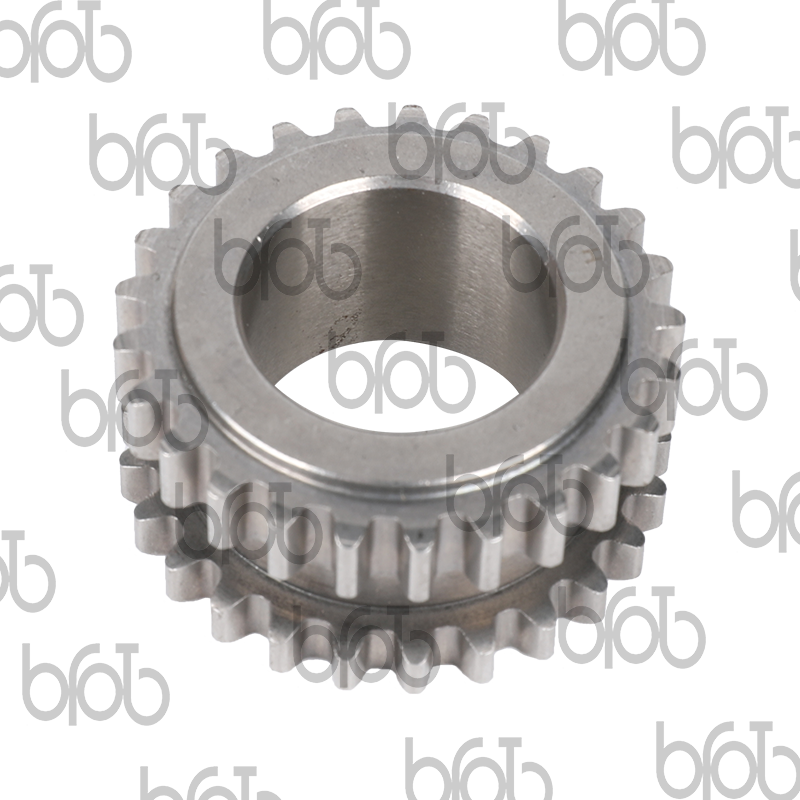
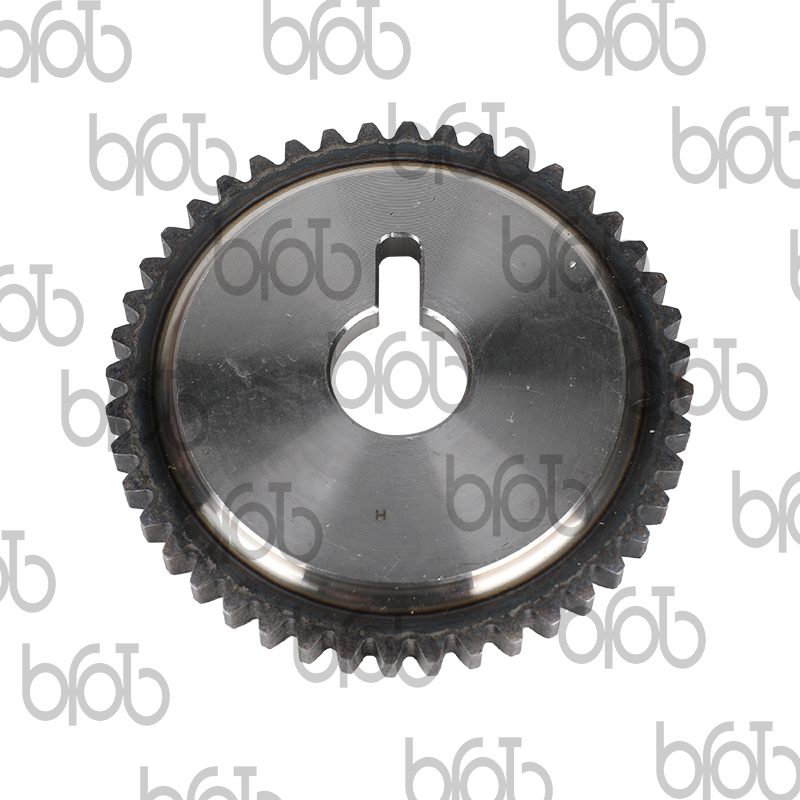
The Volkswagen EA888 crankshaft gear is a well-known example of a part that depends on both case hardness and dimensional stability to perform reliably in a high-output engine.
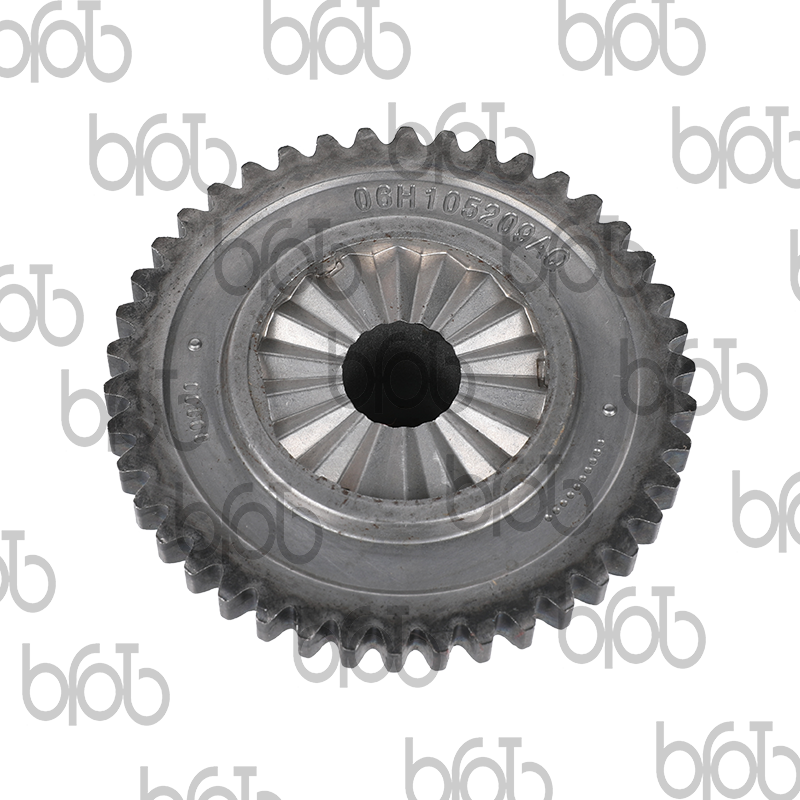 Volkswagen EA888 Crankshaft Gear 06H105209ATThis crankshaft gear for the EA888 engine is presented as an OEM-quality replacement that combines case hardness and dimensional stability, supporting reliable timing in high-output VW, Audi, and Skoda models.View Product →
Mounting Accuracy Determines How the Sprocket Meets the Shaft
A perfectly cut tooth profile is wasted if the sprocket does not sit correctly on its shaft. Bore diameter, keyway width, and concentricity between the bore and the pitch circle control how the sprocket rotates in service. Forcing an oversized bore into a press fit can distort the tooth profile. An undersized keyway creates backlash that loads the chain with impacts on every start. The table below shows the tolerance areas that matter most.
| Feature | Typical Control | Why It Matters |
|---|---|---|
| Bore diameter | H7 class fit | Correct seating without creep or distortion |
| Keyway width | +0.012 / 0 mm | Positive drive, no backlash |
| Radial runout | ≤ 0.05 mm | Even chain load, low noise |
| Face runout | ≤ 0.08 mm | Stable chain alignment in the axial direction |
Balance and Dynamic Behavior Are the Final Geometry Check
At operating speed, a timing sprocket rotates from idle to several thousand rpm, so even a small amount of unbalance turns into noticeable vibration. This matters for two reasons. First, vibration disturbs the chain’s seating and accelerates wear on the guides and tensioner. Second, it adds noise to the whole timing cover, which both drivers and inspectors notice quickly.
Balancing is especially demanding for sprockets with timing marks, keyways, or asymmetric features. The material removed for a keyway or a timing mark must be compensated in the design, and the machining process must keep the mass distribution uniform. A sprocket can hold perfect tooth dimensions and still fail an engine-level noise test if its balance is wrong. That is why many specifications include a balance requirement or a maximum eccentricity between the mass center and the bore.
Quality Control Turns Intentions into Consistent Parts
Every quality factor matters only if it is verified on real parts. A responsible manufacturer tests chemical composition on incoming steel, measures hardness and case depth on heat-treated parts, and checks critical dimensions on finished sprockets. Calibration of measuring instruments, sampling frequency, and batch traceability decide whether a process stays in control or drifts quietly out of it.
Process capability is the practical language of this conversation. If a supplier can state a Cpk value above 1.33 or 1.67 for bore size and runout, that tells you the process produces parts well inside the drawing tolerance. If they cannot show these numbers, the drawing tolerance is only a wish. A single inspection report is not a quality system; a consistent process is.
Before You Place an Order: What to Verify
The order process is the last place where quality problems can be caught. Buyers should ask four questions: What steel grade is used, and is the composition certified? How is hardness controlled, and what is the measured range on finished parts? How are tooth profile and runout inspected during production? And can the supplier provide samples for engine or bench testing? None of these questions is difficult, but the answers separate a real manufacturing partner from a trading company that resells whatever it can find.
Timing sprockets are not commodity consumables. A failed sprocket damages the chain, sometimes the guides, sometimes the engine itself, and the total cost of a rejected part is far higher than the price difference between a controlled process and an uncontrolled one. Working with an experienced engine timing sprocket manufacturer gives you access to documented materials, controlled heat treatment, and dimensional reports that travel with every batch.