 English
 Español
 Deutsch
Article Directory
A purchasing engineer comparing three quotes for the same engine timing sprocket often sees identical drawings, similar material descriptions, and price levels that differ by more than 30 percent. The parts also look the same in a photo. The real difference appears only after the component has run for tens of thousands of kilometers, when tooth wear, chain noise, and timing drift separate a well-made sprocket from a cheap one. That gap is created in manufacturing: the material grade, the machining tolerance, the heat treatment cycle, and the inspection discipline.
An OEM engine timing sprocket is a precision transmission component. Mounted on the crankshaft or camshaft, it transfers rotation to the timing chain, and its tooth position and flank geometry directly control valve timing. Manufacturing it to OEM quality means holding every critical dimension across large production batches, and proving that with measurement data. This guide covers the decisions that determine whether a sprocket actually meets that standard.
What Defines an OEM-Grade Timing Sprocket
The Mechanical Role of a Timing Sprocket
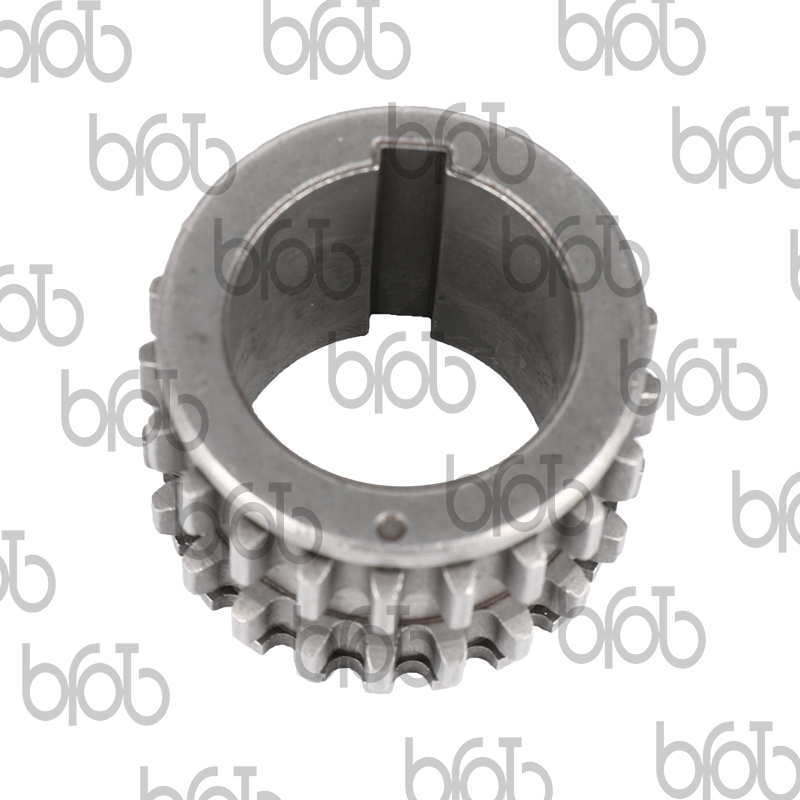
The sprocket does more than rotate with the shaft. Its teeth engage the chain links with a fixed pitch relationship, so tooth profile accuracy, tooth spacing error, and flank hardness all influence chain tension stability. On a camshaft sprocket, angular error converts directly into valve timing error. On a crankshaft sprocket, the keyway position is the reference point for the entire timing system; if the keyway is cut off-center relative to the teeth, every subsequent timing event starts from a wrong zero position.
OEM Versus Low-End Aftermarket Parts
A genuine OEM sprocket is made from a material grade specified for the engine platform, machined within controlled tolerances, and heat-treated so that the tooth flanks wear slowly against the chain. Low-end aftermarket sprockets often start with softer steel or inconsistent powder metal, skip the case-hardening step, or relax tooth pitch tolerance to cut cost. The failure is rarely visible at installation. It appears later as timing chain rattle, premature tooth wear, or a skipped chain. Buyers should evaluate suppliers on process documentation, material certificates, and inspection reports rather than price alone.
Material Selection Is the First Manufacturing Decision
Alloy Steels for Load-Bearing Sprockets
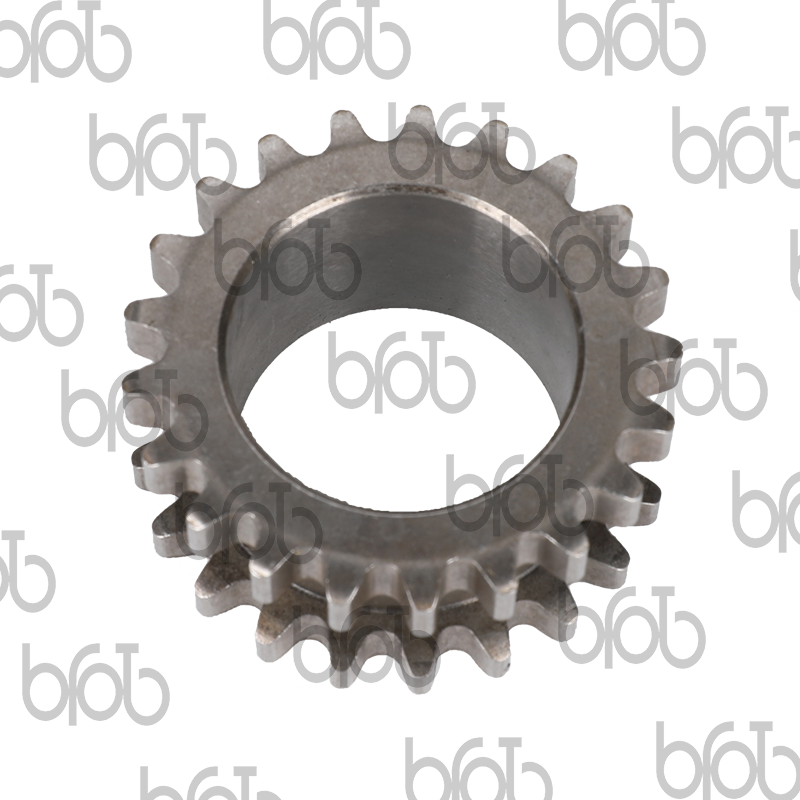
Most OEM timing sprockets are machined from medium-carbon alloy steels such as SAE 1045, 4140, or equivalent grades selected for their response to heat treatment. The steel must provide enough core toughness to absorb the shock loads generated by combustion pulses, and enough hardenability to develop a wear-resistant surface layer. A program like the Nissan HR16 engine timing crankshaft gear depends on this discipline; if the steel grade drifts, the final hardness and geometry drift with it.
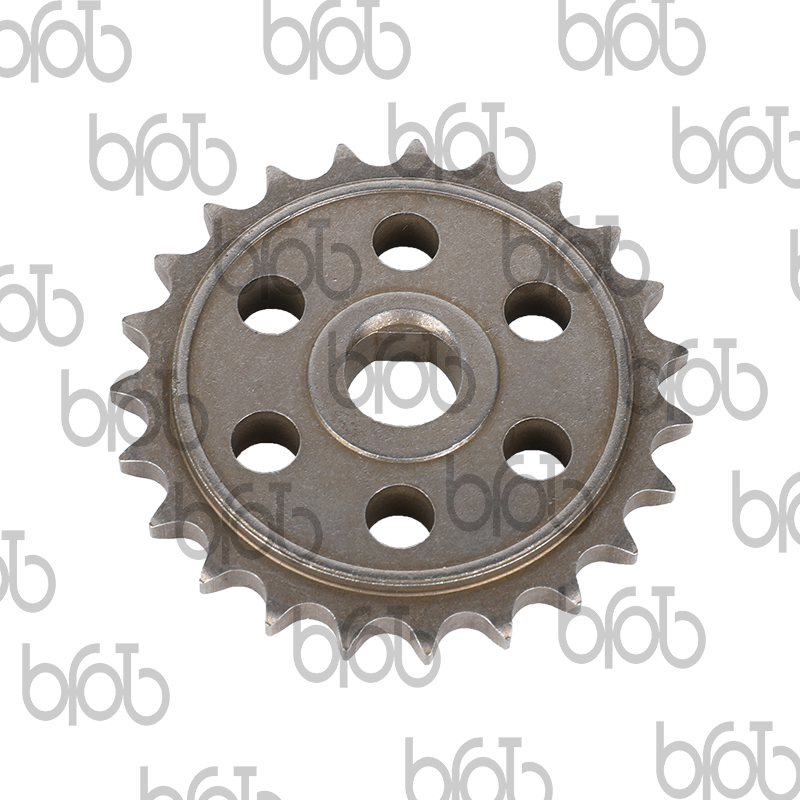
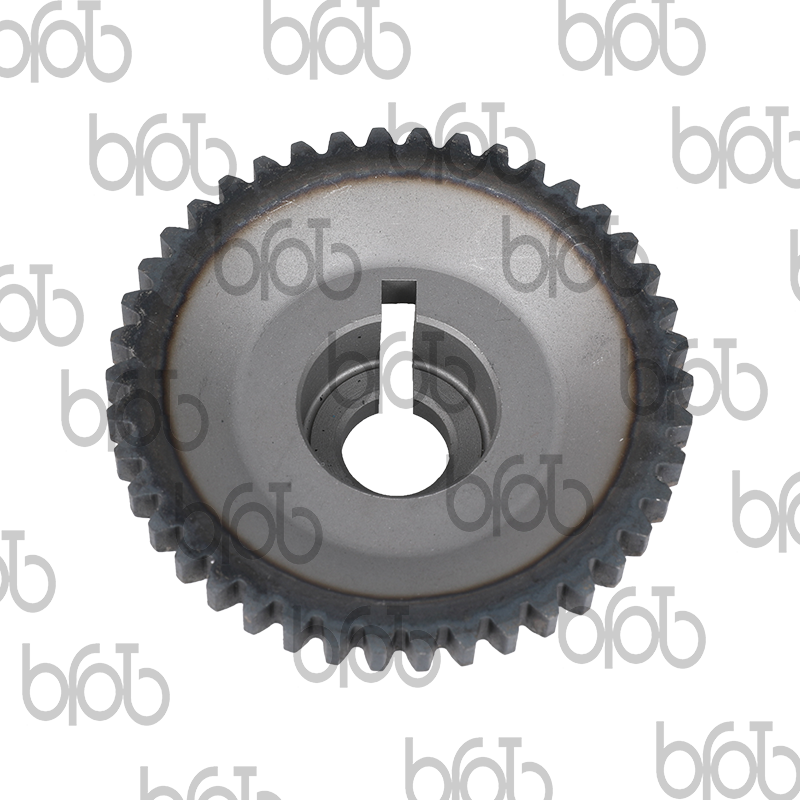
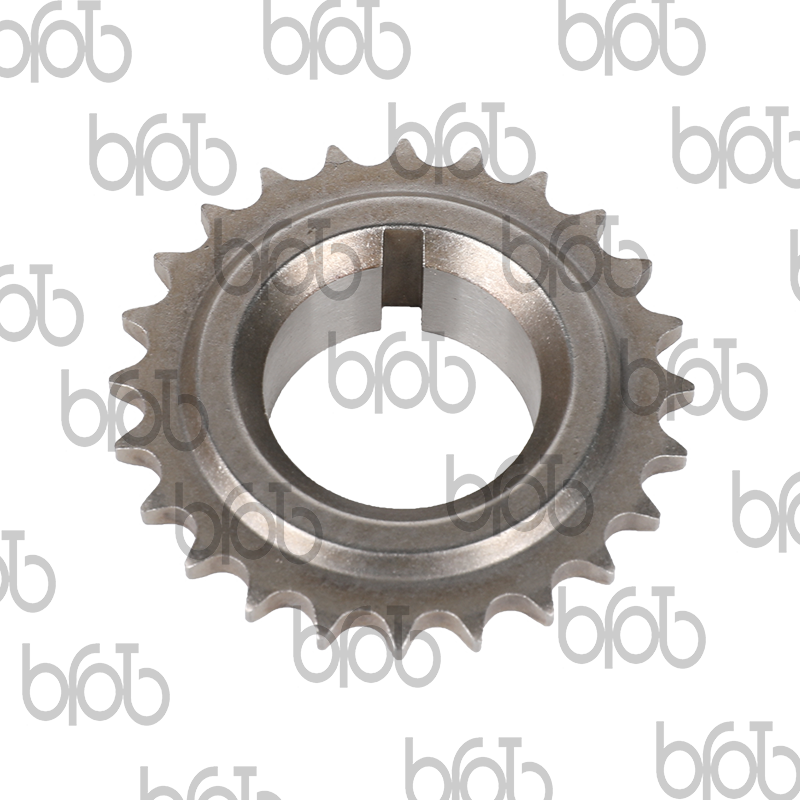
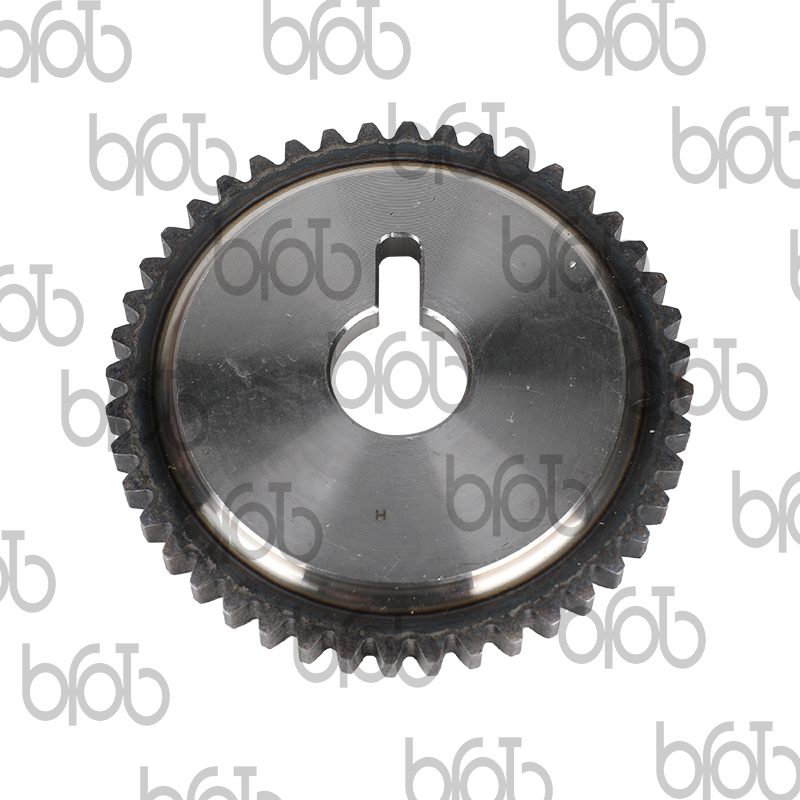
 Wholesale automobile Nissan HR16 Engine Timing Crankshaft Gear Suppliers, ManufaJiaxing Befeite Chain Wheel Manufacturing Co., Ltd. is Wholesale automobile Nissan HR16 Engine Timing Crankshaft Gear Manufacturer, Compa...View Product →
Powdered Metal and Its Trade-Offs
Powdered metal sprockets are used in some engine programs because pressing powder to near-net shape reduces machining cost. PM parts perform acceptably when tooth loads are moderate and the geometry is stable. The trade-off is lower fatigue strength under impact loading compared with forged or machined steel, and wear behavior that depends heavily on density control during compaction. For high-torque engines or heavily loaded chain drives, steel remains the safer specification. The decision between steel and powder metal should follow the engine application rather than the supplier's convenience; this comparison of steel versus powder metal timing sprockets applies to camshaft parts as much as crankshaft parts.
Core Manufacturing Steps That Control Quality
Machining the Tooth Profile
Timing sprocket teeth are generated by hobbing or broaching. Hobbing is the dominant process for involute sprocket teeth because the continuous generating motion produces consistent spacing between teeth. The three critical outputs are tooth-to-tooth pitch error, runout of the pitch circle relative to the bore, and surface finish on the tooth flank. An OEM requirement typically holds tooth-to-tooth pitch error within a few hundredths of a millimeter. This is where a dedicated sprocket manufacturer differentiates itself from a general machine shop.
Heat Treatment for Surface Hardness and Core Toughness
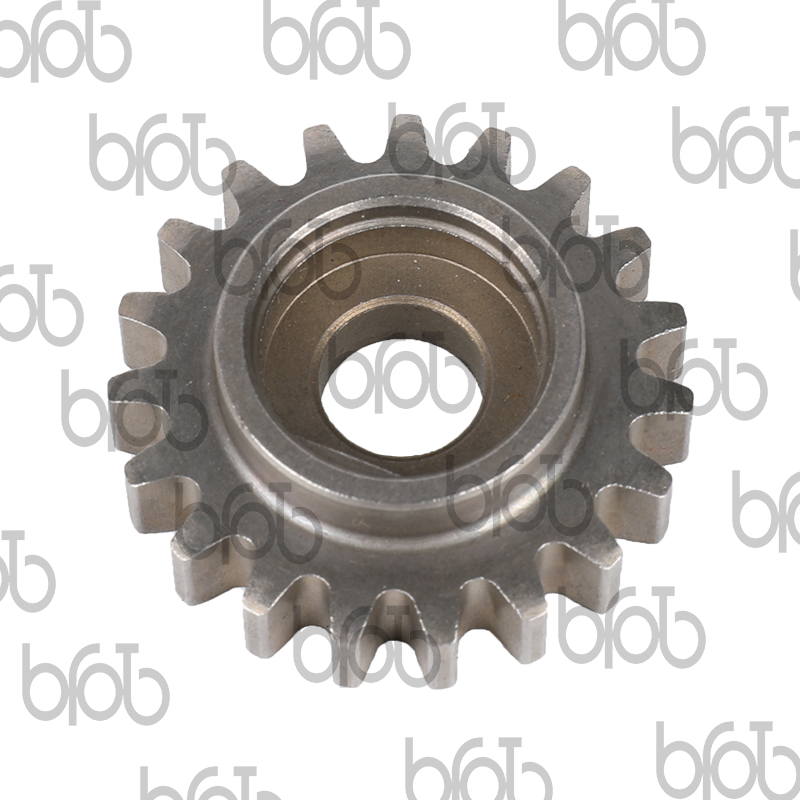
After machining, sprockets are case-hardened or induction-hardened. Carburizing creates a deep, hard case with excellent wear resistance; induction hardening hardens the tooth flanks directly and is widely used in timing applications. Surface hardness for an OEM timing sprocket usually falls in the 50 to 60 HRC range depending on the engine design. A high-volume European program such as the Volkswagen EA888 crankshaft gear depends on consistent case depth and flank hardness across every production batch. The core must remain tough enough to prevent tooth breakage, and inconsistent hardening produces uneven wear that shortens the life of the entire timing system. This is why hardness testing on every batch is standard for OEM supply. Buyers can use an overview of engine timing sprocket hardness and material durability specifications to verify what a supplier's certificate should contain.
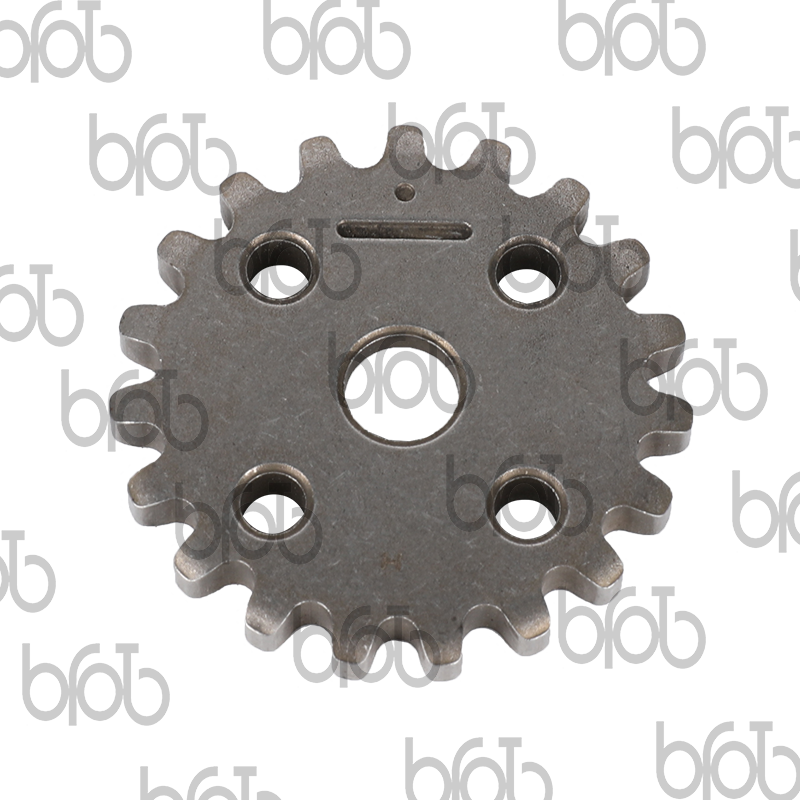
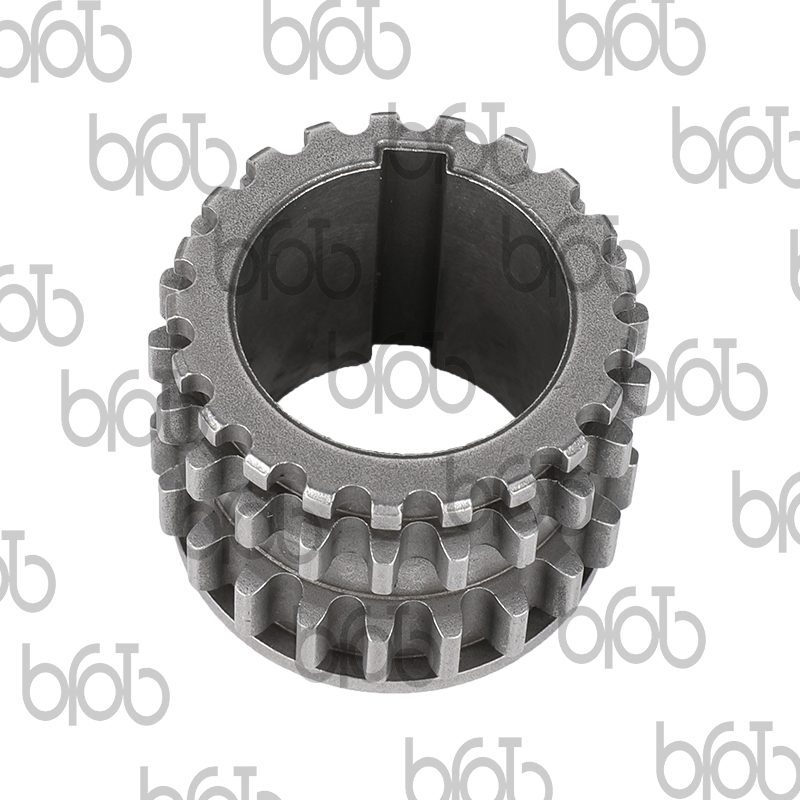
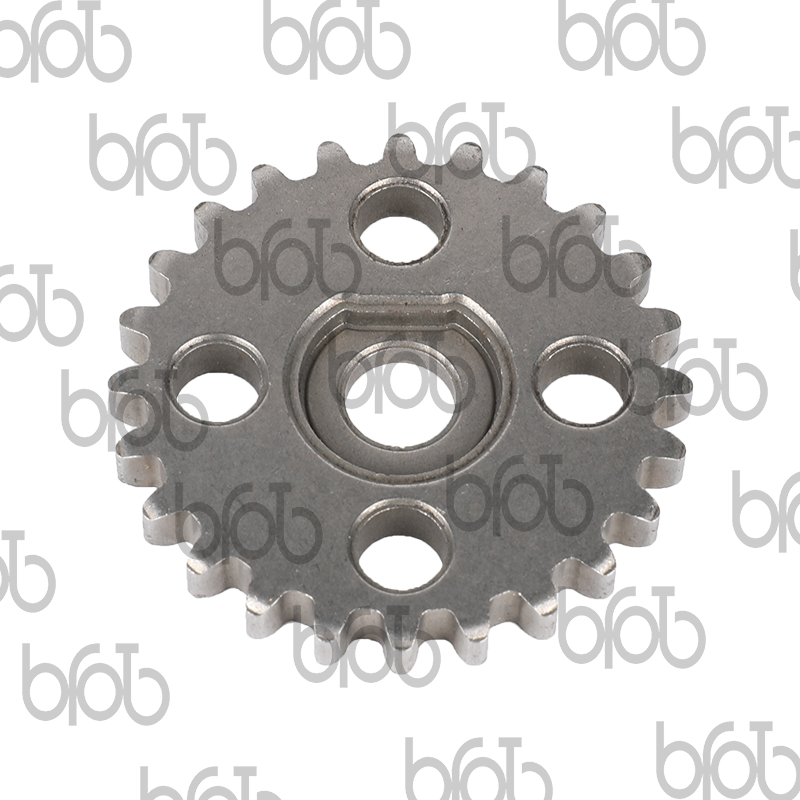
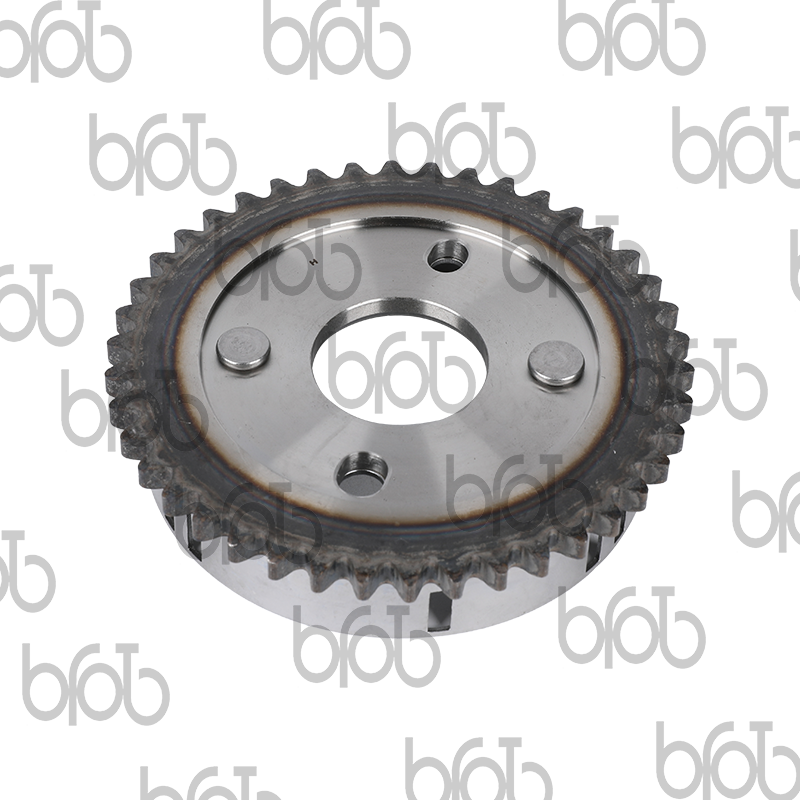
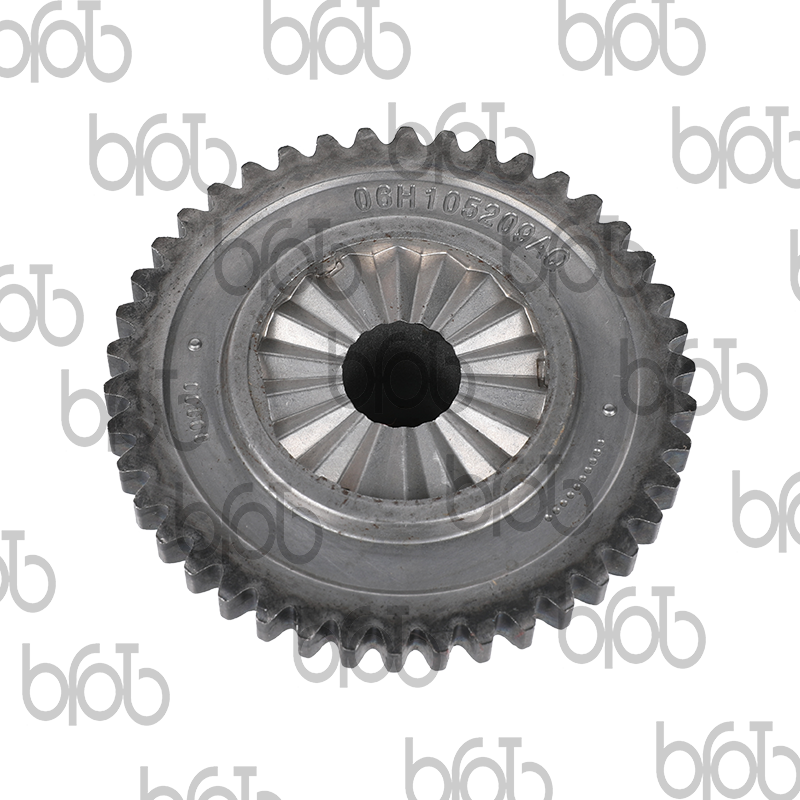 Wholesale automobile Volkswagen EA888 Crankshaft Gear Suppliers, ManufacturersJiaxing Befeite Chain Wheel Manufacturing Co., Ltd. is Wholesale automobile Volkswagen EA888 Crankshaft Gear Manufacturer, Company and Su...View Product →
Final Machining and Keyway Cutting
Heat treatment distorts steel, so the bore and keyway are finish-machined afterward to restore geometric accuracy. The keyway width is typically controlled to an H9 tolerance, and its angular position relative to the first tooth must stay within tightly defined limits. Final machining also corrects bore runout. A sprocket that meets drawing dimensions before hardening but fails after treatment is a common quality escape when the manufacturer skips final inspection.
Tolerances, Fits, and Reject Criteria
The measurable parameters below are typical for OEM timing sprockets. Exact values follow the engine designer's specification and should be confirmed against the original part print before production.
| Parameter | Typical OEM Range | Why It Matters |
|---|---|---|
| Tooth-to-tooth pitch error | ±0.02 to 0.05 mm | Chain engagement smoothness and noise |
| Keyway width tolerance | H9 | Secure fit on the shaft |
| Bore runout (TIR) | ≤ 0.05 mm | Prevents eccentric rotation and timing drift |
| Surface hardness, tooth flank | 50 to 60 HRC | Wear resistance against the chain |
| Case depth | 0.5 to 1.5 mm | Load support below the hardened surface |
| Surface finish, flank | Ra 0.8 to 1.6 µm | Friction, wear, and running noise |
Most OEM buyers apply zero-defect acceptance to these critical dimensions. A supplier with in-house coordinate measurement, hardness testing, and batch-level dimensional records can provide the traceability that qualification audits require. A supplier without that data is difficult to approve for any serious program.
Managing Custom OEM Sprocket Development
Drawing-Based Versus Sample-Based Projects
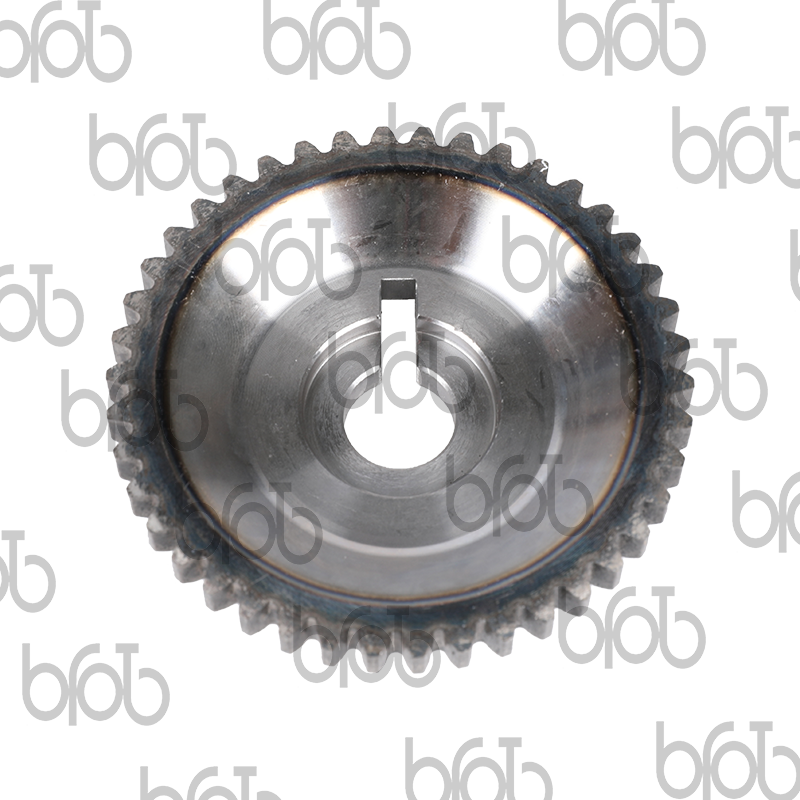
Some OEM projects start from a full drawing with material, tolerances, and heat treatment already defined. Others start from an original sample, requiring the manufacturer to reverse-engineer geometry and material behavior. The most common failure point is not machining, but interpretation of the original part's specification. A reliable manufacturer will ask for the engine model, year, and installation position, and will confirm that the proposed material and hardness match the application before cutting tooling. The same discipline applies when a buyer requests a camshaft sprocket for a widely used engine family such as the Honda Civic 1.8 engine camshaft sprocket, where the tooth count, pitch, and keyway offset have to be verified against the exact engine version.
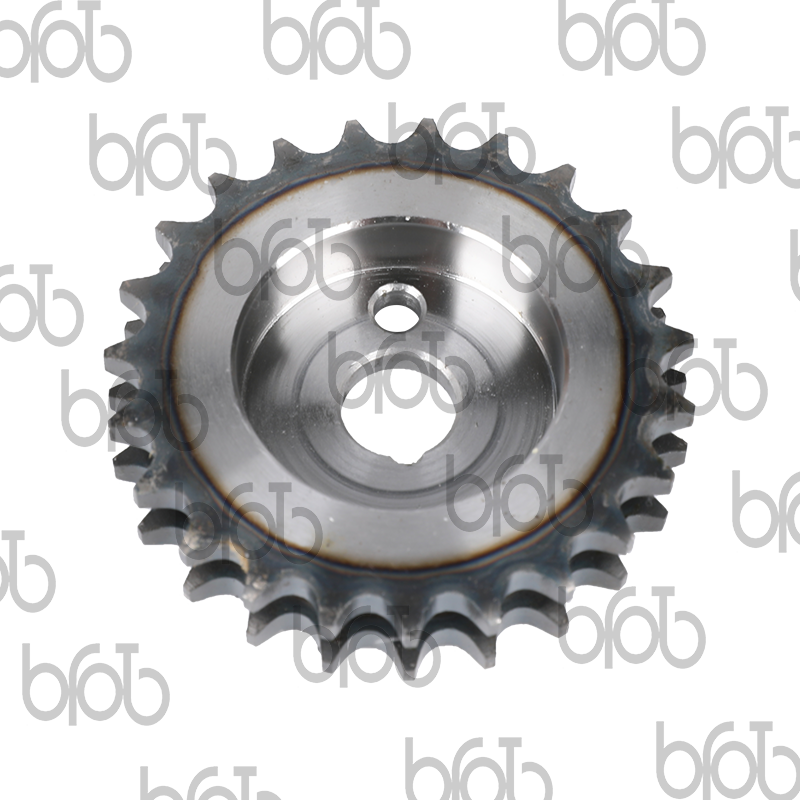
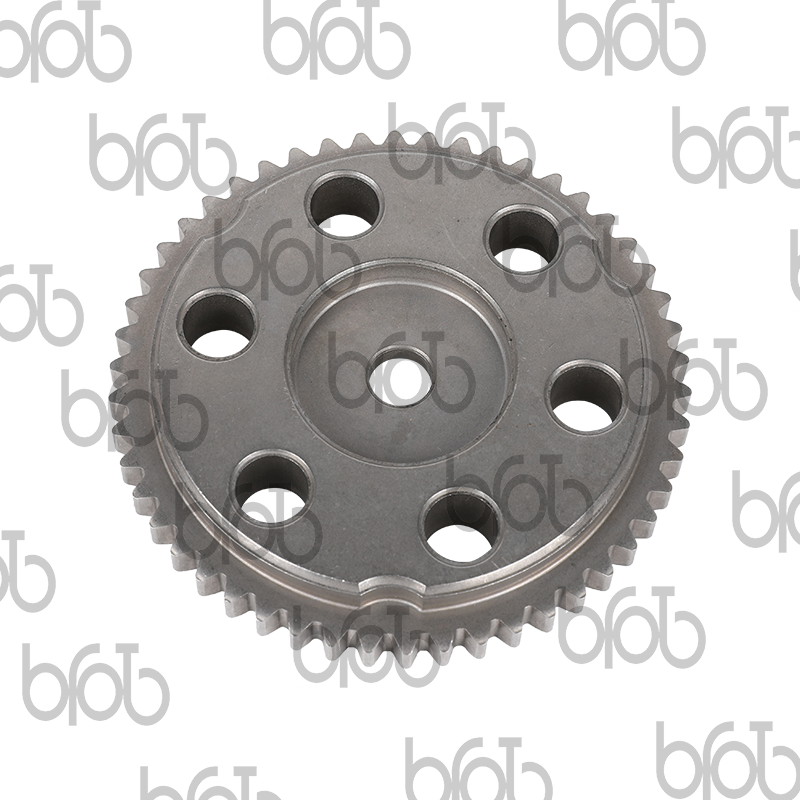
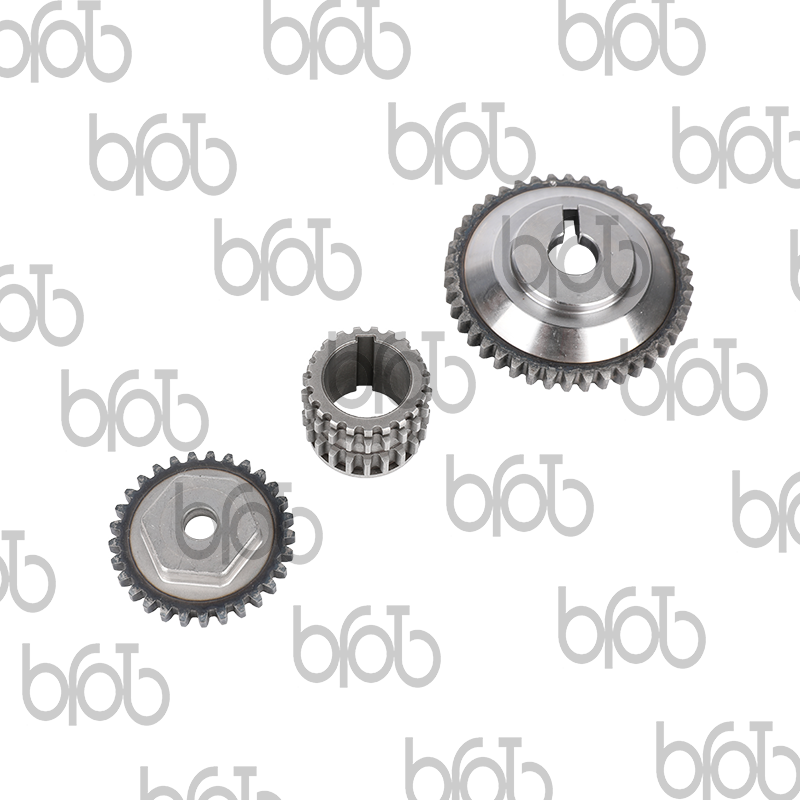
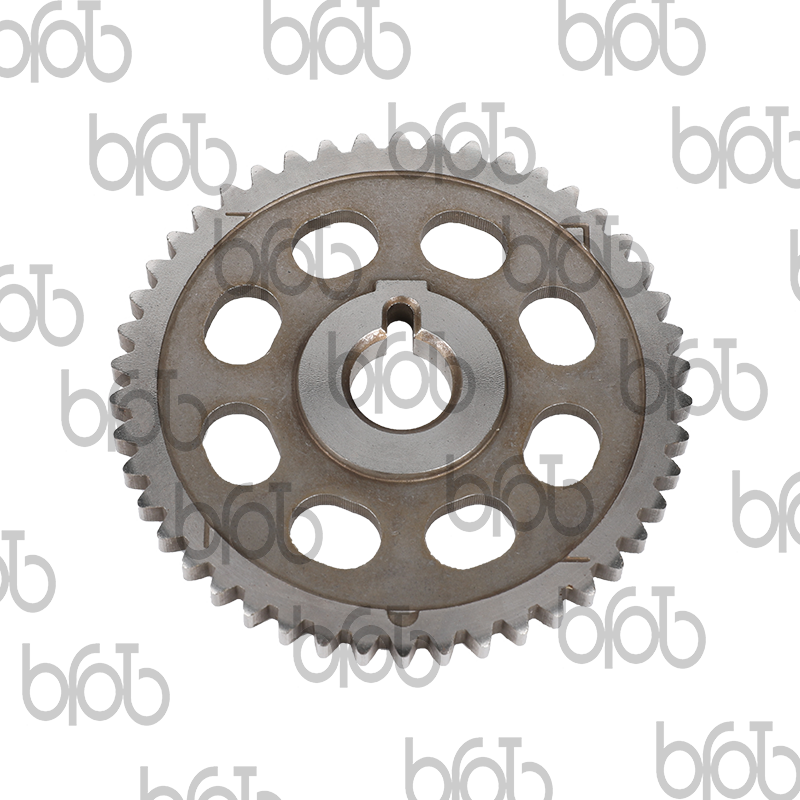 Honda Civic 1.8 & Accord 2.0 Engine Camshaft Sprocket for TimingPrecision camshaft sprocket for Honda Civic 1.8L and Accord 2.0L engines, ensuring accurate valve timing and reliable engine performance.View Product →
What to Check Before Production Release
Before volume production starts, the buyer should review the equivalent of a PPAP package:
- Material certificate confirming the specified steel or powder metal grade
- Heat treatment record with hardness values and case depth
- Dimensional report covering pitch error, runout, and keyway tolerances
- Sample parts for a physical fit trial
Pay particular attention to the tooth count, pitch, and the offset direction for left-hand and right-hand camshaft sprockets, because several engine families use asymmetric keyways to prevent reversed installation. These details determine whether the release process actually delivers the manufacturing accuracy and quality control expected from customized timing gears.
Choosing an OEM Manufacturing Partner
For companies sourcing engine sprockets in volume, evaluate the plant rather than the price list. A manufacturer with vertical control over machining, heat treatment, and inspection removes the variability introduced by sub-suppliers. Ask about annual output, export experience, and how quickly technical questions receive a documented answer. A supplier that operates its own factory, keeps output above one million pieces per year, and handles export documentation for Europe, America, and Japan can usually discuss material and process questions at engineering level.
In each case the measurable question is the same: does the supplier control material, heat treatment, and final measurement in-house, and can it prove that with records? A manufacturer that cannot discuss hardness, tooth pitch tolerance, and heat treatment cycles in the same conversation as pricing and lead time is passing the risk to the buyer. A competent OEM partner treats the timing sprocket as an engineered product, and that is the only basis on which a reliable supply relationship should be built.