 English
 Español
 Deutsch
Article Directory
An engine timing sprocket is a small component with an unforgiving job. It must convert crankshaft rotation into precisely timed valve movement, thousands of revolutions per minute, for tens of thousands of kilometres. Buyers who focus on price alone often discover too late that a sprocket with a loose keyway fit or a soft tooth surface causes timing drift, chain rattle, and eventually engine damage. The practical conclusion is straightforward: base your purchase on application match, material and heat treatment, dimensional accuracy, replacement planning, and supplier reliability — roughly in that order.
Match the Sprocket to the Exact Engine Application
When a replacement sprocket is described as "universal," treat it as a red flag. Camshaft sprockets, crankshaft sprockets, and oil pump sprockets serve different positions, and the same engine family can change tooth count, bore size, or keyway orientation between production years. The vehicle's VIN or engine code is the most reliable starting point, followed by the part number stamped on the old sprocket. If both are unavailable, measure the tooth count, bore diameter, and keyway width directly; these three numbers eliminate most mismatches.
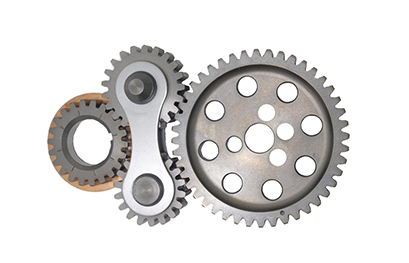
Timing sprockets are also engineered for specific drive architectures. In chain-driven engines, the sprocket teeth engage chain links, so tooth flank wear determines service life. In gear-driven systems, backlash and tooth profile become critical because the sprockets mesh directly with one another. Make sure the replacement matches the original drive type; a chain sprocket used in a gear-driven engine will fail quickly and can damage adjacent components.
| Sprocket position | Main function in the timing system | Most common failure |
|---|---|---|
| Crankshaft sprocket | Transfers crank rotation to the timing chain or gear train | Worn tooth flanks, loose keyway, chain slip |
| Camshaft sprocket | Controls valve timing relative to the crankshaft | Tooth wear, timing shift, VVT phaser issues |
| Oil pump sprocket or gear | Drives the engine oil pump | Noise, reduced oil pressure, breakage under load |
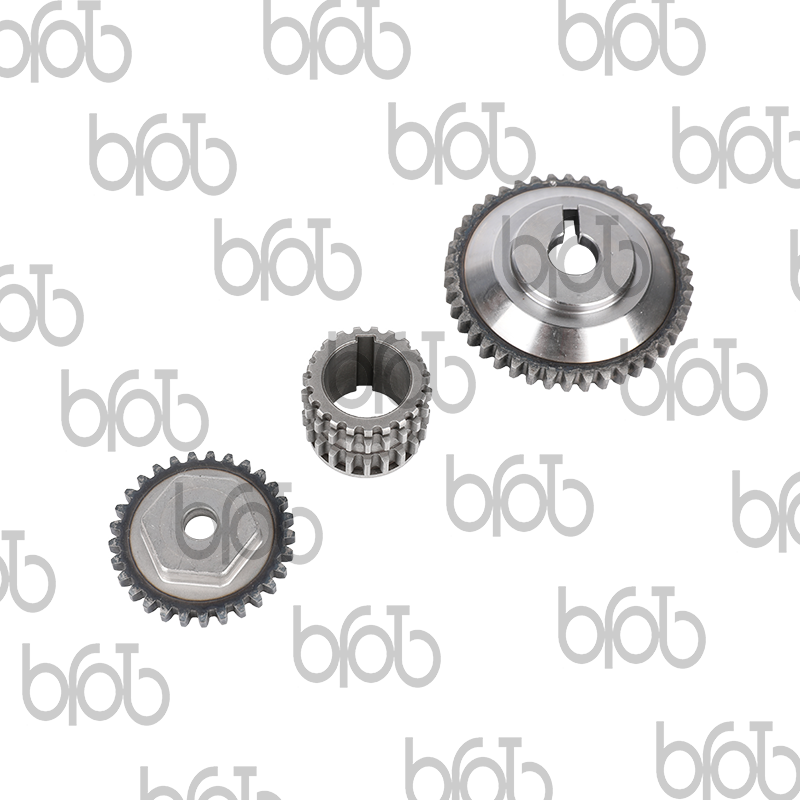
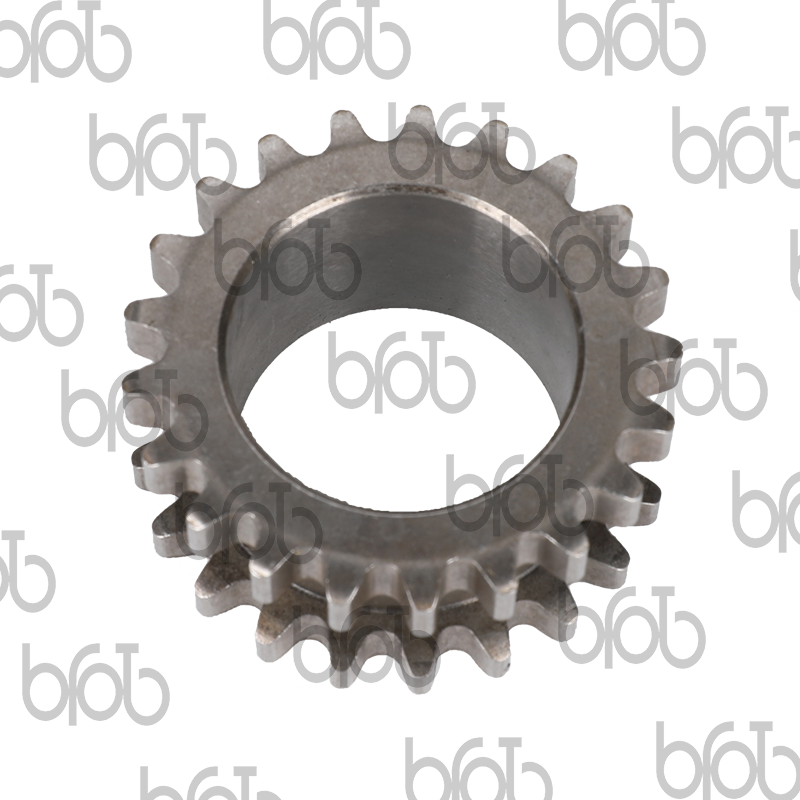
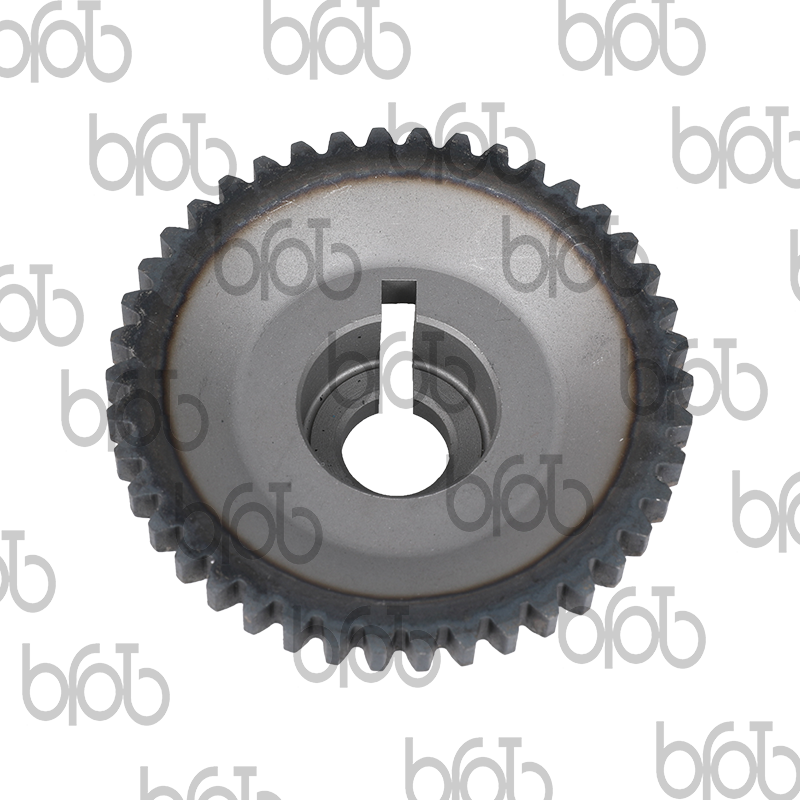
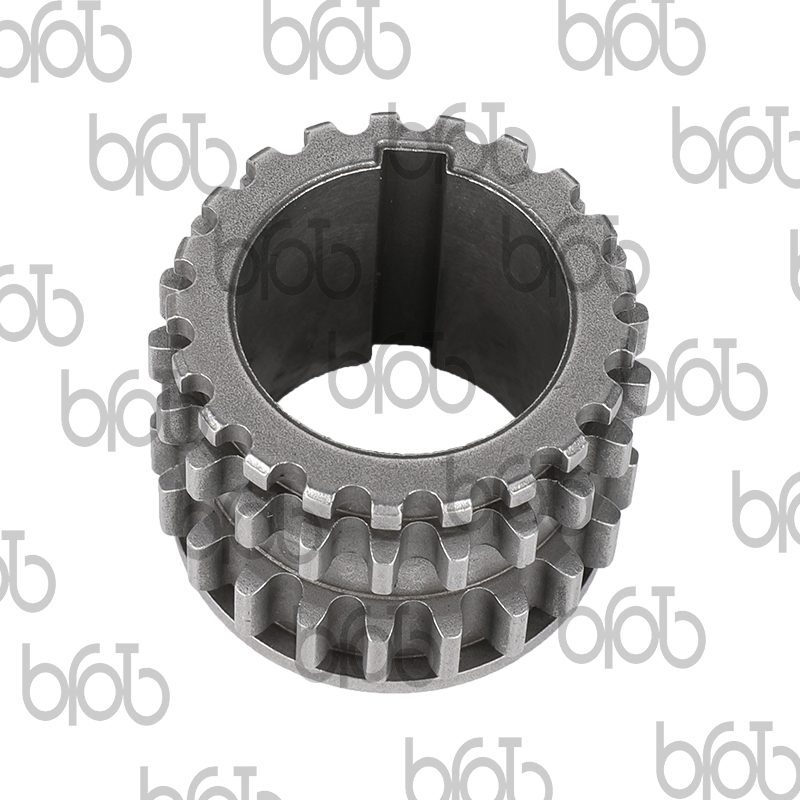
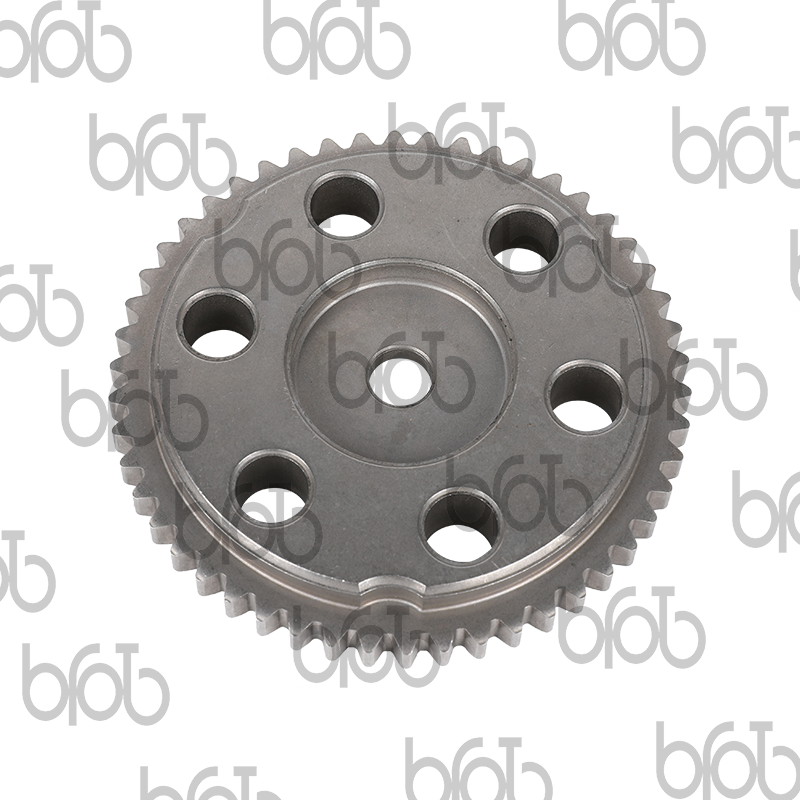
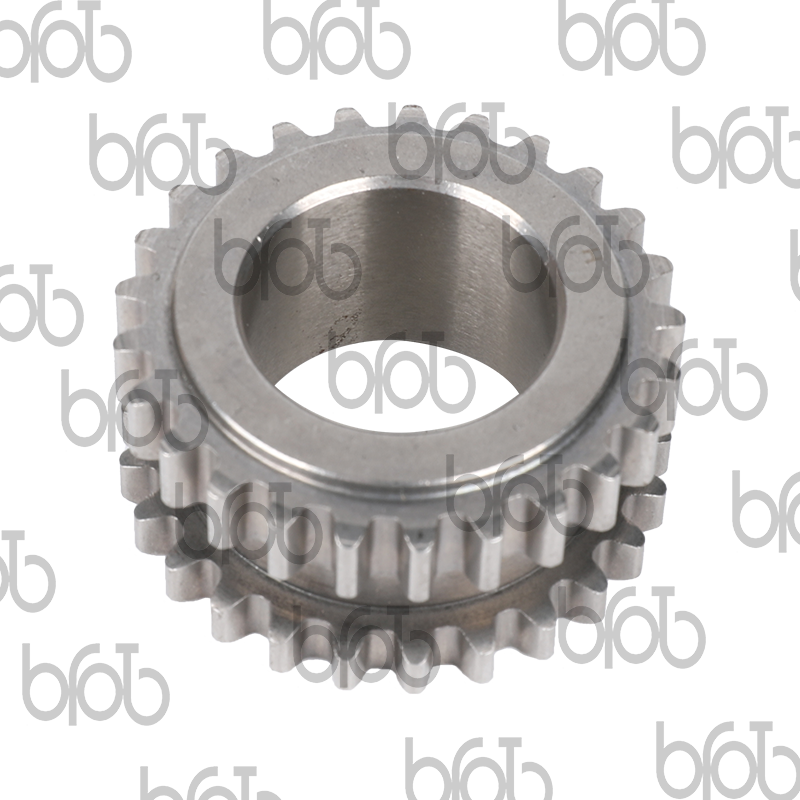
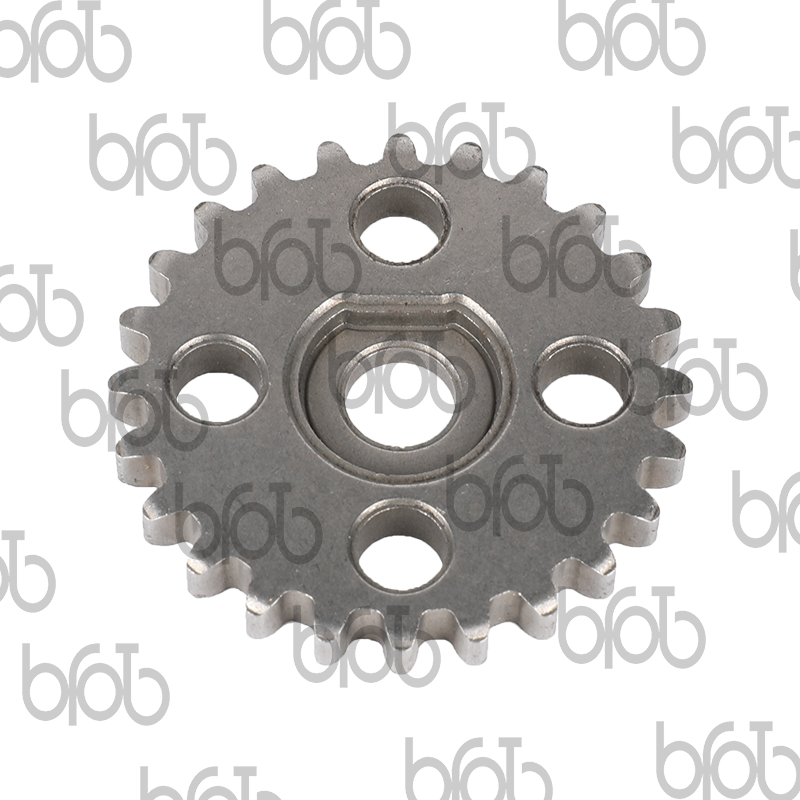
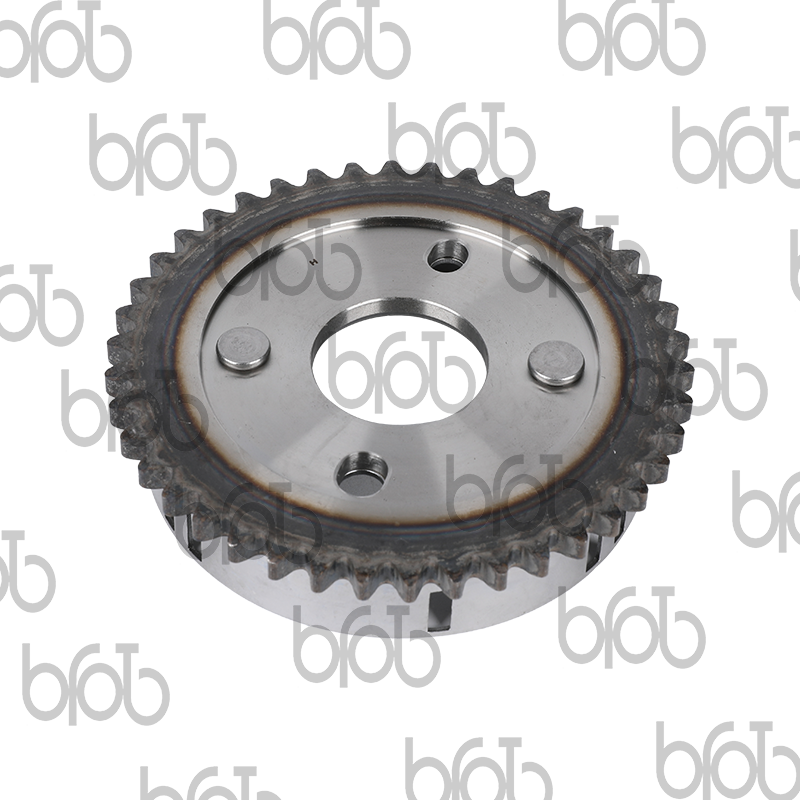
Application-specific listings reduce the guesswork. A manufacturer that publishes vehicle coverage by brand and engine — such as Chevrolet timing crankshaft sprockets for specific small-block applications — makes it easier for a workshop or distributor to confirm fitment before committing to an order.
 Wholesale automobile Chevrolet Timing Crankshaft Sprockets Suppliers, ManufacturJiaxing Befeite Chain Wheel Manufacturing Co., Ltd. is Wholesale automobile Chevrolet Timing Crankshaft Sprockets Manufacturer, Company a...View Product →
Material and Manufacturing Determine Service Life
The material of a timing sprocket does more than set its price; it sets the failure threshold. For production engines, sprockets are typically made from medium-carbon steel, alloy steel, or sintered powder metal. Medium-carbon and alloy steels offer better impact resistance and can be hardened reliably, while powder metal parts are economical for high-volume production but less forgiving in high-load or high-wear applications. If the engine is used for towing, high-mileage commercial service, or performance work, steel sprockets are the safer choice.
Steel versus Powder Metal
Compare the two common options directly. A steel sprocket starts as a machined or forged blank, then undergoes heat treatment and finishing; it can withstand higher tooth loads and repeated thermal cycling. A powder-metal sprocket is pressed and sintered, which gives good dimensional consistency in large batches, but its impact toughness depends heavily on density and sintering quality. For a fleet operator or repair shop that wants to avoid comebacks, the slight price premium for steel is usually worth it.
Heat Treatment and Surface Hardness
Surface hardness is the single best indicator of wear resistance. Induction hardening is widely used on crankshaft and camshaft sprockets because it creates a hard case while keeping the core ductile, so teeth resist wear without becoming brittle. Typical case hardness for automotive timing sprockets falls in the range of 45–55 HRC, with gear-driven applications often specified higher. A sprocket that has been hardened unevenly will wear on one side first, causing the chain or gear train to run out of alignment. If you source from a manufacturer, ask whether it applies induction hardening and whether hardness is verified per batch. The differences may not be visible before installation, but they show up clearly in service life. For a deeper look, review the timing sprocket hardness and material durability specifications used in modern engine applications.
Dimensional Accuracy and Keyway Fit
A sprocket with the correct tooth count can still be the wrong part if the bore and keyway do not match the crankshaft or camshaft nose. The bore must seat properly on the shaft; an oversized bore allows the sprocket to rock, which wears the key and eventually shifts timing. The keyway, in turn, must fit the key without excessive clearance. Industry practice treats keyway width as a controlled dimension: too tight and the part will not slide onto the shaft; too loose and the key hammers under load.
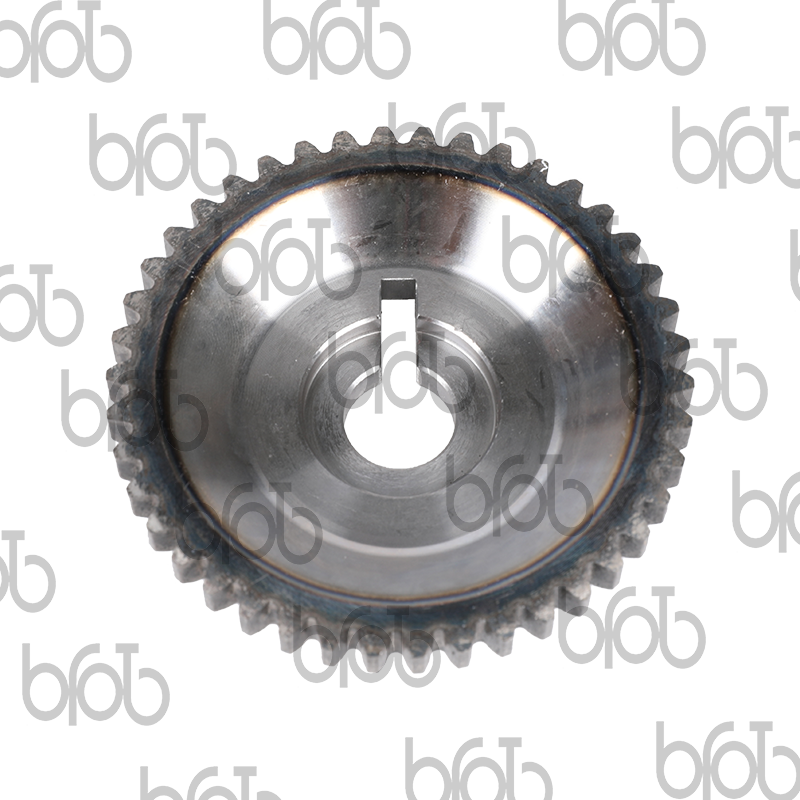
Tooth profile is the other dimension buyers rarely verify but should. Sprocket teeth follow an involute profile designed to engage chain rollers or gear teeth smoothly. If the profile is copied poorly or the pitch spacing is off, the chain will run noisily and wear faster. Serious suppliers measure tooth profile and pitch with gear testers and hold bore tolerances in the H7 range or equivalent. When you are checking a parts catalogue, the accuracy standards applied to the sprocket matter; camshaft timing sprocket accuracy standards directly affect how smoothly the valve train runs at speed.
Plan the Replacement as a Set
Replacing only the chain while reusing the old sprockets is one of the most common cost-cutting mistakes in timing system service. Sprockets and chains wear together; a new chain running on a worn sprocket will accelerate its own wear and can jump teeth under load. The industry-standard recommendation is to replace the chain, sprockets, and tensioner guides as a set, because a fresh sprocket matched to a fresh chain distributes load evenly from the first start.
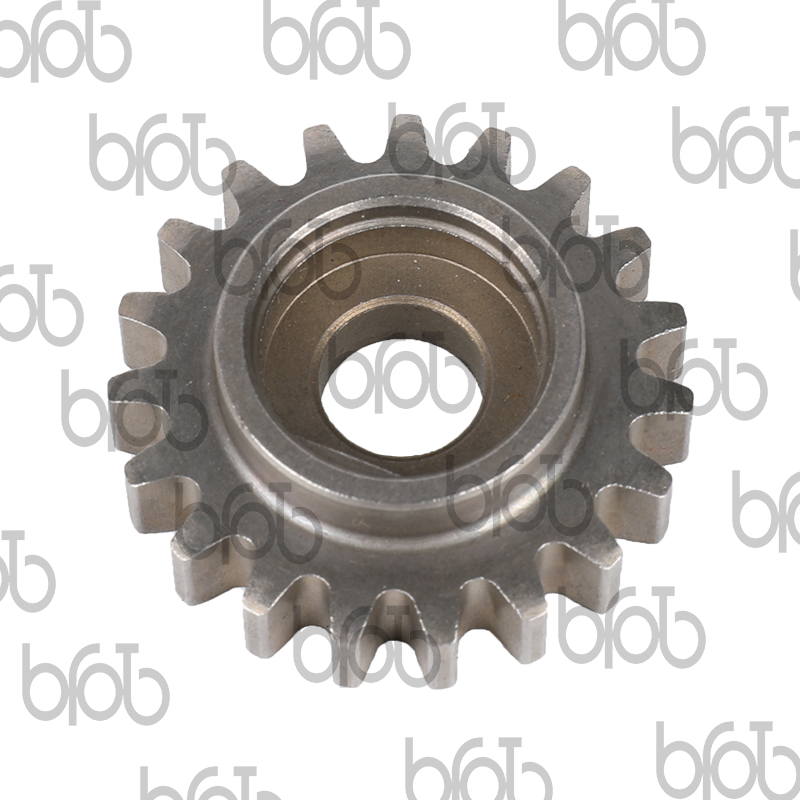
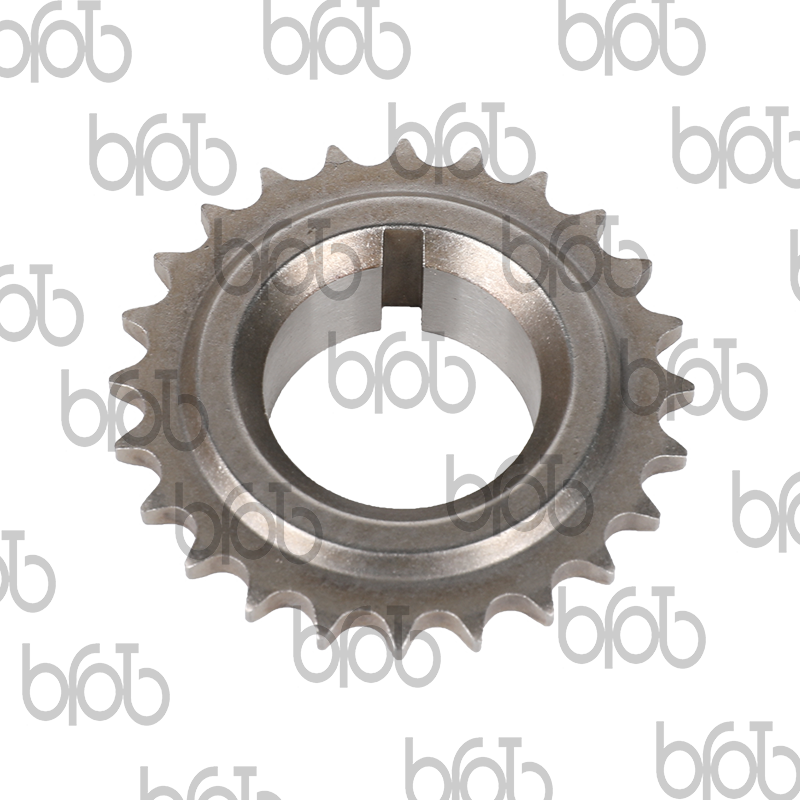
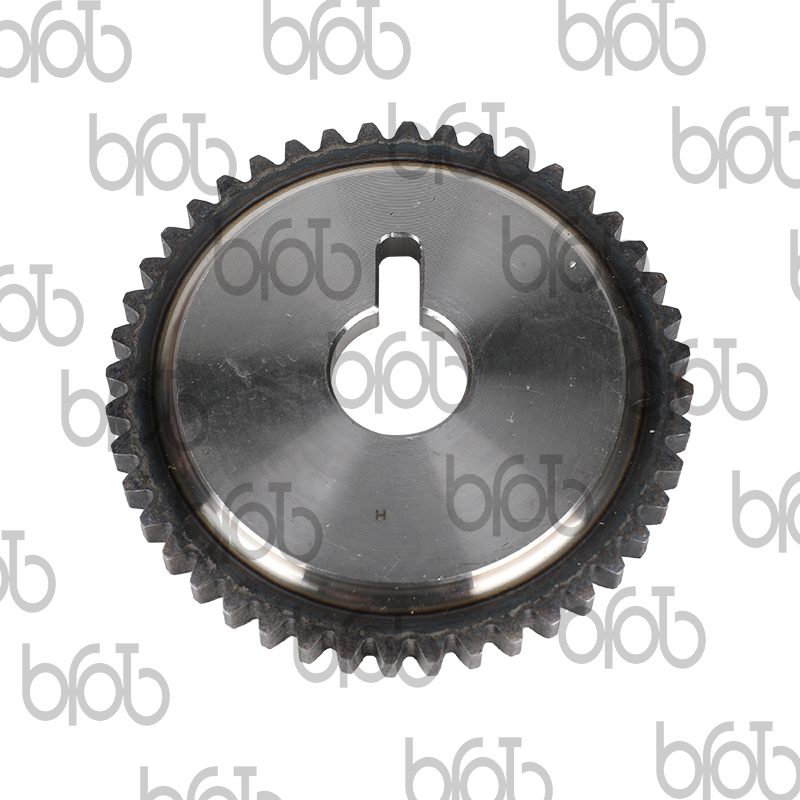
Wear signs are not always visible from outside. A sprocket with hooked or polished teeth may still pass a visual check, but it no longer engages the chain correctly. Common symptoms include a rattling noise from the timing cover on cold start, slight timing variance in a scan tool reading, or a chain that is visibly loose at its longest span. If any of these appear, do not reuse the sprocket. A detailed crankshaft timing sprocket selection and installation guide can help you confirm whether the part you are specifying matches the service condition. Patterns are easier to see in specific engine applications: the Nissan HR16 engine timing crankshaft gear, for example, is specified for a family of small-displacement engines, and ordering it requires confirming both the engine code and the tooth count.
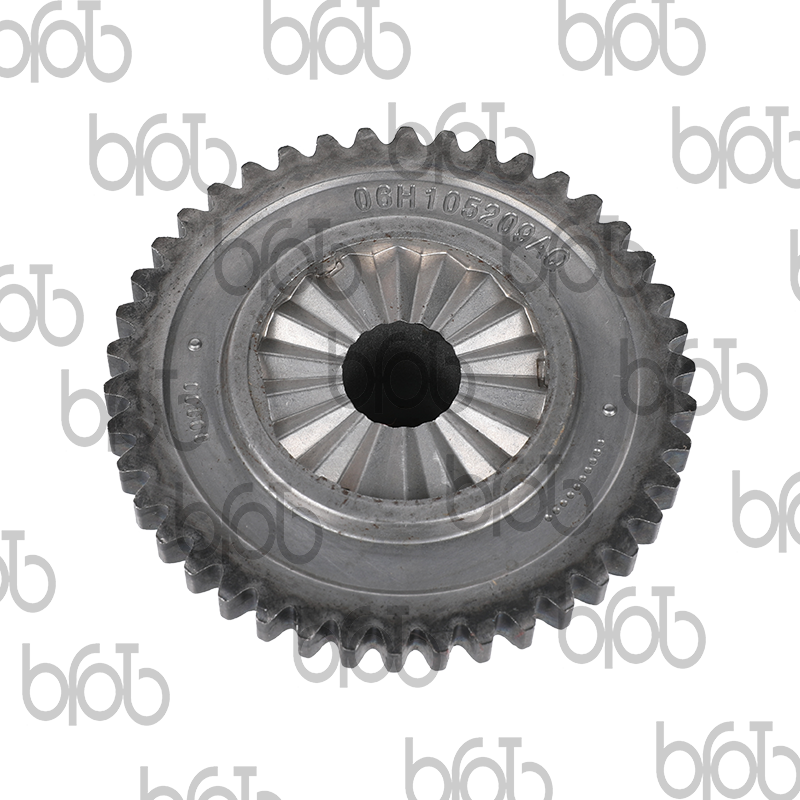
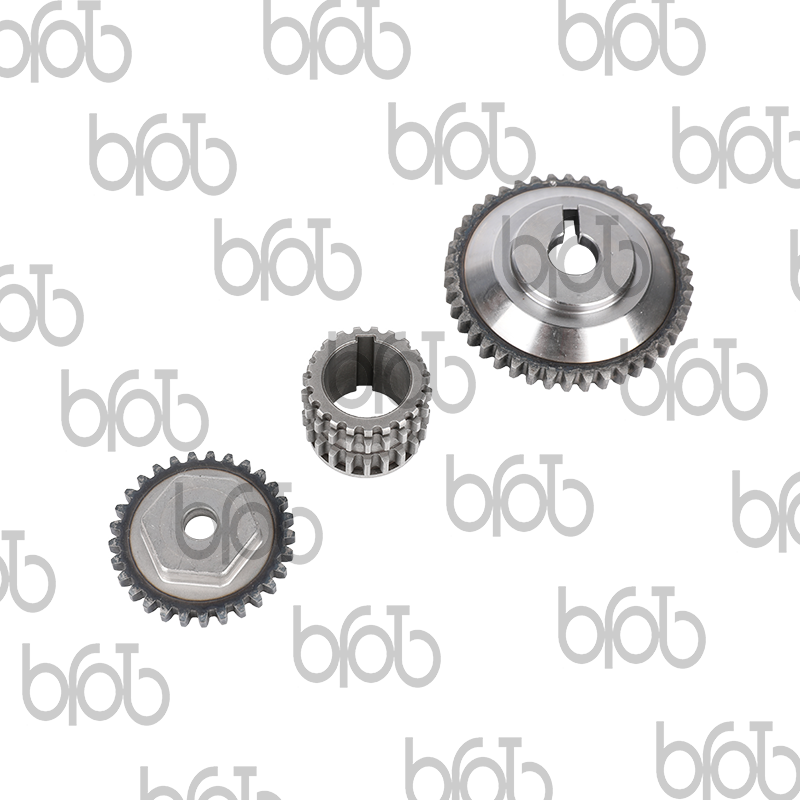 Wholesale automobile Nissan HR16 Engine Timing Crankshaft Gear Suppliers, ManufaJiaxing Befeite Chain Wheel Manufacturing Co., Ltd. is Wholesale automobile Nissan HR16 Engine Timing Crankshaft Gear Manufacturer, Compa...View Product →
Verify the Supplier's Quality System
Because timing sprockets are rarely inspected before installation, the supplier's quality system is your real inspection. Reliable suppliers control three things: material certificates, heat-treatment records, and batch traceability. If a supplier cannot tell you which steel grade was used or whether hardness was tested on the production batch, the part is a gamble regardless of how shiny the plating looks.
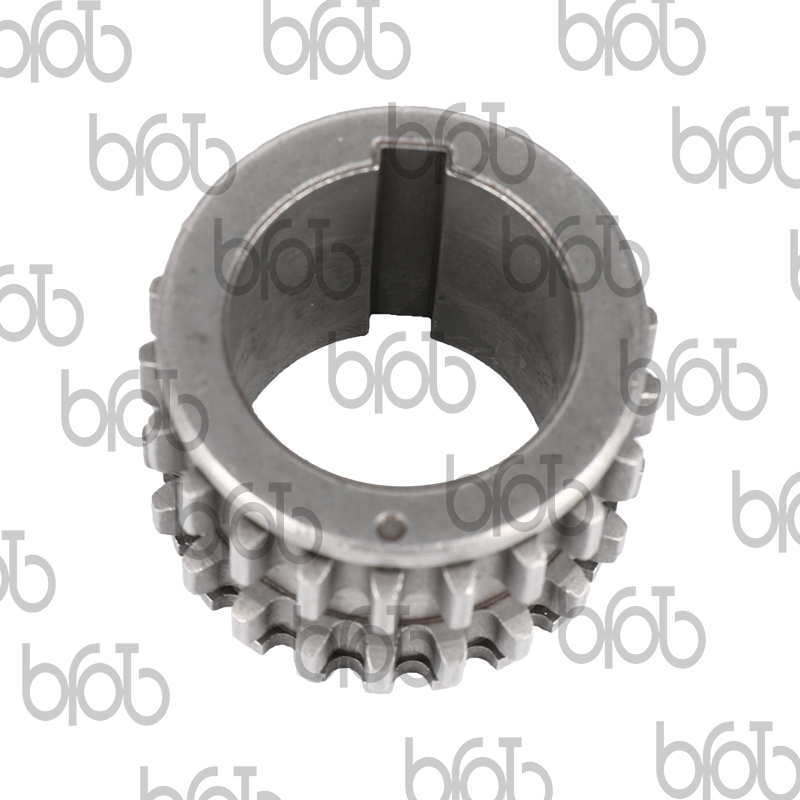
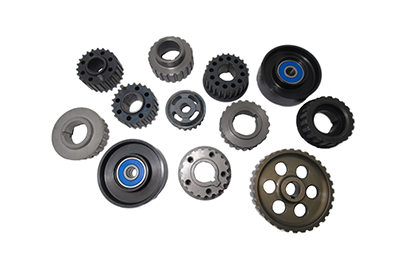
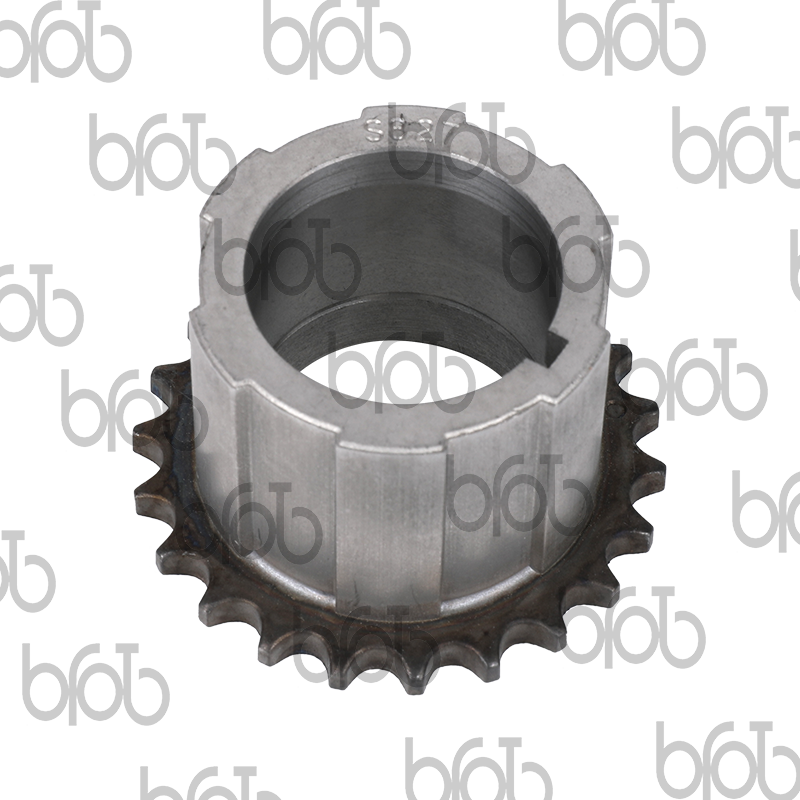
Custom parts should not be excluded from this rule. Many workshops and distributors eventually need a sprocket that is no longer available from the OE channel, or one with a modified tooth count for a special application. A manufacturer with in-house machining and a development team can produce parts from a drawing or sample, but it should apply the same tolerances and hardness verification as it does to standard catalogue items. Suppliers that publish detailed product coverage by vehicle family, like the BMW Mini Peugeot engine timing crankshaft sprocket line, usually have the engineering discipline to support both standard and custom orders.
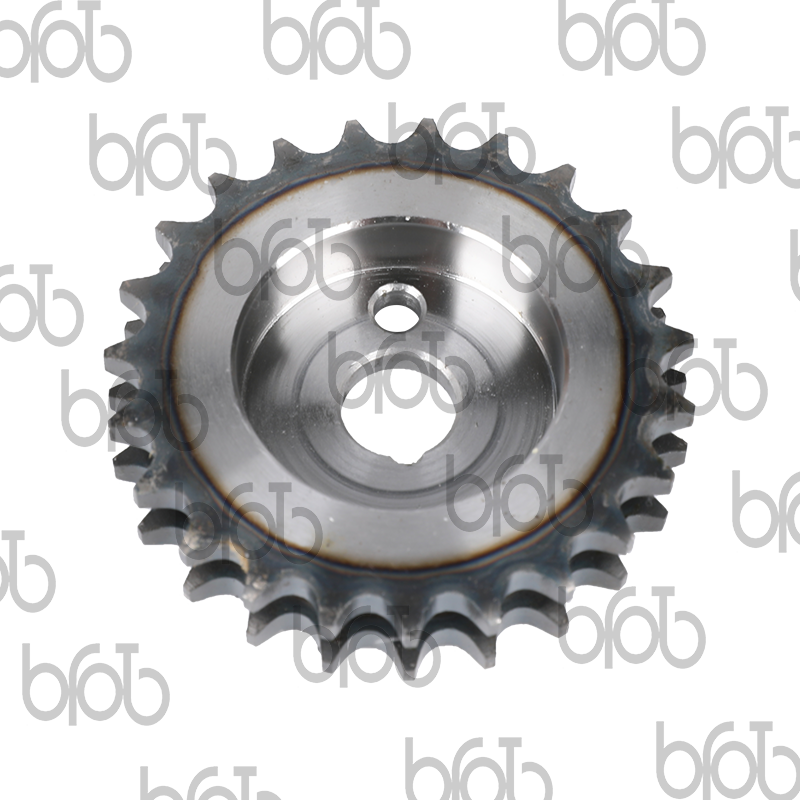
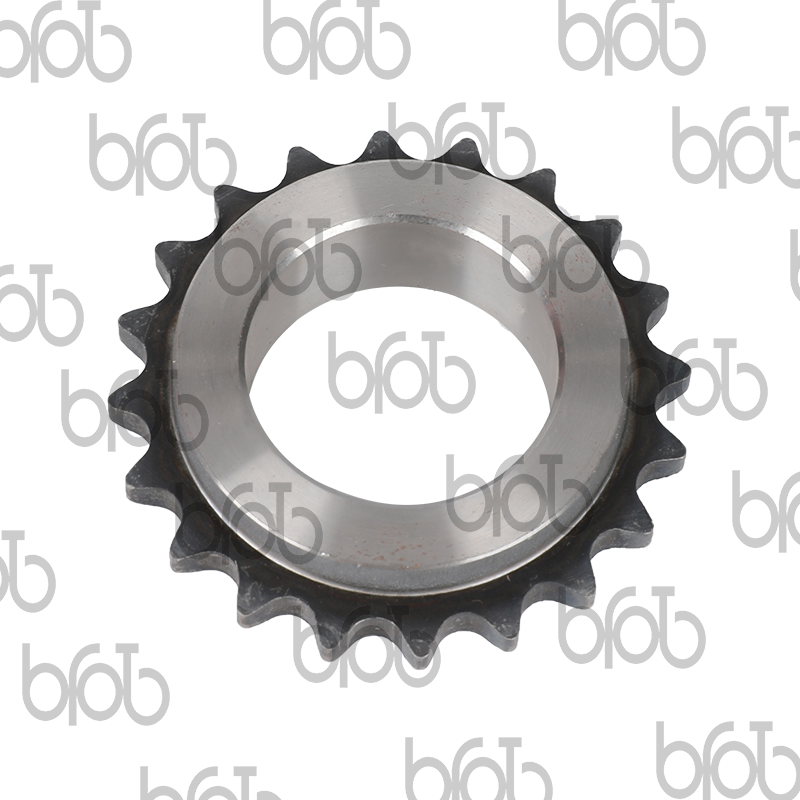 Wholesale automobile BMW mini, Peugeot engine timing crankshaft sprocket SupplieJiaxing Befeite Chain Wheel Manufacturing Co., Ltd. is Wholesale automobile BMW mini, Peugeot engine timing crankshaft sprocket Manufactu...View Product →
A Practical Buying Checklist
Summarizing the above, a sound purchase decision comes down to five checks:
- Confirm the engine code, production year, and sprocket position before searching for a part.
- Verify the material type and heat-treatment specification, not just the price.
- Check bore tolerance, keyway width, tooth count, and pitch accuracy against the original part.
- Replace sprockets and chain together, and inspect for uneven wear before reassembly.
- Choose a supplier that documents material, hardness, and batch traceability.
None of these checks requires a test bench or a laboratory; they are questions every buyer can ask before placing an order. For parts that will sit inside an engine for another hundred thousand kilometres, the extra minutes of verification cost nothing compared with the labour and downtime of a repeat repair.